

African Palm Swift vs Lesser Striped Swallow
Cypsiurus parvus contro Cecropis abyssinica
Fai un quiz con African Palm Swift e Lesser Striped Swallow
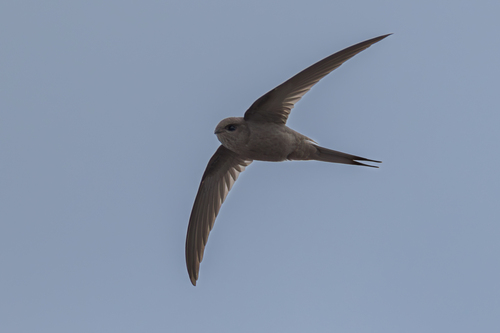 African Palm Swift
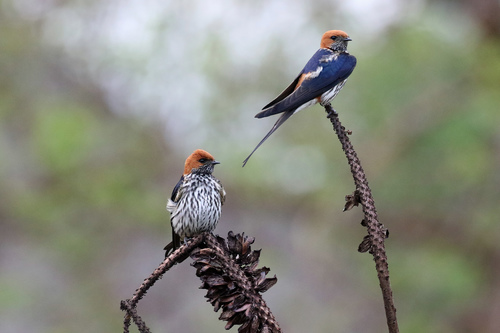 Lesser Striped Swallow
In breve
Il modo più affidabile per separare l'African Palm Swift dalla Lesser Striped Swallow è attraverso la loro struttura generale e lo stile di volo: gli swift delle palme sono slanciati, con ali lunghe e a forma di falce in volo, con una coda profondamente biforcuta di solito tenuta chiusa, mentre le rondini sono più robuste con ali più larghe e una coda più classica da rondine. Le rondini juvenile hanno penne della coda esterne più corte, ma non eguagliano mai la silhouette a forma di boomerang dello swift. Anche il piumaggio è distintivo: gli swift sono di un marrone chiaro uniforme, mentre le rondini mostrano parti superiori blu, una corona rugginosa e parti inferiori bianche striate in modo audace. Se posate, le rondini si siedono su fili o rami, mentre gli swift delle palme quasi mai si posano, eccetto quando si aggrappano verticalmente alle palme. I richiami differiscono: gli swift emettono un urlo acuto, le rondini un 'zeh zeh zeh' nasale.
Consigli di identificazione
- Flight silhouette: Cerca le ali estremamente slanciate e a forma di falce dell'African Palm Swift e il corpo snello; la Lesser Striped Swallow è più robusta, con ali più larghe e una biforcazione della coda meno estrema.
- Tail shape: L'African Palm Swift ha una coda profondamente biforcuta, ma di solito è tenuta chiusa e può apparire appuntita; la coda della rondine è anch'essa biforcuta, con lunghe penne esterne (soprattutto nei maschi adulti), ma appare sempre più larga e più classica 'da rondine'.
- Plumage color: L'African Palm Swift è di un marrone chiaro uniforme, senza forti contrasti di colore. La rondine è marcata in modo sorprendente: parti superiori blu, corona/nuca rugginosa, groppa rossa, parti inferiori bianche con audaci striature scure.
- Underparts: La rondine mostra parti inferiori bianche con pesanti striature scure (variabili per sottospecie), mai eguagliate dal marrone uniforme dello swift.
- Head pattern: La rondine ha una corona e una nuca rugginose, in contrasto con le parti superiori blu; la testa dell'African Palm Swift è dello stesso marrone chiaro del resto del corpo.
- Juvenile confusion: La rondine juvenile è più opaca e marrone, con streamer della coda più corti, ma mostra comunque alcune striature sotto e una corona rugginosa. L'African Palm Swift juvenile è semplicemente una versione con coda più corta dell'adulto, rimanendo di un marrone chiaro uniforme.
- Perching behavior: Le rondini si posano frequentemente su fili, rami o edifici. Gli swift delle palme quasi mai si posano, eccetto quando si aggrappano verticalmente alle fronde delle palme o superfici simili.
- Nesting sites: Le rondini costruiscono nidi di fango con ingressi tubulari sotto sporgenze o strutture artificiali. Gli swift delle palme incollano nidi di piume alla parte inferiore delle fronde delle palme.
- Flight style: Gli swift delle palme sono veloci, diretti e raramente planano; le rondini hanno un volo più erratico e a spirale, spesso planando tra i battiti.
- Voice: Ascolta un urlo acuto dall'African Palm Swift; un 'zeh zeh zeh' nasale dalla rondine.
- Habitat association: Gli swift delle palme sono strettamente legati alle palme, specialmente alle palme da olio, ma si trovano anche in savane boschive e terreni coltivati. Le rondini sono più flessibili, spesso vicino a strutture umane.
- Wing pattern in flight: Nessuna delle due specie mostra forti pannelli di ali contrastanti, ma le ali dell'African Palm Swift sono più strette e a forma di mezzaluna, mentre quelle della rondine sono più larghe e di colore marrone scuro.
- Size impression: La rondine appare più pesante e robusta, soprattutto quando è posata; l'African Palm Swift è sempre slanciato e leggero.
- Season/sex: Gli streamer della lunga coda della rondine sono più pronunciati nei maschi adulti, ma anche le femmine e i juvenile non eguagliano mai la forma della coda o la struttura generale dello swift.
- Common pitfalls: Uccelli lontani o in volo veloce possono confondere, soprattutto le rondini juvenile con code più corte. Cerca qualsiasi segno di parti inferiori striate o corona rugginosa per la rondine, o la forma uniforme marrone e a ali a falce per lo swift.
Taglia
L'African Palm Swift è un uccello piccolo e molto leggero (massa corporea ~14g [wikidata]), con una lunghezza di circa 16 cm [wikipedia]. La Lesser Striped Swallow è più lunga (15–19 cm [wikipedia]) e visibilmente più pesante, con un aspetto più robusto. Sul campo, le rondini appaiono più tozze e con ali più larghe, mentre gli swift delle palme sono estremamente slanciati e a forma di falce. Gli streamer della coda della rondine possono farla apparire più lunga, soprattutto negli adulti, ma la coda dello swift è profondamente biforcuta anche se di solito è tenuta chiusa e meno evidente a meno che non sia aperta.
Piumaggio
-
Juveniles: La rondine juvenile è più opaca e marrone rispetto agli adulti, con meno contrasto e penne della coda esterne più corte, ma mostra comunque alcune striature sotto e una corona rugginosa. L'African Palm Swift juvenile differisce principalmente dagli adulti per avere una coda più corta, ma rimane di un marrone chiaro uniforme.
-
Adults: L'African Palm Swift è di un marrone chiaro uniforme, con ali lunghe e all'indietro e una coda profondamente biforcuta (di solito tenuta chiusa). Nessun forte contrasto di colore o marcature. La Lesser Striped Swallow è molto più colorata: parti superiori blu scuro, corona/nuca/lati della testa rugginosi, groppa rossa, parti inferiori bianche con pesanti striature scure, e ali e coda marrone scuro. Le copritrici delle ali inferiori sono fulve. La coda della rondine ha penne esterne molto lunghe (soprattutto nei maschi), ma sempre di colore marrone scuro.
-
Wing pattern in flight: Le ali dell'African Palm Swift sono lunghe, strette e a forma di mezzaluna, prive di pannelli o barre contrastanti. Le ali della rondine sono più larghe, con penne da volo marrone scuro e senza pannelli chiari; le copritrici delle ali inferiori sono fulve ma non fortemente marcate. Le penne da volo della rondine contrastano con le parti superiori blu e la groppa rugginosa quando viste dall'alto.
Comportamento
L'African Palm Swift trascorre quasi tutto il suo tempo in aria, raramente posandosi eccetto per aggrapparsi verticalmente alle fronde delle palme o superfici simili. Il loro volo è veloce, diretto e a forma di falce, spesso alto ma a volte basso su terreni aperti. Le rondini Lesser Striped hanno un volo più erratico e a spirale tipico delle rondini, e sono spesso viste posate su fili, rami o edifici. Le rondini costruiscono nidi di fango con ingressi tubulari sotto sporgenze o strutture artificiali, mentre gli swift delle palme incollano i loro nidi alla parte inferiore delle fronde delle palme usando la saliva.
Habitat
Entrambe le specie possono verificarsi in terreni aperti e vicino a insediamenti umani, ma l'African Palm Swift è fortemente associato alle palme (soprattutto alle palme da olio), savane boschive, cespugli spinati e terreni coltivati. La Lesser Striped Swallow nidifica ampiamente nell'Africa subsahariana, spesso vicino a edifici, ponti e tombini, così come a sporgenze naturali. Le rondini sono più propense a essere viste posate in aree aperte o semiaperte, mentre gli swift delle palme sono quasi sempre in volo a meno che non siano al nido.
Voce
L'African Palm Swift emette un urlo forte e acuto, che è penetrante e distintivo. La Lesser Striped Swallow ha un richiamo nasale 'zeh zeh zeh zeh zeh', molto diverso nel tono dall'urlo dello swift. Se senti un richiamo nasale ripetuto, è probabile che sia una rondine; un urlo penetrante indica uno swift delle palme.
African Palm Swift · Lesser Striped Swallow · I miei uccelli difficili