

African Grass-Owl vs American Barn Owl
Tyto capensis contro Tyto furcata
Fai un quiz con African Grass-Owl e American Barn Owl
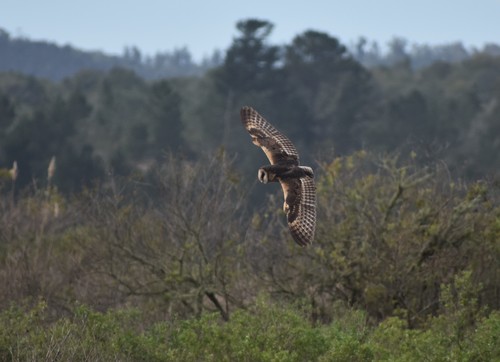 African Grass-Owl
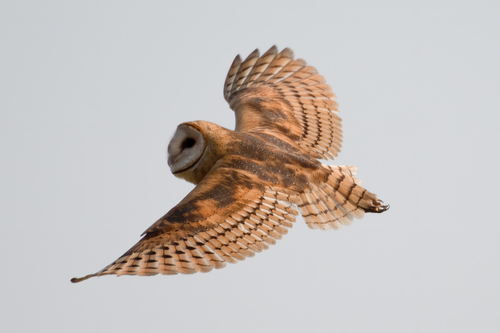 American Barn Owl
In breve
Il segno distintivo più affidabile per separare l'African Grass-Owl dall'American Barn Owl è l'oscurità generale e l'uniformità delle parti superiori di colore nero-nerastro dell'African Grass-Owl, in contrasto con le parti superiori tipicamente più chiare e variegate dell'American Barn Owl. In volo o posato, l'African Grass-Owl mostra un dorso e ali sorprendentemente scuri, con piccole macchie bianche sparse, mentre l'American Barn Owl è generalmente di un marrone più chiaro al grigio sopra, con aree chiare più estese e una maculatura più fine. Entrambi hanno dischi facciali a forma di cuore, ma quello dell'African Grass-Owl è bordato da un sottile bordo giallo-buff densamente maculato, mentre quello dell'American Barn Owl è solitamente bianco brillante e meno distintamente bordato. Le parti inferiori sono più pesantemente maculate e variabili nell'African Grass-Owl, mentre quelle dell'American Barn Owl sono più chiare e meno marcate, specialmente nei maschi. Le differenze strutturali sono sottili, ma l'African Grass-Owl è leggermente più grande e pesante, specialmente nelle femmine.
Consigli di identificazione
- Upperparts Coloration: L'African Grass-Owl è sorprendentemente di un nero-nerastro-marrone sopra con piccole macchie bianche e macchie grigie; l'American Barn Owl è di un marrone più chiaro al grigio con una maculatura fine in bianco e nero, mai così scuro o uniforme come l'African Grass-Owl. Questo è il segno distintivo più consistente in tutte le età.
- Facial Disc: Il disco facciale dell'African Grass-Owl è di un crema-bianco con un sottile bordo giallo-buff densamente maculato; quello dell'American Barn Owl è solitamente bianco brillante con un bordo meno distintivo. Cerca il bordo maculato sull'African Grass-Owl a distanza ravvicinata.
- Underparts Markings: L'African Grass-Owl mostra sempre macchie scure sulle parti inferiori, che variano da bianco a buff; le parti inferiori dell'American Barn Owl sono solitamente meno marcate, specialmente nei maschi, e possono essere quasi senza macchie in alcuni individui. Parti inferiori pesantemente maculate favoriscono l'African Grass-Owl, ma esiste sovrapposizione con le femmine maculate dell'American Barn Owl.
- Tail Pattern: La coda dell'African Grass-Owl ha piume centrali marroni e piume esterne più chiare, quasi bianche, con circa quattro barre scure; la coda dell'American Barn Owl è squadrata, di un marrone chiaro con bande più scure, ma non così contrastanti.
- Leg Feathering: Le piume delle gambe dell'African Grass-Owl sono bianche e si estendono più in basso sui tarsi rispetto all'American Barn Owl, le cui piume tarsometatarsali corrispondono alle parti inferiori e possono essere meno estese. Questo è sottile e meglio visibile su uccelli posati.
- Overall Darkness/Jizz: In scarsa luce o a distanza, l'African Grass-Owl dà un'impressione molto più scura e uniforme, mentre l'American Barn Owl appare più chiara e più patternata. Usa questo per una rapida separazione in volo.
- Size and Bulk: L'African Grass-Owl è leggermente più grande e massiccio, specialmente nelle femmine, ma la sovrapposizione di dimensioni è considerevole. Usa solo come segno di supporto.
- Flight Style: L'American Barn Owl vola spesso con un pattern ondulato e gambe penzolanti; il volo dell'African Grass-Owl è meno descritto ma può apparire più pesante e diretto.
- Habitat: L'African Grass-Owl è ristretto a praterie alte e dense e paludi; l'American Barn Owl si trova in una gamma più ampia di habitat aperti, inclusi terreni agricoli e vicino a edifici. Il contesto può aiutare ma non è definitivo.
- Voice: Il grido dell'African Grass-Owl è meno stridente, e il canto del maschio è un tremolo sibilante ad alta frequenza; il grido dell'American Barn Owl è più forte e più penetrante. Usa solo se i richiami sono chiaramente uditi.
- Sexual Dimorphism: Entrambe le specie mostrano femmine più grandi e pesanti e parti inferiori più maculate nelle femmine, ma questo non è affidabile per la separazione sul campo.
- Bill and Eye Color: L'African Grass-Owl ha un becco da bianco a rosa pallido e occhi marrone-nerastri; il becco dell'American Barn Owl varia da corno pallido a buff scuro, e l'iride è marrone scuro. Questi non sono segni distintivi forti sul campo.
- Tail Shape: Entrambi hanno code corte, ma quella dell'American Barn Owl è descritta come squadrata; la coda dell'African Grass-Owl può apparire più corta e più graduata a causa del contrasto di colore.
- Spotting on Upperparts: Le macchie bianche dell'African Grass-Owl sono sparse e piccole; la maculatura dell'American Barn Owl è più fine e distribuita più uniformemente, tranne che sulle piume principali delle ali.
- When in Doubt: Se l'uccello appare insolitamente scuro e si trova in alta erba, sospetta l'African Grass-Owl; se è più chiaro e si trova in terreni agricoli aperti o vicino a edifici, l'American Barn Owl è più probabile.
Taglia
L'African Grass-Owl è leggermente più grande e pesante in media: lunghezza del corpo 38–42 cm, lunghezza dell'ala 283–345 mm e massa 355–520 g, con femmine significativamente più grandi dei maschi [wikipedia]. L'American Barn Owl è un gufo di dimensioni medie, con le femmine più grandi di alcune razze insulari che raggiungono oltre 550 g, ma i maschi tipici sono circa il 10% più leggeri delle femmine [wikipedia]. Nella maggior parte degli incontri sul campo, l'African Grass-Owl apparirà un po' più massiccio, specialmente nel corpo e nella testa. Tuttavia, la sovrapposizione di dimensioni è considerevole, e la struttura da sola non è un separatore sicuro a meno che entrambi i sessi e l'età non siano noti.
Piumaggio
- Juvenile/immature flight (upperwing): Non sono descritte differenze esplicite nei pattern delle ali superiori specifiche per età per nessuna delle due specie nelle fonti, quindi la separazione si basa sulla colorazione generale e sulla maculatura in tutte le età.
- Adult and immature perched or in flight: L'African Grass-Owl è uniformemente di un nero-nerastro-marrone sopra, con piccole macchie bianche e macchie grigie, creando un'impressione molto più scura rispetto all'American Barn Owl, che è di un marrone chiaro al grigio sopra con macchie fine in bianco e nero (eccetto sulle piume principali delle ali, che sono marroni chiare con bande più scure). Il disco facciale dell'African Grass-Owl è di un crema-bianco con un sottile bordo giallo-buff densamente maculato; quello dell'American Barn Owl è solitamente bianco brillante con un bordo meno distintivo. Le parti inferiori dell'African Grass-Owl sono variabili, da bianche a buff, ma sempre con macchie scure; le parti inferiori dell'American Barn Owl variano da bianche a rosso-buff, con maculatura variabile (femmine più maculate, maschi spesso più semplici). La coda dell'African Grass-Owl è corta con piume centrali marroni e piume esterne più chiare, quasi bianche, che mostrano circa quattro barre scure; la coda dell'American Barn Owl è corta, squadrata e di un marrone chiaro con bande più scure. Entrambi hanno gambe piumate, ma le piume delle gambe dell'African Grass-Owl sono bianche e si estendono più in basso sui tarsi.
Comportamento
Entrambe le specie sono notturne e cacciano su terreni aperti, ma l'African Grass-Owl è più strettamente associato a habitat di alta erba e potrebbe essere meno probabile vederlo in ambienti agricoli o urbani rispetto all'adattabile American Barn Owl. In volo, entrambe mostrano ali lunghe e una coda corta, ma il volo dell'American Barn Owl è descritto come ondulato con gambe piumate penzolanti, mentre il volo dell'African Grass-Owl è meno descritto ma probabilmente appare più pesante e diretto a causa della sua costruzione più massiccia. Entrambi si posano bassi o a terra, ma l'African Grass-Owl è più segreto e meno probabile da vedere in aperto durante il giorno.
Habitat
L'African Grass-Owl è strettamente legato a praterie alte e dense e aree paludose, raramente avventurandosi lontano da tali habitat. L'American Barn Owl è molto più adattabile, trovandosi in campagna aperta, terreni agricoli, praterie e persino aree urbane. Se visto in praterie estese e indisturbate, l'African Grass-Owl è più probabile; nei campi agricoli, fienili o vicino a insediamenti umani, l'American Barn Owl è molto più probabile.
Voce
Entrambe le specie emettono richiami striduli, ma quello dell'African Grass-Owl è meno stridente di quello dell'American Barn Owl. L'African Grass-Owl emette anche un tremolo sibilante ad alta frequenza (1–2 secondi) ritenuto il canto del maschio. Il grido dell'American Barn Owl è più forte e più penetrante. Tuttavia, la voce non è un separatore affidabile a meno che il richiamo non sia chiaramente udito e confrontato fianco a fianco.
African Grass-Owl · American Barn Owl · I miei uccelli difficili