

Pie-grièche écorcheur vs Jaseur boréal
Lanius collurio contre Bombycilla garrulus
Faire un quiz avec Pie-grièche écorcheur et Jaseur boréal
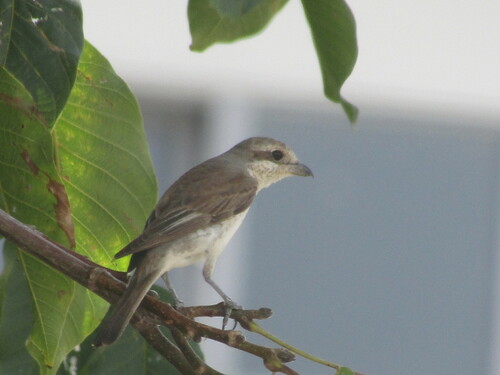 Pie-grièche écorcheur
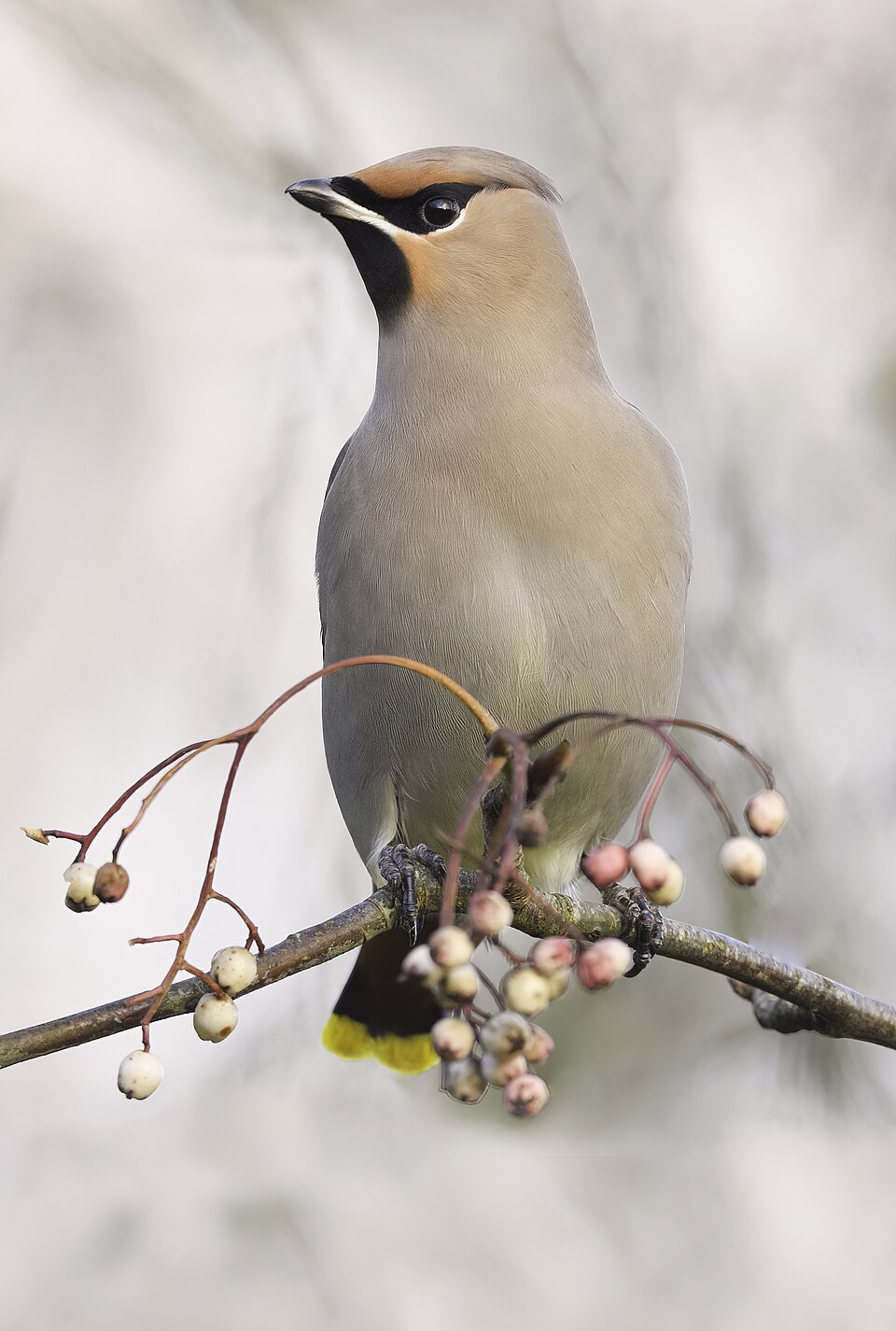 Jaseur boréal
En bref
The most reliable field mark between Red-backed Shrike and Bohemian Waxwing is the waxwing’s bold wing pattern: in all but juveniles, look for yellow and white markings plus red waxy tips on the secondaries, which are never present on shrikes. For immature birds, note that young shrikes are brown and heavily vermiculated, while first-winter waxwings lack the adult’s full wing pattern but still show some yellow and white in the wing and a short, square tail with a yellow tip. Structurally, shrikes are slimmer, longer-tailed, and often perch upright on exposed branches, while waxwings are chunkier, short-tailed, and have a prominent crest. In flight, waxwings move in tight flocks and show a starling-like jizz, while shrikes are more solitary and direct. If you see a bird with a black mask, check for the shrike’s rufous back and grey head versus the waxwing’s overall buff-grey and pointed crest.
Conseils d’identification
- Wing Pattern (all ages except juvenile waxwing): Bohemian Waxwing shows white and yellow markings on the wings and red waxy tips on the secondaries; Red-backed Shrike never shows any wing color patches. First-winter waxwings have reduced but still visible pale yellow or white edges to the primaries and a yellow tail tip.
- Tail Shape and Pattern: Waxwing has a short, square tail with a broad yellow tip; shrike has a longer, more graduated tail with a black-and-white pattern but never yellow.
- Crest: Waxwing always has a prominent pointed crest; shrike lacks any crest and has a smoothly rounded head.
- Facial Markings: Both have a black mask, but shrike’s is through the eye and set off by a grey head (male) or brown (female/immature); waxwing’s mask is broader, with a black throat and white lines above and below the eye, plus cinnamon highlights.
- Back Color: Male shrike has a distinctive rufous back; waxwing is uniformly buff-grey above, never rufous.
- Underparts: Shrike’s underparts are pinkish (male) or buff and vermiculated (female/immature); waxwing’s are smooth, with a rich chestnut belly and no barring.
- Juvenile/First-winter Confusion: Young shrikes are brown and heavily barred above and below, with no wing or tail color; first-winter waxwings are duller but still show some yellow/white in the wings and a yellow tail tip.
- Structure: Shrike is slim, long-tailed, and upright; waxwing is chunky, short-tailed, and compact, with a thick neck and large head.
- Perching Behavior: Shrikes perch alone or in pairs on exposed branches or wires; waxwings are often in flocks, perched close together in berry trees.
- Flight Jizz: Waxwings fly in tight, fast-moving flocks with a starling-like flight; shrikes are solitary and have a more typical, direct passerine flight.
- Habitat: Shrikes are found in open countryside, hedgerows, and scrub; waxwings are in forests (breeding) or urban/parkland with berry trees (winter).
- Bill: Shrike has a hooked, predatory bill; waxwing’s bill is short and straight, suited for berries.
- Impaling Behavior: Only shrikes impale prey on thorns or wire; waxwings do not.
- Seasonal Context: In Western Europe, shrikes are present in summer (breeding), waxwings appear in winter during irruptions.
- Size: Waxwing is larger and heavier than shrike, with a chunkier build and shorter tail.
Taille
Bohemian Waxwing is noticeably larger and heavier: 19–23 cm in length and averaging 55 g, compared to the Red-backed Shrike’s 16–18 cm and lighter build [wikipedia][avonet]. Waxwings are starling-sized, with a short tail and broad wings, while shrikes are slimmer, longer-tailed, and more slender overall. The difference is especially apparent when both are seen perched: waxwings look chunky and compact, shrikes more streamlined and upright.
Plumage
Age-specific wing pattern is the fastest separator.
-
Juvenile/First-winter: Young Red-backed Shrikes are brown above with heavy vermiculations (fine barring) on both upperparts and underparts; their wings and tail lack any bright markings. First-winter Bohemian Waxwings are duller than adults but still show a pale yellow or white edge to the primaries and a yellow tail tip, though the white 'tick mark' on the wing is faint or absent. Juvenile waxwings (seen only on breeding grounds) are streaky below, lack the black throat and mask, and have a duller overall look, but still retain a short, square tail and some wing patterning.
-
Adult: Male Red-backed Shrike has a rufous back, grey head, black mask through the eye, pinkish underparts, and a black-and-white tail pattern. Females and immatures are browner and vermiculated but never show wing or tail color patches. Bohemian Waxwing adults are buff-grey with a prominent crest, black mask and throat, white and yellow wing markings, red waxy tips on the secondaries, and a broad yellow tail tip. The underparts are smooth and chestnut on the belly, with cinnamon around the mask.
-
In flight: Waxwings flash white and yellow in the wings and a yellow tail tip; shrikes show plain wings and a longer, more graduated tail with a black-and-white pattern.
Comportement
Red-backed Shrikes hunt from exposed perches, sitting upright and scanning for prey, often impaling food on thorns or wire. They are usually solitary or in pairs, rarely forming flocks. Bohemian Waxwings are highly gregarious in winter, moving in tight, noisy flocks, feeding on berries, and often clambering through trees and bushes. In flight, waxwings are fast and direct, resembling starlings, while shrikes have a more typical passerine flight and are less likely to be seen in groups.
Habitat
Red-backed Shrikes breed in open country with scattered bushes, hedgerows, or scrub, often in farmland or heathland. They prefer prominent perches in open landscapes. Bohemian Waxwings breed in northern forests and, in winter, move to urban parks, gardens, and areas with abundant berry-bearing trees. Waxwings are more likely to be seen in towns or cities during irruptions, especially in winter, while shrikes avoid dense urban areas and stick to rural or semi-open habitats.
Pie-grièche écorcheur · Jaseur boréal · Mes oiseaux difficiles