

Motmot

Séricorne à bec blanc vs Séricorne fardé

Aethomyias spilodera contre Aethomyias perspicillatus

Faire un quiz avec Séricorne à bec blanc et Séricorne fardé

Séricorne à bec blanc (Aethomyias spilodera) Séricorne à bec blanc
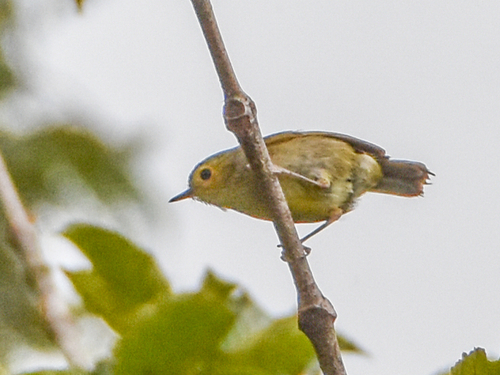
Séricorne fardé (Aethomyias perspicillatus) Séricorne fardé

Médias

Chargement…

En bref

The most reliable way to separate Pale-billed Scrubwren from Buff-faced Scrubwren is by habitat: Pale-billed is found in lowland forests of New Guinea and the Aru Islands, while Buff-faced is restricted to the highland montane forests of New Guinea. In the field, plumage differences are poorly documented, so context and location are essential. If you encounter a scrubwren in the lowlands, it is almost certainly Pale-billed; in the highlands, Buff-faced is the likely candidate. Structural and vocal differences are not described in available sources, so rely on elevation and forest type for confident identification.

Conseils d’identification

  1. Habitat and Elevation: This is the most reliable separation. Pale-billed Scrubwren occurs in lowland forests (Aru Islands and New Guinea), while Buff-faced Scrubwren is confined to highland montane forests in New Guinea. Always check your elevation and forest type.
  2. Geographic Range: If you are on the Aru Islands, only Pale-billed Scrubwren is present. In New Guinea, use elevation as your main guide.
  3. Plumage: There are no documented field marks or age-specific plumage differences between these two species. Do not rely on color, wing pattern, or facial markings for separation.
  4. Structure: No structural differences (bill shape, tail length, wing formula) are described in the sources. Both are typical small scrubwrens.
  5. Size: Only Pale-billed Scrubwren has a published mass (11.7 g), but this is not likely to be useful in the field, as both species are similar in size.
  6. Behavior: No behavioral differences are noted. Both species behave like typical scrubwrens in dense undergrowth.
  7. Vocalizations: No information is available on voice differences. Do not use song or call for separation unless you have local experience.
  8. Season and Sex: No seasonal or sex-based plumage differences are described for either species. Identification by season or sex is not possible.
  9. Flight vs Perched Views: There are no notes on distinctive flight or perched features for either species. Both are likely to be seen skulking in dense vegetation.
  10. Pitfalls: The main pitfall is attempting to separate these species by appearance alone. Always prioritize habitat and elevation over visual marks.
  11. When Uncertain: If you are unsure of your elevation or habitat, it may not be possible to confidently assign a record to species. Document the location and habitat for later review.
  12. Quiz Context: If you mixed these up in a quiz, the question likely hinged on habitat or range, not field marks. Remember that for these two, context is everything.
  13. Recent Taxonomy: Both species were formerly in Sericornis and are now in Aethomyias, but this does not affect field identification.
  14. Local Abundance: No eBird or community data is available, but expect Pale-billed in the lowlands and Buff-faced in the highlands.
  15. Summary Tip: When in doubt, use habitat and elevation as your primary clues. Appearance alone will not reliably separate these two scrubwrens.

Taille

Only Pale-billed Scrubwren has a documented average body mass (11.7 g [wikidata]), but there is no published mass for Buff-faced Scrubwren. Both are small acanthizids and are likely similar in size, so size is not a reliable field mark for separation.

Plumage

No detailed plumage differences are described between these two species in the available sources. Both have been recently reclassified into the genus Aethomyias, and there are no notes on age-specific wing patterns, juvenile or immature plumage, or distinctive adult features that can be used in the field. Therefore, plumage should not be relied upon for identification between these two species.

Comportement

No behavioral differences are documented between Pale-billed and Buff-faced Scrubwrens in the available sources. Both are typical scrubwrens of forest undergrowth, and behavior is not a useful field mark for separating these species.

Habitat

Habitat is the key distinguishing factor: Pale-billed Scrubwren is found in subtropical or tropical moist lowland forests of New Guinea and the Aru Islands, while Buff-faced Scrubwren is restricted to subtropical or tropical moist montane (highland) forests in New Guinea. If you are birding in lowland areas, expect Pale-billed; in montane or highland forests, expect Buff-faced. Their ranges do not typically overlap in elevation.

Envoyer une meilleure description

Utilise les mêmes sections que la comparaison. Ton texte est publié tout de suite.

The most reliable way to separate Pale-billed Scrubwren from Buff-faced Scrubwren is by habitat: Pale-billed is found in lowland forests of New Guinea and the Aru Islands, while Buff-faced is restricted to the highland montane forests of New Guinea. In the field, plumage differences are poorly documented, so context and location are essential. If you encounter a scrubwren in the lowlands, it is almost certainly Pale-billed; in the highlands, Buff-faced is the likely candidate. Structural and vocal differences are not described in available sources, so rely on elevation and forest type for confident identification.

  1. Habitat and Elevation: This is the most reliable separation. Pale-billed Scrubwren occurs in lowland forests (Aru Islands and New Guinea), while Buff-faced Scrubwren is confined to highland montane forests in New Guinea. Always check your elevation and forest type.
  2. Geographic Range: If you are on the Aru Islands, only Pale-billed Scrubwren is present. In New Guinea, use elevation as your main guide.
  3. Plumage: There are no documented field marks or age-specific plumage differences between these two species. Do not rely on color, wing pattern, or facial markings for separation.
  4. Structure: No structural differences (bill shape, tail length, wing formula) are described in the sources. Both are typical small scrubwrens.
  5. Size: Only Pale-billed Scrubwren has a published mass (11.7 g), but this is not likely to be useful in the field, as both species are similar in size.
  6. Behavior: No behavioral differences are noted. Both species behave like typical scrubwrens in dense undergrowth.
  7. Vocalizations: No information is available on voice differences. Do not use song or call for separation unless you have local experience.
  8. Season and Sex: No seasonal or sex-based plumage differences are described for either species. Identification by season or sex is not possible.
  9. Flight vs Perched Views: There are no notes on distinctive flight or perched features for either species. Both are likely to be seen skulking in dense vegetation.
  10. Pitfalls: The main pitfall is attempting to separate these species by appearance alone. Always prioritize habitat and elevation over visual marks.
  11. When Uncertain: If you are unsure of your elevation or habitat, it may not be possible to confidently assign a record to species. Document the location and habitat for later review.
  12. Quiz Context: If you mixed these up in a quiz, the question likely hinged on habitat or range, not field marks. Remember that for these two, context is everything.
  13. Recent Taxonomy: Both species were formerly in Sericornis and are now in Aethomyias, but this does not affect field identification.
  14. Local Abundance: No eBird or community data is available, but expect Pale-billed in the lowlands and Buff-faced in the highlands.
  15. Summary Tip: When in doubt, use habitat and elevation as your primary clues. Appearance alone will not reliably separate these two scrubwrens.

Only Pale-billed Scrubwren has a documented average body mass (11.7 g [wikidata]), but there is no published mass for Buff-faced Scrubwren. Both are small acanthizids and are likely similar in size, so size is not a reliable field mark for separation.

No detailed plumage differences are described between these two species in the available sources. Both have been recently reclassified into the genus Aethomyias, and there are no notes on age-specific wing patterns, juvenile or immature plumage, or distinctive adult features that can be used in the field. Therefore, plumage should not be relied upon for identification between these two species.

No behavioral differences are documented between Pale-billed and Buff-faced Scrubwrens in the available sources. Both are typical scrubwrens of forest undergrowth, and behavior is not a useful field mark for separating these species.

Habitat is the key distinguishing factor: Pale-billed Scrubwren is found in subtropical or tropical moist lowland forests of New Guinea and the Aru Islands, while Buff-faced Scrubwren is restricted to subtropical or tropical moist montane (highland) forests in New Guinea. If you are birding in lowland areas, expect Pale-billed; in montane or highland forests, expect Buff-faced. Their ranges do not typically overlap in elevation.

Abandonner tes modifications ?

Tu as des modifications non enregistrées. Si tu pars maintenant, elles seront perdues.

Séricorne à bec blanc · Séricorne fardé · Mes oiseaux difficiles