

Pipit à long bec vs Serin cini
Anthus similis contre Serinus serinus
Faire un quiz avec Pipit à long bec et Serin cini
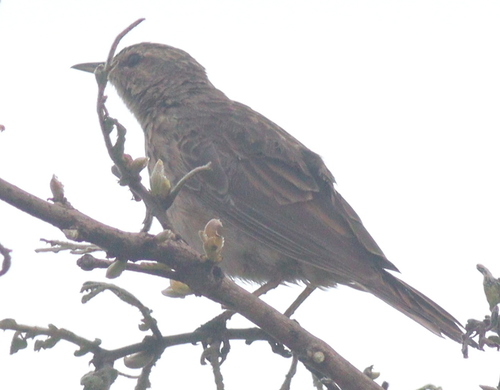 Pipit à long bec
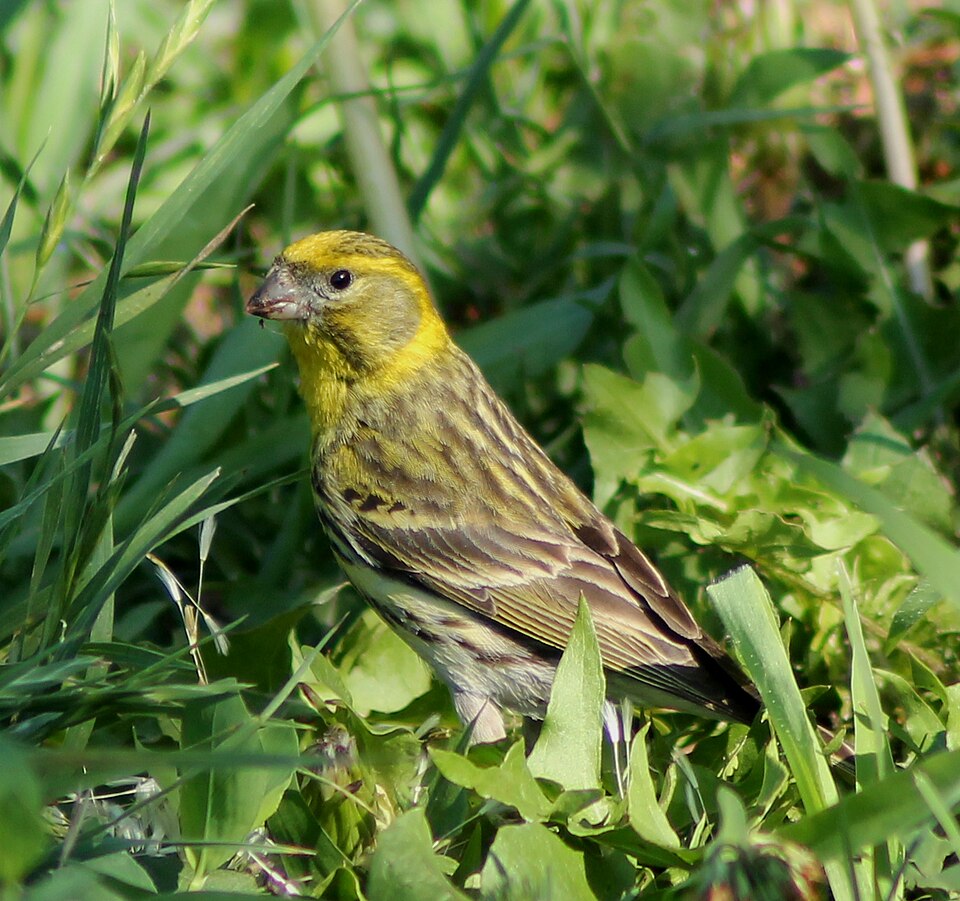 Serin cini
En bref
The most reliable way to separate Long-billed Pipit from European Serin is by structure: the pipit is much larger, longer-tailed, and has a long, dark bill, while the serin is tiny, short-tailed, and finch-billed. In all plumages, Long-billed Pipit is sandy-grey above and pale below, lacking the bright yellow tones and heavy streaking of serin. In flight or perched, serin’s yellow rump and wing bars are distinctive, especially in males, while pipit is plain and lacks any yellow. Voice is also very different: pipit gives a 'chupp' call and a slow, varied song, while serin’s song is a rapid buzzing trill. Even at a distance, size, tail length, and overall coloration are usually enough to avoid confusion.
Conseils d’identification
- Size and shape: Long-billed Pipit is much larger and longer-tailed than European Serin; this is obvious even at a distance or in flight. Serin is tiny, compact, and short-tailed.
- Bill shape: Pipit has a long, slender, dark bill typical of insectivores; serin has a short, conical finch bill for seed eating. Bill shape is diagnostic at close range.
- Tail length: Pipit’s tail is noticeably long and often wagged; serin’s tail is short and square.
- Plumage color: Pipit is sandy-grey above and pale below, with little or no streaking and no yellow. Serin is greenish-grey above, heavily streaked, with a bright yellow rump and yellow in the face, breast, wing bars, and tail sides (especially males).
- Wing bars: Serin shows yellow wing bars (best in males), absent in pipit.
- Rump color: Serin’s yellow rump is conspicuous in flight and when perched; pipit’s rump is plain and matches the back.
- Underpart streaking: Serin has heavy streaking on breast and flanks; pipit is plain or only faintly streaked below.
- Sex differences: Male serins are brighter yellow; females and juveniles are duller but still show yellow rump and streaking. Pipit shows little sexual dimorphism.
- Behavior: Pipit walks or runs on the ground, rarely perches in trees. Serin is often seen flitting between trees and shrubs, and rarely spends time on the ground.
- Flock size: Serin often in small flocks, especially outside breeding season; pipit usually alone or in pairs.
- Habitat: Pipit in open, rocky, grassy slopes; serin in woodland, gardens, cultivated areas.
- Song: Pipit’s song is slow, churring, and varied; serin’s is a rapid, buzzing trill.
- Call: Pipit gives a 'chupp' call; serin’s calls are higher-pitched and more finch-like.
- Pitfalls: Juvenile serins are duller but still show yellow rump and streaking; pipit never shows yellow or wing bars. In poor light, serin’s yellow may be less obvious, but streaking and size still separate them.
- When in doubt: If the bird is streaky with any yellow, especially on rump or face, it is serin; if plain, sandy, and long-tailed, it is pipit.
Taille
Long-billed Pipit is a medium-large pipit, around 16–17.5 cm long and weighing about 23 g [wikidata], with a noticeably long tail and elongated body. European Serin is much smaller, only 11–12 cm in length, and is the smallest European finch; it is compact, short-tailed, and much lighter-bodied. The difference in size and proportions is striking in the field, even at a distance or in mixed flocks.
Plumage
No age-specific upperwing or flight marks are described for either species, but overall plumage is highly contrasting. Long-billed Pipit of all ages is sandy-grey above and whitish or pale buff below, with little streaking and no bright colors. European Serin, even in juveniles, shows dark-streaked greyish-green upperparts, a yellow rump, and heavy streaking below; males are brighter yellow on face, breast, wing bars, and tail sides. Serin’s wing bars and yellow rump are visible in flight and when perched. Pipit lacks any yellow, wing bars, or strong streaking. In summary: pipit is plain and earth-toned, serin is streaky with obvious yellow highlights.
Comportement
Long-billed Pipit is typically solitary or in pairs, walking or running on the ground in open, rocky slopes with low vegetation. Its flight is strong and direct. European Serin is much more active and often conspicuous, frequently seen in small flocks outside breeding season, flitting between shrubs and trees, and often feeding in mixed finch groups. Serin is more arboreal, while pipit is almost always on the ground.
Habitat
Long-billed Pipit favors dry, open slopes with rocks and sparse vegetation, usually away from dense trees or cultivation. European Serin prefers open woodland, cultivated areas, and gardens, often with some conifers or shrubs, and is more likely to be found in areas with trees and human habitation. If you see the bird in a rocky, treeless landscape, pipit is more likely; in gardens, orchards, or woodland edges, serin is expected.
Voix
Long-billed Pipit gives a sharp 'chupp' call, reminiscent of a desert lark, and its song is slow and varied: 'sri...churr...sri...churr…'. European Serin’s song is a rapid, buzzing trill, much more musical and familiar in Mediterranean regions. The difference is clear: pipit’s song is slow and churring, serin’s is fast and buzzy.