

Colombe à front gris vs Guira cantara
Leptotila rufaxilla contre Guira guira
Faire un quiz avec Colombe à front gris et Guira cantara
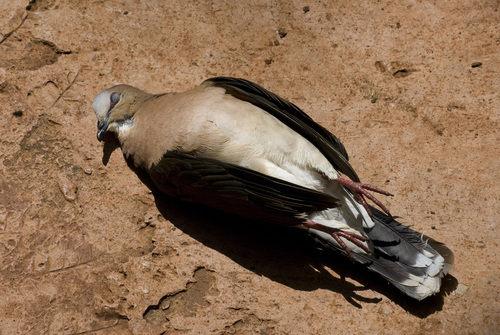 Colombe à front gris
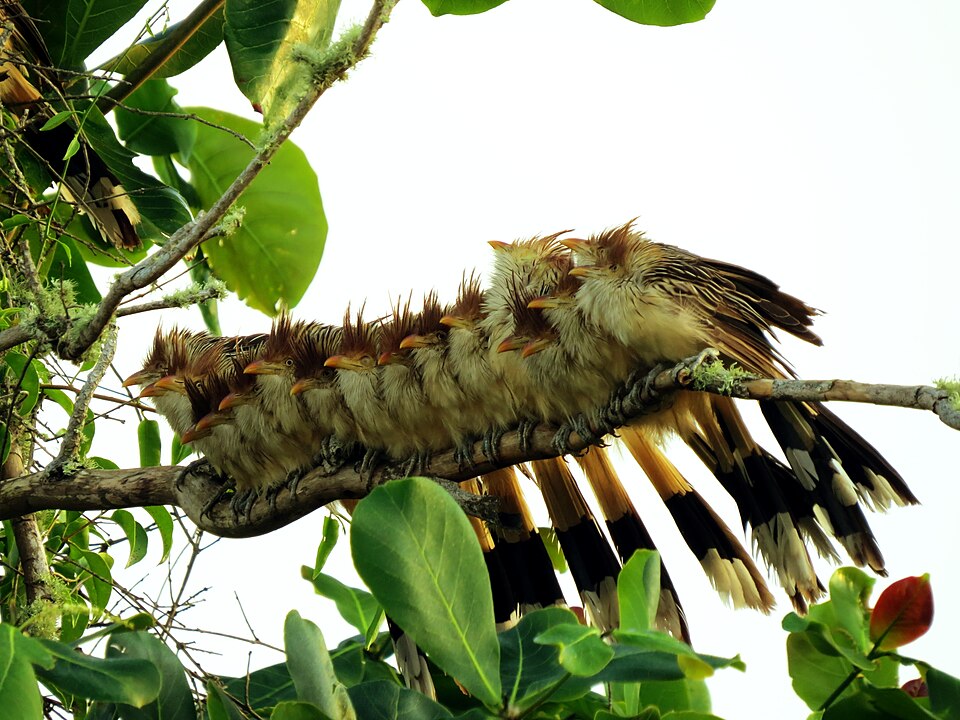 Guira cantara
En bref
The most reliable field mark to separate Grey-fronted Dove from Guira Cuckoo is overall structure and posture: the dove is compact, with a short neck and rounded wings, while the cuckoo is lanky, with a long tail, prominent crest, and a more horizontal stance. Juvenile Grey-fronted Doves show rusty-edged upperparts and barred breasts, unlike any Guira Cuckoo. In flight, the cuckoo's long, broad tail with a white tip and its streaked upperparts are distinctive, while the dove shows a more uniform olive-brown back and white-tipped outer tail feathers. Vocalizations are also completely different, with the Guira Cuckoo giving loud, shrill, wailing calls, and the dove being much quieter.
Conseils d’identification
- Juvenile plumage: Look for rusty-edged upperparts and barred breast in juvenile Grey-fronted Dove; Guira Cuckoo juveniles lack these features and resemble adults.
- Tail shape and length: Guira Cuckoo has a very long, broad, dark brown tail with a bold white tip, often held fanned or drooped; Grey-fronted Dove has a shorter, rounded tail with blackish outer feathers and white tips, but the tail is never as long or as prominent as the cuckoo's.
- Crest: Only Guira Cuckoo has a prominent orange-rufous crest, which is often raised and very visible; Grey-fronted Dove lacks any crest.
- Facial skin and eye-ring: Grey-fronted Dove shows a bare red eye-ring surrounded by pinkish white feathers; Guira Cuckoo has a thin featherless yellow eye-ring, and the eye itself is yellow to orange.
- Bill color and shape: Dove's bill is black and short; cuckoo's bill is yellow to orange, longer, and slightly downcurved.
- Upperparts pattern: Dove is olive-brown above with faint bronze/purple on mantle and no strong streaking; cuckoo is dark brown above with heavy white streaking.
- Underparts color: Dove has a pinkish white throat, greyish pink breast, and white belly; cuckoo is whitish-buff below, with no pinkish tones.
- Posture and jizz: Dove is compact, short-necked, and rounded; cuckoo is lanky, long-tailed, and often appears stretched out, especially when perched.
- Flight style: Dove flies strongly and directly with rapid wingbeats; cuckoo is a weak flier, often gliding or making short, labored flights.
- Social behavior: Guira Cuckoo is almost always in noisy groups; Grey-fronted Dove is solitary or in pairs and very quiet.
- Habitat context: Open country, parks, or gardens favor cuckoo; dense forest or woodland favors dove.
- Vocalizations: Loud, shrill, wailing calls indicate Guira Cuckoo; soft cooing is typical of Grey-fronted Dove.
- Leg color: Dove has red legs and feet; cuckoo has dark gray legs.
- Sex differences: Female doves are browner and more olive than males, but this is subtle; Guira Cuckoo sexes are nearly identical, with females only slightly larger.
- Odor: Guira Cuckoo reportedly gives off a strong, pungent odor, which is unique among these two, though not a practical field mark unless handling the bird.
Taille
Guira Cuckoo is notably longer (about 34 cm) than Grey-fronted Dove (about 28 cm), but their weights are similar (dove: 115–183 g; cuckoo: ~134 g). The cuckoo's extra length is almost entirely due to its long, broad tail, which gives it a lankier, more stretched appearance compared to the dove's compact, rounded shape. In the field, the cuckoo will often look larger and more elongated, especially when perched or gliding.
Plumage
- Juvenile/immature birds: Juvenile Grey-fronted Doves have rusty-edged upperparts and rust/drab brown bars on the breast, which are never shown by Guira Cuckoo at any age. Juvenile cuckoos look very similar to adults, lacking strong age-specific marks.
- Adults: Grey-fronted Dove adults have olive-brown upperparts with faint bronze or purplish on the mantle, a grayish to bluish forehead, and a grayish purple nape with iridescence. Their face is buff to pinkish buff, with a pinkish white throat and a bare red eye-ring surrounded by pinkish white feathers. The tail is olive-brown centrally, with blackish outer feathers tipped white. Guira Cuckoo adults have dark brown upperparts heavily streaked with white, a prominent orange-rufous crest, and a long, broad, dark brown tail with a white tip. Their underparts and rump are whitish-buff, and the eye is yellow to orange with a thin featherless yellow ring. The cuckoo's plumage is much more patterned and contrasting, especially on the head and tail, compared to the dove's more uniform and subtle tones.
Comportement
Guira Cuckoo is highly gregarious, often seen in noisy flocks, gliding or hopping between perches, and foraging both in trees and on the ground. It is not a strong flier and rarely flies long distances, preferring short, direct flights or glides. Grey-fronted Dove is typically solitary or in pairs, walking quietly on the forest floor or low perches, and is much more secretive and inconspicuous. The dove's flight is direct and strong, with rapid wingbeats, while the cuckoo's flight is less adept and more labored.
Habitat
Guira Cuckoo is found in open and semi-open habitats, including suburban parks, gardens, and deforested areas throughout eastern and southeastern South America. It is common in human-altered landscapes. Grey-fronted Dove prefers more forested environments, being found in tropical forests and woodlands, and is less likely to be seen in open or suburban settings. Seeing a bird in a flock in an open area strongly favors Guira Cuckoo; a lone bird in dense cover is more likely a dove.
Voix
Guira Cuckoo is extremely vocal, producing long, shrill, wailing calls that are loud and distinctive, often heard before the bird is seen. Grey-fronted Dove is much quieter, with soft, low cooing typical of doves, and is unlikely to be mistaken for the cuckoo by sound alone.
Colombe à front gris · Guira cantara · Mes oiseaux difficiles