

Motmot

Traquet de Chypre vs Traquet deuil

Oenanthe cypriaca contre Oenanthe lugens

Faire un quiz avec Traquet de Chypre et Traquet deuil
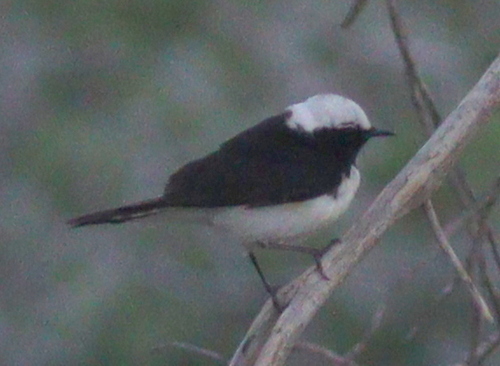
Traquet de Chypre (Oenanthe cypriaca) Traquet de Chypre
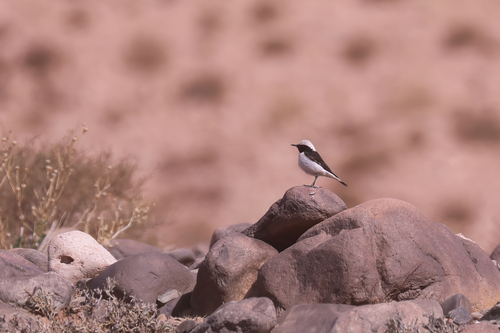
Traquet deuil (Oenanthe lugens) Traquet deuil

Médias

Chargement…

En bref

The most reliable field mark to separate Cyprus Wheatear from Mourning Wheatear is the head and back pattern: Cyprus Wheatear shows more extensive black on the head and back, with both sexes looking alike, while Mourning Wheatear has a striking contrast of a white crown, nape, chest, and belly against a black head and back, with a distinctive inverted 'T' pattern on the tail. In flight, Mourning Wheatear reveals a bold white 'flag' on the wing bases, not shown by Cyprus Wheatear. Cyprus Wheatear is endemic to Cyprus and is the only wheatear there in summer, while Mourning Wheatear is widespread in arid regions of North Africa and the Middle East. Juvenile and female Mourning Wheatears can be browner, but Cyprus Wheatear remains more uniformly dark above. Song and habitat preference also differ, but plumage and tail pattern are the most practical field marks.

Conseils d’identification

  1. Head and Crown Pattern: Mourning Wheatear (adult male) has a striking white crown and nape contrasting with a black face and back; Cyprus Wheatear has a more uniformly dark head and back, with no white crown. This is visible in both perched and flying birds, and works for most Mourning Wheatear subspecies except some females and immatures.
  2. Sexual Dimorphism: Cyprus Wheatear shows no sexual dimorphism—males and females look alike. Mourning Wheatear males are much more contrasting than females, which can be browner or greyer, especially in the Maghreb and Basalt forms.
  3. Tail Pattern: Mourning Wheatear's tail is white with a black tip and central shaft, forming an inverted 'T'—very crisp and diagnostic when seen well. Cyprus Wheatear's tail is darker overall, with more black extending up the tail, and lacks the neat 'T' pattern.
  4. Wing Pattern in Flight: Mourning Wheatear shows a bold white 'flag' at the base of the flight feathers in flight, while Cyprus Wheatear does not display this feature. This is especially useful for birds flushed or seen in active flight.
  5. Back Color: Mourning Wheatear has a black or blackish back (male), contrasting with white underparts. Cyprus Wheatear is more uniformly dark above, with less contrast between back and head.
  6. Underparts: Mourning Wheatear has white underparts (chest and belly), sharply separated from the black upperparts in males. Cyprus Wheatear is less contrasting, with underparts not as cleanly white or sharply demarcated.
  7. Habitat Context: Cyprus Wheatear is found only in Cyprus in summer, often in wooded or semi-wooded habitats, and perches high. Mourning Wheatear is found in arid, rocky, or desert habitats outside Cyprus. Habitat is a strong clue if location is known.
  8. Behavior: Cyprus Wheatear often uses high song perches (5–10 m) and flycatcher-like sallying; Mourning Wheatear is more ground-oriented, perching on rocks or low bushes.
  9. Song: Cyprus Wheatear's song is a high-pitched, insect-like buzz, unlike any Mourning Wheatear vocalization. If you hear this, it is diagnostic for Cyprus Wheatear.
  10. Female/Immature Pitfalls: Female and immature Mourning Wheatears can be duller and browner, but still show the white crown and tail pattern. Cyprus Wheatear remains more uniformly dark above and lacks the white crown.
  11. Size: Both species are similar in size and structure; size is not a reliable separator in the field.
  12. Seasonality: In Cyprus during the breeding season, any wheatear is almost certainly Cyprus Wheatear. Mourning Wheatear does not breed in Cyprus.
  13. Subspecies Variation: Some Mourning Wheatear subspecies (e.g., Basalt, Maghreb) have more extensive black or brown in females, which can reduce contrast, but the white crown and tail pattern remain key.
  14. Jizz: Cyprus Wheatear may appear more active and arboreal, often seen flycatching from high perches, while Mourning Wheatear is more likely to be seen on the ground or low rocks.
  15. Overlap: There is minimal range overlap; vagrancy is rare. If you are outside Cyprus, especially in arid regions, Mourning Wheatear is far more likely.

Taille

Both species are similar in size, with Cyprus Wheatear measuring 14–15 cm and Mourning Wheatear 14–16 cm in length. Mourning Wheatear is slightly heavier (19–25 g), but this difference is not useful in the field. Structurally, both are typical small wheatears with no dramatic differences in bill or tail length noted in the sources.

Plumage

Juvenile and immature plumages are not described in detail for Cyprus Wheatear, but both sexes and ages are said to look similar, lacking sexual dimorphism. Mourning Wheatear, by contrast, shows subtle sexual dimorphism: males have a white crown and underparts with a black head, neck, and back, while females and some subspecies (especially Maghreb and Basalt forms) can be browner or greyer, but still show the white crown and belly. In flight, Mourning Wheatear displays a bold white base to the flight feathers, creating a white 'flag' on the wing, and the tail shows a clear inverted 'T' pattern (white tail with black tip and central shaft). Cyprus Wheatear has more black on the tail and back than Mourning Wheatear, but lacks the crisp white crown and 'flag' wing pattern of Mourning. Both have white in the tail, but Cyprus Wheatear's tail is darker overall. These contrasts apply to all ages, though female and immature Mourning Wheatears may be duller.

Comportement

Cyprus Wheatear is notably arboreal for a wheatear, often perching high (5–10 m) and using aerial sallying and perch-pounce feeding, sometimes reminiscent of a flycatcher. Mourning Wheatear is more typical of open, arid habitats, often seen on rocks or low perches, and does not show the same arboreal tendencies. Cyprus Wheatear is more likely to be seen in or near woodland, while Mourning Wheatear prefers open, rocky, or desert-like areas.

Habitat

Cyprus Wheatear breeds only in Cyprus and is the only wheatear there in summer, favoring woodland edges, open pine forests, and areas with scattered trees and bushes. It is the most arboreal wheatear in the region. Mourning Wheatear is found in arid and semi-arid regions across North Africa and the Middle East, preferring open, rocky, or desert habitats with sparse vegetation. If you see a wheatear in a forested or wooded area in Cyprus, it is almost certainly Cyprus Wheatear; if in a rocky desert outside Cyprus, Mourning Wheatear is much more likely.

Voix

Cyprus Wheatear has a distinctive song: a series of high-pitched, insect-like buzzing bursts, very different from the song of Mourning Wheatear. Song is a strong separator if heard, as Cyprus Wheatear's vocalizations are unique among wheatears and do not resemble Mourning Wheatear's more typical wheatear song.

Envoyer une meilleure description

Utilise les mêmes sections que la comparaison. Ton texte est publié tout de suite.

The most reliable field mark to separate Cyprus Wheatear from Mourning Wheatear is the head and back pattern: Cyprus Wheatear shows more extensive black on the head and back, with both sexes looking alike, while Mourning Wheatear has a striking contrast of a white crown, nape, chest, and belly against a black head and back, with a distinctive inverted 'T' pattern on the tail. In flight, Mourning Wheatear reveals a bold white 'flag' on the wing bases, not shown by Cyprus Wheatear. Cyprus Wheatear is endemic to Cyprus and is the only wheatear there in summer, while Mourning Wheatear is widespread in arid regions of North Africa and the Middle East. Juvenile and female Mourning Wheatears can be browner, but Cyprus Wheatear remains more uniformly dark above. Song and habitat preference also differ, but plumage and tail pattern are the most practical field marks.

  1. Head and Crown Pattern: Mourning Wheatear (adult male) has a striking white crown and nape contrasting with a black face and back; Cyprus Wheatear has a more uniformly dark head and back, with no white crown. This is visible in both perched and flying birds, and works for most Mourning Wheatear subspecies except some females and immatures.
  2. Sexual Dimorphism: Cyprus Wheatear shows no sexual dimorphism—males and females look alike. Mourning Wheatear males are much more contrasting than females, which can be browner or greyer, especially in the Maghreb and Basalt forms.
  3. Tail Pattern: Mourning Wheatear's tail is white with a black tip and central shaft, forming an inverted 'T'—very crisp and diagnostic when seen well. Cyprus Wheatear's tail is darker overall, with more black extending up the tail, and lacks the neat 'T' pattern.
  4. Wing Pattern in Flight: Mourning Wheatear shows a bold white 'flag' at the base of the flight feathers in flight, while Cyprus Wheatear does not display this feature. This is especially useful for birds flushed or seen in active flight.
  5. Back Color: Mourning Wheatear has a black or blackish back (male), contrasting with white underparts. Cyprus Wheatear is more uniformly dark above, with less contrast between back and head.
  6. Underparts: Mourning Wheatear has white underparts (chest and belly), sharply separated from the black upperparts in males. Cyprus Wheatear is less contrasting, with underparts not as cleanly white or sharply demarcated.
  7. Habitat Context: Cyprus Wheatear is found only in Cyprus in summer, often in wooded or semi-wooded habitats, and perches high. Mourning Wheatear is found in arid, rocky, or desert habitats outside Cyprus. Habitat is a strong clue if location is known.
  8. Behavior: Cyprus Wheatear often uses high song perches (5–10 m) and flycatcher-like sallying; Mourning Wheatear is more ground-oriented, perching on rocks or low bushes.
  9. Song: Cyprus Wheatear's song is a high-pitched, insect-like buzz, unlike any Mourning Wheatear vocalization. If you hear this, it is diagnostic for Cyprus Wheatear.
  10. Female/Immature Pitfalls: Female and immature Mourning Wheatears can be duller and browner, but still show the white crown and tail pattern. Cyprus Wheatear remains more uniformly dark above and lacks the white crown.
  11. Size: Both species are similar in size and structure; size is not a reliable separator in the field.
  12. Seasonality: In Cyprus during the breeding season, any wheatear is almost certainly Cyprus Wheatear. Mourning Wheatear does not breed in Cyprus.
  13. Subspecies Variation: Some Mourning Wheatear subspecies (e.g., Basalt, Maghreb) have more extensive black or brown in females, which can reduce contrast, but the white crown and tail pattern remain key.
  14. Jizz: Cyprus Wheatear may appear more active and arboreal, often seen flycatching from high perches, while Mourning Wheatear is more likely to be seen on the ground or low rocks.
  15. Overlap: There is minimal range overlap; vagrancy is rare. If you are outside Cyprus, especially in arid regions, Mourning Wheatear is far more likely.

Both species are similar in size, with Cyprus Wheatear measuring 14–15 cm and Mourning Wheatear 14–16 cm in length. Mourning Wheatear is slightly heavier (19–25 g), but this difference is not useful in the field. Structurally, both are typical small wheatears with no dramatic differences in bill or tail length noted in the sources.

Juvenile and immature plumages are not described in detail for Cyprus Wheatear, but both sexes and ages are said to look similar, lacking sexual dimorphism. Mourning Wheatear, by contrast, shows subtle sexual dimorphism: males have a white crown and underparts with a black head, neck, and back, while females and some subspecies (especially Maghreb and Basalt forms) can be browner or greyer, but still show the white crown and belly. In flight, Mourning Wheatear displays a bold white base to the flight feathers, creating a white 'flag' on the wing, and the tail shows a clear inverted 'T' pattern (white tail with black tip and central shaft). Cyprus Wheatear has more black on the tail and back than Mourning Wheatear, but lacks the crisp white crown and 'flag' wing pattern of Mourning. Both have white in the tail, but Cyprus Wheatear's tail is darker overall. These contrasts apply to all ages, though female and immature Mourning Wheatears may be duller.

Cyprus Wheatear is notably arboreal for a wheatear, often perching high (5–10 m) and using aerial sallying and perch-pounce feeding, sometimes reminiscent of a flycatcher. Mourning Wheatear is more typical of open, arid habitats, often seen on rocks or low perches, and does not show the same arboreal tendencies. Cyprus Wheatear is more likely to be seen in or near woodland, while Mourning Wheatear prefers open, rocky, or desert-like areas.

Cyprus Wheatear breeds only in Cyprus and is the only wheatear there in summer, favoring woodland edges, open pine forests, and areas with scattered trees and bushes. It is the most arboreal wheatear in the region. Mourning Wheatear is found in arid and semi-arid regions across North Africa and the Middle East, preferring open, rocky, or desert habitats with sparse vegetation. If you see a wheatear in a forested or wooded area in Cyprus, it is almost certainly Cyprus Wheatear; if in a rocky desert outside Cyprus, Mourning Wheatear is much more likely.

Cyprus Wheatear has a distinctive song: a series of high-pitched, insect-like buzzing bursts, very different from the song of Mourning Wheatear. Song is a strong separator if heard, as Cyprus Wheatear's vocalizations are unique among wheatears and do not resemble Mourning Wheatear's more typical wheatear song.

Abandonner tes modifications ?

Tu as des modifications non enregistrées. Si tu pars maintenant, elles seront perdues.

Traquet de Chypre · Traquet deuil · Mes oiseaux difficiles