

Obispo Coronigualdo vs Tejedor Picogordo
Euplectes afer frente a Amblyospiza albifrons
Juega un quiz con Obispo Coronigualdo y Tejedor Picogordo
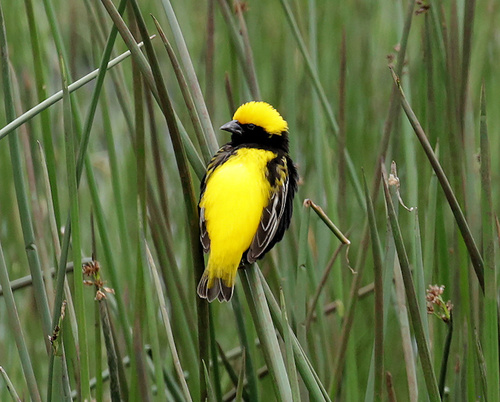 Obispo Coronigualdo
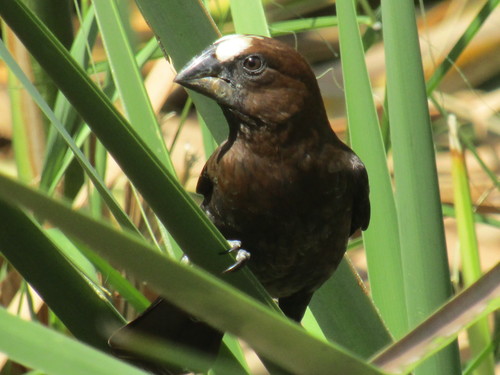 Tejedor Picogordo
En breve
La marca de campo más confiable entre el Obispo Coronigualdo y el Tejedor Picogordo es la estructura general y el tamaño del pico: el Tejedor Picogordo es mucho más grande y robusto, con un pico masivo y grueso, mientras que el Obispo Coronigualdo es un pájaro pequeño y compacto con un pico corto y cónico. En la temporada de cría, los obispos machos son strikingmente amarillos y negros, con una brillante corona amarilla, mientras que los Tejedores Picogordo nunca tienen colores tan vívidos. Los obispos no en cría y las hembras son de color marrón con rayas y pueden confundirse con otros tejedores, pero el Tejedor Picogordo aún se destaca por su tamaño y especialmente por su enorme pico. En vuelo o posado, el obispo es notablemente más pequeño y más delicado, mientras que el tejedor es robusto y con un pico grande.
Consejos de identificación
- Tamaño y forma del pico: El Tejedor Picogordo tiene un pico masivo, grueso y similar al de un pinzón, mucho más grande y pesado que el pico corto y cónico del Obispo Coronigualdo. Esta es la marca más confiable en todos los plumajes y edades.
- Tamaño y estructura del cuerpo: El obispo es un pájaro pequeño y compacto (alrededor de 14.5 g), mientras que el tejedor es mucho más robusto y largo. Si ves ambos juntos, la diferencia de tamaño es obvia.
- Plumaje del macho en cría: El macho del Obispo Coronigualdo en la temporada de cría es de un amarillo brillante con una cara, garganta y partes inferiores negras, y una corona amarilla vívida. El Tejedor Picogordo nunca muestra esta combinación de colores o intensidad.
- Color de la corona: Solo el obispo (macho en cría) tiene una corona amarilla brillante; el tejedor nunca muestra esta característica.
- Plumaje no en cría/hembras: Las hembras y los obispos no en cría son de color marrón en la parte superior con rayas oscuras y una ceja pálida, de color blanco sucio en la parte inferior con finas rayas. El Tejedor Picogordo es más sencillo, careciendo de rayas fuertes o una ceja pálida, y parece más uniforme.
- Color del pico: El macho en cría del obispo tiene un pico negro; los obispos no en cría y las hembras tienen un pico de color cuerno, al igual que el tejedor. El color del pico no es diagnóstico excepto en los obispos machos en cría.
- Ala y cola: El obispo tiene alas y cola marrones, pero estas no son distintivas en comparación con el tejedor. No se describe un patrón único en el ala superior para ninguna de las especies.
- Comportamiento: Los Tejedores Picogordo a menudo abanican y mueven sus colas y utilizan su pico para romper semillas de una manera notablemente enérgica. Los obispos son más propensos a ser vistos alimentándose de semillas de hierba o volando entre la hierba.
- Hábitat: Si se ve en cañaverales densos o pantanos, especialmente cerca de nidos distintivos en forma de globo, sospecha del Tejedor Picogordo. En pastizales abiertos, campos de malas hierbas o áreas agrícolas, es más probable que se vea al obispo.
- Estilo de vuelo: El obispo es rápido y ágil en vuelo, mientras que el tejedor es más pesado y directo.
- Vocalizaciones: Si escuchas una canción áspera y no musical, puede ser el Tejedor Picogordo, pero esta no es una marca de campo primaria.
- Dimorfismo sexual: El obispo es altamente dimórfico sexualmente en la temporada de cría; el tejedor es menos así, con ambos sexos careciendo de plumaje amarillo brillante o negro.
- Confusión de plumaje: Los obispos no en cría y las hembras pueden confundirse con otros tejedores, pero el enorme pico y el volumen del tejedor deberían prevenir la confusión con los obispos.
- Contexto: Si ves un pájaro en una colonia con nidos en forma de globo en cañas, es probable que sea un Tejedor Picogordo. Los obispos no construyen tales nidos.
- Trampas: Los obispos inmaduros y las hembras pueden confundirse con pequeños tejedores, pero siempre verifica el tamaño del pico y la estructura general del cuerpo: los obispos son delicados, los tejedores son robustos.
Tamaño
El Obispo Coronigualdo es un pequeño paseriforme, que pesa alrededor de 14.5 g [wikidata], y mide entre 95 y 105 mm de longitud [wikipedia]. En contraste, aunque no se da una masa precisa para el Tejedor Picogordo aquí, se describe como un tejedor grande y robusto con un pico particularmente grueso [wikipedia]. En el campo, el obispo parecerá mucho más pequeño, ligero y ágil, mientras que el tejedor es notablemente más robusto y pesado, con una cabeza y un pico desproporcionadamente grandes.
Plumaje
Los machos en cría del Obispo Coronigualdo son inconfundibles: muestran una brillante corona amarilla, frente y parte posterior de la cabeza, con una cara inferior negra, garganta, pecho y vientre, además de un amplio collar negro en la nuca, rabadilla amarilla, espalda y parche en el hombro, y alas y cola marrones [wikipedia]. Las hembras y los machos no en cría son de color marrón pálido en la parte superior con rayas más oscuras, una ceja pálida y partes inferiores de color blanco sucio con finas rayas oscuras en el pecho y los flancos. En contraste, los Tejedores Picogordo no muestran ningún patrón brillante amarillo o negro; su plumaje es más apagado y carece del contraste agudo o la corona amarilla del obispo. No se describe un patrón específico en el ala superior para ninguna de las especies, por lo que la separación se basa en la coloración y estructura general. En todos los plumajes, el obispo es más colorido (en machos en cría) o más finamente rayado (en hembras/no en cría), mientras que el tejedor es más sencillo y se define por su enorme pico.
Comportamiento
Los Tejedores Picogordo a menudo se ven abanicar y mover sus colas y son conocidos por su robusto comportamiento de romper semillas utilizando sus fuertes mandíbulas [wikipedia]. También construyen nidos distintivos en forma de globo en cañaverales. Los Obispos Coronigualdo son más propensos a ser vistos volando por pastizales o posados en tallos, con un uso del pico o movimiento de cola menos obvios. En vuelo, los obispos son rápidos y ágiles, mientras que los tejedores parecen más pesados y deliberados.
Hábitat
El Obispo Coronigualdo prefiere pastizales, humedales y campos agrícolas (especialmente de trigo y sorgo), a menudo en vegetación de malas hierbas cerca del agua [wikipedia]. El Tejedor Picogordo está más estrechamente asociado con humedales de cañas, pantanos y bordes de bosques, y a menudo se encuentra en cañaverales donde anida colonialmente [wikipedia]. Aunque ambos pueden ocurrir cerca del agua, el obispo es más probable que se encuentre en áreas abiertas de hierba o agrícolas, y el tejedor está más estrictamente asociado con cañas densas y humedales.
Voz
La canción del Tejedor Picogordo se describe como no musical y áspera [wikipedia], mientras que no se da ninguna descripción vocal específica para el Obispo Coronigualdo en estas notas. Si se escucha, una serie de notas ásperas y no musicales sugeriría el Tejedor Picogordo, pero esta no es una marca de campo primaria para la separación.
Obispo Coronigualdo · Tejedor Picogordo · Mis aves difíciles