

Alcatraz Atlántico vs Zanate Marismeño
Morus bassanus frente a Quiscalus major
Juega un quiz con Alcatraz Atlántico y Zanate Marismeño
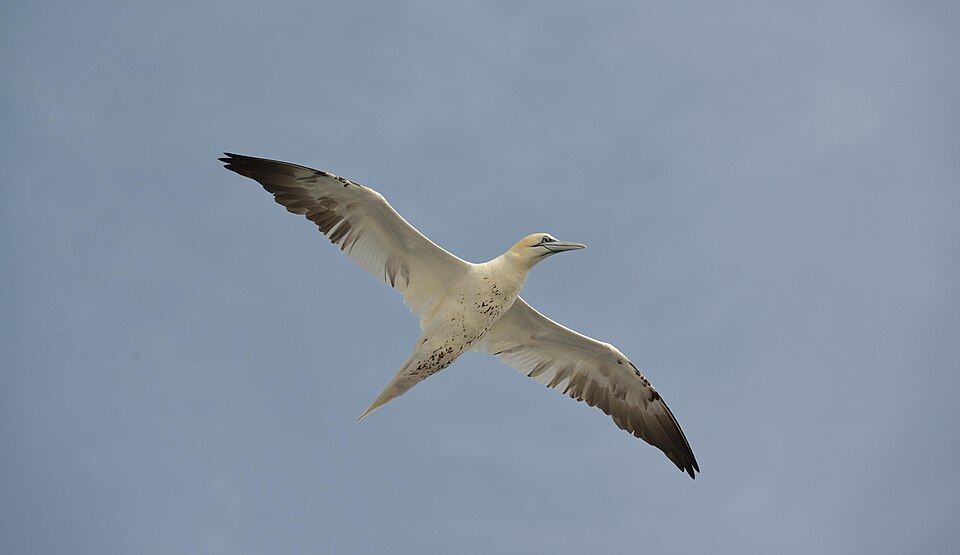 Alcatraz Atlántico
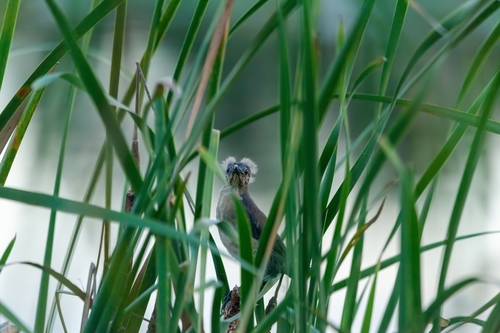 Zanate Marismeño
En breve
The most reliable separation is size: Northern Gannet is a massive seabird, nearly 20 times heavier than the Boat-tailed Grackle, with a long, pointed bill and all-white adult plumage with black wingtips, while Boat-tailed Grackle is a crow-sized songbird with a much smaller, slender body and a long, keel-shaped tail. In flight, juvenile Northern Gannets are dark and bulky with contrasting white and black wing patterns, whereas Boat-tailed Grackles (of any age) are uniformly dark or brownish and never show white in the wings. Gannets are only found over open water or at coastal colonies, while grackles are marshland and urban birds of the southeastern US. Even at a distance, the gannet's size, shape, and flight style are utterly different from the grackle's, making confusion rare except in poor viewing conditions or with distant, immature gannets.
Consejos de identificación
- Size is the quickest check: Northern Gannet is a huge seabird, vastly larger than any grackle; if the bird is crow-sized or smaller, it is not a gannet.
- Flight style: Gannets soar and glide on long, narrow wings with deep, powerful wingbeats and often plunge-dive; grackles have a more fluttery, direct flight with a long, trailing tail.
- Bill shape: Gannet has a long, pointed, blue-grey bill with black facial skin; grackle has a much shorter, slender, all-dark bill.
- Tail shape: Gannet's tail is straight and all-white (adults) or dark (juveniles), never long or keel-shaped; grackle's tail is long, often held in a boat shape, and always dark.
- Adult plumage: Gannet adults are white with black wingtips and a buff-tinged head; grackle males are glossy black, females are brown with darker wings and tail.
- Juvenile/immature plumage: Immature gannets are dark with white patches in the wings and body, all-white tail; grackle immatures are dull brown or blackish, never with white patches.
- Wing pattern in flight: Gannet (all ages) shows contrasting black and white in the wings; grackle is uniformly dark or brownish, with no white.
- Habitat: Gannet is only seen over ocean or at coastal cliffs; grackle is found in marshes, wetlands, and urban areas, never at sea.
- Vocalization: Grackles are noisy and call frequently; gannets are silent except at colonies.
- Iris color: Grackle iris varies (pale or dark depending on region); gannet has dark eyes surrounded by black skin.
- Head color: Gannet adults have a buff-tinged head in breeding season; grackles never show buff or pale tones.
- Social context: Gannets are seen in large, dense colonies or flying singly/with other seabirds; grackles are often in noisy, loose flocks in marshes or cities.
- Foraging behavior: Gannets dive from height into the sea; grackles forage on the ground, in shallow water, or in trash bins.
- Sexual dimorphism: Grackles show strong male/female differences (male black, female brown); gannets are similar between sexes.
- Range: Gannet is North Atlantic; grackle is southeastern and mid-Atlantic US coast. Out-of-range sightings are extremely rare.
Tamaño
Northern Gannet is vastly larger: adults average about 2999 g, with a length of 87–100 cm and a wingspan of 170–180 cm. Boat-tailed Grackle is much smaller, averaging 159 g (male up to 250 g), with a length of 37–43 cm and wingspan of 39–50 cm. In the field, a gannet dwarfs any grackle, appearing closer to an albatross or large gull in size, while a grackle is only slightly larger than a typical blackbird or starling. This size gap is so extreme that even at a distance, the two are not easily confused if seen together or with familiar species for scale.
Plumaje
Juvenile and immature Northern Gannets are mostly grey-brown with extensive white patches developing as they age, especially on the underwings and body, taking up to five years to reach full adult white plumage. In flight, young gannets show a striking contrast of dark and white in the wings and have an all-white tail, unlike any grackle. Adult gannets are white with a buff-tinged head (especially in breeding season), black wingtips, and a blue-grey bill. Boat-tailed Grackles, by contrast, never show white in the plumage: adult males are glossy iridescent black all over, with a long dark bill and pale or dark eyes depending on region; females are smaller, with a tawny-brown body and darker wings and tail. Immature grackles are duller versions of adults, with young males lacking strong iridescence and immature females showing blotched breasts. No age of grackle shows the white or buff tones of gannet, nor the sharply contrasting wing pattern of immature gannets.
Comportamiento
Northern Gannets are powerful, direct fliers, often seen soaring high above the sea or plunging spectacularly into the water from great heights to catch fish. They nest in dense colonies on offshore cliffs. Boat-tailed Grackles are social, noisy birds of marshes and urban areas, often seen walking or foraging on the ground, perching on reeds, or scavenging in human environments. Their flight is more labored and direct, with a characteristic long, keel-shaped tail often held in a boat-like curve. Gannets are never seen foraging on land or in urban settings, while grackles rarely venture far from shore or marsh.
Hábitat
Northern Gannet is strictly marine, found over open ocean or at coastal breeding colonies on cliffs and offshore islands in the North Atlantic. It is never found inland or in marshes. Boat-tailed Grackle is a resident of saltwater marshes, coastal wetlands, and urban areas near the southeastern and mid-Atlantic US coast, often foraging in parking lots, trash bins, and near human habitation. The two species do not overlap in typical habitat: seeing a large white seabird over the ocean is always a gannet, while a black or brownish bird in a marsh or city is a grackle.
Voz
Northern Gannet is mostly silent at sea, with harsh, guttural calls only at breeding colonies. Boat-tailed Grackle is extremely vocal, producing a wide range of harsh, squeaky, and musical calls and songs, often heard in marshes and urban settings. Their noisy presence is a strong clue to identification.