

Tarabilla Europea vs Collalba Gris
Saxicola rubicola frente a Oenanthe oenanthe
Juega un quiz con Tarabilla Europea y Collalba Gris
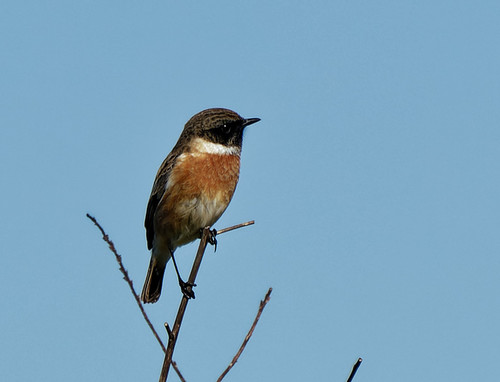 Tarabilla Europea
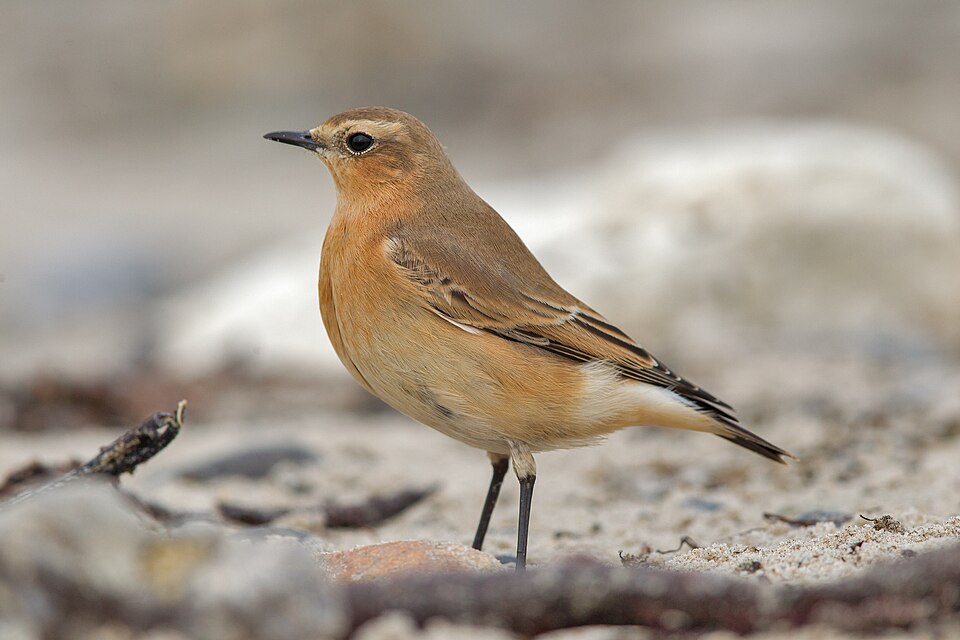 Collalba Gris
En breve
La marca de campo más confiable para separar la Tarabilla Europea de la Collalba Gris en cualquier edad o estación es el patrón de la rabadilla y la cola en vuelo: la Collalba Gris de todas las edades muestra una rabadilla y cola blancas audaces con una T invertida negra en la punta, mientras que la Tarabilla Europea tiene una rabadilla blanca mucho más pequeña, a menudo estriada (solo machos) y una cola oscura sin el patrón en T. Posados, los machos de Tarabilla muestran una cabeza negra y un pecho naranja, pero las hembras y los inmaduros son mucho más apagados y pueden confundirse con hembras/inmaduros de Collalba. La Collalba es notablemente más grande, con alas más largas y cola más larga, con una postura más erguida y una tendencia a posarse en rocas o suelo abierto, mientras que la Tarabilla es más pequeña, más redonda y más a menudo se posa en arbustos bajos. En otoño e invierno, ambas especies pueden parecer apagadas, pero el patrón de la cola/rabadilla sigue siendo diagnóstico en vuelo.
Consejos de identificación
- Rabadilla y cola en vuelo (todas las edades): La Collalba siempre muestra una rabadilla y base de cola blancas brillantes con una T invertida negra en la punta. Los machos de Tarabilla tienen una rabadilla blanca mucho más pequeña, a menudo estriada, y las hembras/inmaduros carecen completamente de rabadilla blanca; la cola es completamente oscura.
- Patrón de cola posado: Si el pájaro mueve su cola, busca el audaz patrón en T blanco y negro (Collalba) frente a la cola oscura simple (Tarabilla).
- Forma y longitud de las alas: La Collalba tiene alas largas y puntiagudas que se extienden bien más allá de la rabadilla cuando está posada; las alas de la Tarabilla son cortas y redondeadas, apenas alcanzando la base de la cola.
- Tamaño y estructura: La Collalba es más grande, con patas más largas y más erguida, con una cola más larga y una silueta más alargada. La Tarabilla es más pequeña, más redonda y más compacta.
- Comportamiento de posado: La Collalba a menudo se posa en rocas, suelo desnudo o postes de cerca, mientras que la Tarabilla prefiere arbustos bajos, zarzas o tojos.
- Plumaje de machos adultos (primavera/verano): El macho de Tarabilla tiene una cabeza negra, garganta y pecho naranjas, lados del cuello blancos y un pequeño parche escápular blanco. El macho de Collalba tiene una máscara facial negra, partes superiores grises, garganta color canela y alas negras, careciendo de tonos naranjas.
- Plumaje de hembras/inmaduros adultos: La hembra/inmaduro de Collalba es de color marrón pálido por encima, canela por debajo, con una rabadilla y cola blancas. La hembra/inmaduro de Tarabilla es más oscura, con partes superiores marrón estriado y carece de cualquier blanco en la rabadilla o cola; puede mostrar un pequeño parche escápular pálido (a menudo canela).
- Parche escápular: La Tarabilla (ambos sexos) puede mostrar un pequeño parche escápular blanco o blanco canela; la Collalba nunca muestra esto.
- Patrón de la cabeza: El macho de Tarabilla tiene una cabeza completamente negra; el macho de Collalba tiene una máscara facial negra pero corona y nuca pálidas. Las hembras de ambas son más simples, pero la Tarabilla es más oscura y más estriada.
- Color de las partes inferiores: La Tarabilla (especialmente los machos) tiene una garganta y pecho naranjas fuertes; la Collalba es canela o pálida por debajo, nunca naranja.
- Contexto del hábitat: En hábitats abiertos, pedregosos o rocosos, especialmente lejos de arbustos, espera ver Collalba. En áreas de pastizales, arbustos o brezos, es más probable que veas Tarabilla.
- Comportamiento en el suelo: La Collalba frecuentemente corre o salta en el suelo; la Tarabilla rara vez lo hace, prefiriendo lanzarse desde los posaderos.
- Vocalizaciones: El llamado 'tac-tac' de la Tarabilla es más seco y mecánico que el 'chack' de la Collalba; las canciones son diferentes pero pueden ser difíciles de separar a menos que estés familiarizado.
- Confusión estacional: En otoño e invierno, ambas especies se vuelven más apagadas y similares, pero el patrón de la rabadilla/cola sigue siendo diagnóstico.
- Trampas: Las hembras y los inmaduros de Tarabilla a menudo se confunden con la Collalba debido a su simplicidad, pero siempre carecen del patrón de rabadilla y cola blanca. Las Tarabillas del sur muy pálidas pueden acercarse a los tonos de la Collalba, pero aún carecen del contraste audaz de la cola/rabadilla.
Tamaño
La Collalba Gris es notablemente más grande: 14.5–16 cm de longitud y 17–30 g de peso, con una envergadura de 26–32 cm [wikipedia], en comparación con los 11.5–13 cm y 13–17 g de la Tarabilla Europea [wikipedia]. La Collalba parece tener un cuerpo más largo y una cola más larga, mientras que la Tarabilla es más compacta y redonda. En el campo, la Collalba a menudo parece más alta y más erguida, especialmente cuando está de pie sobre rocas o suelo desnudo.
Plumaje
- Juvenil/inmaduro y hembra adulta: La diferencia más importante está en la rabadilla y la cola. La Collalba Gris de todas las edades y sexos muestra una rabadilla y base de cola blancas brillantes, con una clara T invertida negra en la punta de la cola; esto siempre es visible en vuelo y a menudo cuando se mueve la cola. Los machos de Tarabilla en verano tienen un pequeño parche de rabadilla blanca, pero está estriado de negro y es mucho menos extenso; las hembras y los inmaduros carecen de cualquier rabadilla blanca, mostrando solo tonos marrones y estriados. La cola de la Tarabilla es completamente oscura, sin el patrón en T.
- Machos adultos en cría: Los machos de Tarabilla tienen una cabeza negra, garganta y pecho naranjas, lados del cuello blancos y un pequeño parche escápular blanco; los machos de Collalba tienen una máscara facial negra, partes superiores grises, garganta color canela y alas negras, careciendo de los tonos naranjas. Ambos tienen blanco por debajo, pero solo la Collalba tiene la rabadilla y cola blancas audaces.
- Hembras adultas: Ambas son marrones por encima y canela por debajo, pero la hembra de Collalba es más pálida y más uniforme, con una rabadilla y cola blancas; la hembra de Tarabilla es más oscura, con partes superiores marrón estriado y sin rabadilla o cola blancas. Solo las hembras de Tarabilla pueden mostrar un pequeño parche escápular pálido (a menudo canela).
- En otoño/invierno: La Collalba se vuelve más simple y más parecida a la hembra, pero el patrón de la cola/rabadilla permanece. Los machos de Tarabilla se vuelven más apagados pero retienen algo de naranja y la cabeza oscura; las hembras permanecen estriadas y oscuras.
- Patrón de alas: La Tarabilla tiene alas cortas y redondeadas con un pequeño parche escápular blanco; la Collalba tiene alas más largas y puntiagudas que son completamente oscuras, sin panel blanco.
Comportamiento
La Collalba Gris es más probable que se vea corriendo o saltando en el suelo, especialmente en áreas abiertas y pedregosas, y a menudo se posa en rocas o postes de cerca. Su postura erguida y su hábito de mover la cola revelan la rabadilla y cola blancas. La Tarabilla Europea se ve más a menudo posada en arbustos bajos, zarzas o tojos, lanzándose para atrapar insectos y regresando al mismo posadero. La Tarabilla rara vez pasa mucho tiempo en el suelo y parece más inquieta, moviendo las alas y la cola pero sin mostrar una rabadilla blanca.
Hábitat
La Tarabilla Europea prefiere pastizales ásperos, brezos, dunas costeras y áreas con arbustos bajos dispersos o zarzas, a menudo en hábitats más húmedos o más vegetados. La Collalba Gris favorece el país abierto y pedregoso, campos rocosos, tierras altas e incluso suelo desnudo, a menudo lejos de arbustos. Si ves un pájaro en un campo rocoso y sin árboles o en una pared de piedra, es más probable que sea una Collalba; si está en un área arbustiva y herbosa, se prefiere la Tarabilla.
Voz
La Collalba Gris emite una canción silbante y crujiente y un típico llamado 'chack', con un llamado de vuelo que es similar. La Tarabilla Europea tiene un llamado agudo y seco 'tac-tac' (como dos piedras golpeándose) y una canción simple y repetitiva. Ambos pueden sonar superficialmente similares, pero el llamado de la Tarabilla es más seco y mecánico.