

Mascarita Común vs Reinita Encapuchada
Geothlypis trichas frente a Setophaga citrina
Juega un quiz con Mascarita Común y Reinita Encapuchada
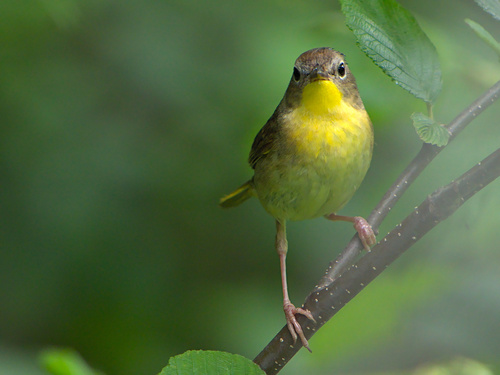 Mascarita Común
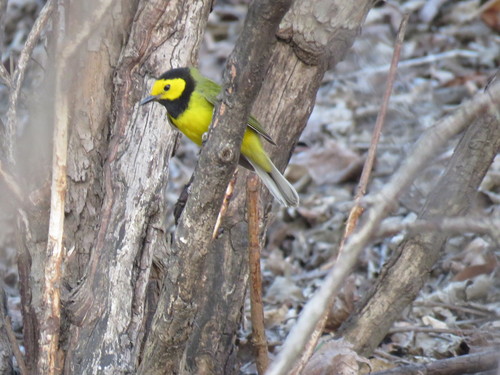 Reinita Encapuchada
En breve
La marca de campo más confiable es la presencia de una máscara facial negra audaz en el macho adulto de Mascarita Común, frente al capucho negro completo (incluyendo la garganta y la corona) en el macho adulto de Reinita Encapuchada. Las hembras y los inmaduros de ambas especies carecen de estas fuertes marcas negras y son fácilmente confundibles, pero la Reinita Encapuchada siempre muestra una cara amarilla limpia y sin marcas con una gorra verde oliva, mientras que las hembras y los inmaduros de Mascarita Común tienen partes inferiores amarillas más apagadas y una cara oliva más uniforme. En vuelo, la Reinita Encapuchada muestra plumas de la cola externas blancas, una característica que nunca está presente en la Mascarita Común. Ambas son pequeñas reinitas con espalda oliva y partes inferiores amarillas, pero las diferencias sutiles en el patrón facial, la cola y el uso del hábitat ayudan a separarlas. La voz y el comportamiento también pueden ser útiles, especialmente cuando el plumaje es ambiguo.
Consejos de identificación
- Patrón facial del macho adulto: Busca una máscara negra (a través de los ojos y la frente, bordeada arriba con blanco/gris) en Mascarita Común; busca un capucho negro completo (que rodea toda la cara amarilla, incluyendo la corona y la garganta) en Reinita Encapuchada. Esta es la marca más confiable para los machos adultos.
- Cara de hembras e inmaduros: La hembra y el inmaduro de Reinita Encapuchada muestran una cara amarilla clara con una gorra verde oliva, que no se extiende a la frente, orejas o garganta. Las hembras y los inmaduros de Mascarita Común tienen una cara oliva más uniforme y partes inferiores amarillas más pálidas, careciendo de cualquier gorra distintiva.
- Macho de Mascarita Común de primer año: Puede mostrar una máscara negra parcial y tenue para la primavera, pero nunca un capucho completo. Los machos de Reinita Encapuchada no adquieren el capucho completo hasta los 9-12 meses de edad, por lo que los machos jóvenes se asemejan a las hembras.
- Blanco en la cola: La Reinita Encapuchada siempre muestra plumas de la cola externas blancas (rectrices externas), visibles en vuelo o al mover la cola. La Mascarita Común nunca muestra blanco en la cola.
- Color de las partes inferiores: La Reinita Encapuchada típicamente tiene partes inferiores amarillas más brillantes y saturadas; la Mascarita Común es a menudo más apagada, especialmente en hembras e inmaduros.
- Color de la espalda: Ambas son de espalda oliva, pero la Reinita Encapuchada puede parecer ligeramente más verdosa o marrón-oliva. Esto es sutil y no siempre confiable.
- Hábitat: En pantanos, cañas o áreas arbustivas húmedas, espera encontrar Mascarita Común. En bosques de hojas anchas maduros con densa vegetación, espera encontrar Reinita Encapuchada.
- Comportamiento: La Reinita Encapuchada a menudo mueve su cola para mostrar blanco; la Mascarita Común se mueve rápidamente y bajo, a menudo permaneciendo oculta en vegetación densa.
- Canto: La Mascarita Común canta "twichety twichety twichety twich"; la Reinita Encapuchada canta "wheeta wheeta whee-tee-oh" o similar. Aprende estos de oído para una separación rápida.
- Notas de llamada: La Reinita Encapuchada emite un fuerte "chip"; la Mascarita Común emite un suave "jip."
- Rango geográfico: La Reinita Encapuchada está restringida al este de América del Norte; la Mascarita Común está ampliamente distribuida por el continente. En el oeste, un yellowthroat es casi siempre Mascarita Común.
- Temporada: Ambas especies son migratorias en el norte, pero la Mascarita Común es más probable que se encuentre en invierno en el sur de EE. UU. y México. La Reinita Encapuchada inverna más al sur.
- Pico y estructura: No se notaron diferencias fuertes en las fuentes, pero la Reinita Encapuchada puede parecer ligeramente más de cola larga y más esbelta. No suele ser diagnóstica en el campo.
- Variación de subespecies: Algunas subespecies de Mascarita Común (especialmente en el suroeste) son de un amarillo más brillante por debajo, pero nunca muestran un capucho negro completo o blanco en la cola.
- Trampa: La Reinita Encapuchada inmadura y hembra puede confundirse con otras reinitas de cara amarilla, pero la combinación de cara amarilla, gorra verde oliva y blanco en la cola es única.
Tamaño
La Reinita Encapuchada es ligeramente más grande en general, midiendo alrededor de 13 cm (5.1 in) de longitud y pesando 9-12 g, con una envergadura de 17.5 cm (6.9 in) [wikipedia]. La Mascarita Común es algo más pequeña y compacta, pero no se proporcionan medidas exactas en las notas. En el campo, esta diferencia de tamaño es sutil y no suele ser diagnóstica a menos que ambas especies se vean una al lado de la otra.
Plumaje
- Aves juveniles/inmaduros: Tanto los inmaduros como las hembras de ambas especies carecen de las fuertes marcas negras de los machos adultos, lo que las hace difíciles de separar. Sin embargo, los inmaduros y hembras de Reinita Encapuchada tienen una cara amarilla clara con una gorra verde oliva que no se extiende a la frente, orejas o garganta, mientras que los inmaduros y hembras de Mascarita Común tienen una cara oliva más uniforme y partes inferiores amarillas más pálidas. El macho de primer año de Mascarita Común puede mostrar una máscara negra tenue, especialmente para la primavera, pero nunca un capucho completo.
- Machos adultos: Los machos de Mascarita Común tienen una máscara negra a través de los ojos y la frente, bordeada arriba con blanco o gris, y garganta y pecho amarillos. Los machos de Reinita Encapuchada tienen un capucho negro completo que cubre la corona, nuca y garganta, con una cara amarilla brillante y partes inferiores. El negro en la Reinita Encapuchada es más extenso y rodea toda la cara, no solo los ojos.
- Alas y cola: La Reinita Encapuchada muestra plumas de la cola externas blancas (rectrices externas) en todos los plumajes, especialmente visibles en vuelo o al mover la cola. La Mascarita Común carece de cualquier blanco en la cola.
- Espalda y partes superiores: Ambas especies tienen espaldas olivas, pero la de la Reinita Encapuchada a veces se describe como más verdosa o marrón-oliva. Esto es sutil y no siempre confiable.
Comportamiento
Ambas especies forrajean bajo en vegetación densa, pero la Reinita Encapuchada es más probable que se vea cazando al vuelo o saltando desde posaderos, a menudo moviendo su cola para revelar plumas externas blancas. La Mascarita Común tiende a ocultarse en pantanos, cañas o arbustos densos, moviéndose rápidamente y a menudo permaneciendo oculta. La Reinita Encapuchada es más probable que se vea en bosques maduros con densa vegetación, mientras que la Mascarita Común prefiere hábitats más húmedos, abiertos o de borde.
Hábitat
La Mascarita Común es abundante en pantanos, humedales y bordes arbustivos en gran parte de América del Norte, especialmente en áreas con vegetación densa y baja. La Reinita Encapuchada cría en bosques de hojas anchas con densa vegetación, principalmente en el este de EE. UU. y el sur de Ontario. Si encuentras una reinita amarilla en un pantano húmedo y abierto, es más probable que sea una Mascarita Común; en un bosque maduro y sombrío con densa vegetación, es más probable que sea una Reinita Encapuchada.
Voz
El canto de la Mascarita Común es un "twichety twichety twichety twich" fuerte y repetitivo, y su llamada es un suave "jip." El canto de la Reinita Encapuchada es una serie de notas musicales, a menudo representadas como "wheeta wheeta whee-tee-oh" (mnemotécnico: "La camiseta roja, la camiseta roja" o "Ven al bosque o no me verás"), con una llamada fuerte de "chip." Los cantos son bastante diferentes, pero ambos pueden ser variables y pueden superponerse en ritmo. Las llamadas son más distintas, siendo la de la Reinita Encapuchada más aguda y fuerte.