

Semillero Ventricastaño vs Semillero Curió
Sporophila castaneiventris frente a Sporophila angolensis
Juega un quiz con Semillero Ventricastaño y Semillero Curió
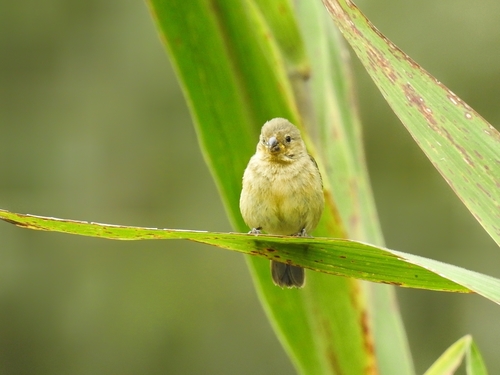 Semillero Ventricastaño
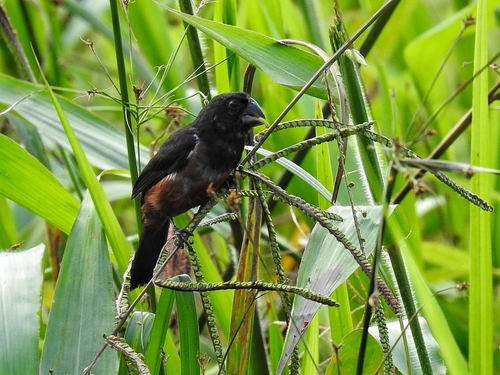 Semillero Curió
En breve
La marca de campo más confiable entre el Semillero Ventricastaño y el Semillero Curió es el color y patrón de la cabeza y partes superiores del macho adulto: el macho del Ventricastaño es azul-grisáceo por encima, mientras que el macho del Curió es completamente negro por encima y en la garganta. Las hembras son más complicadas, pero el Ventricastaño es en general más pálido y más claro, mientras que el Curió es de un marrón más rico con un mentón blanquecino y partes inferiores canela. El Curió es notablemente más grande y pesado, con un pico de base mucho más profunda. En vuelo o posado, busca los cobertores de las alas inferiores blancos del Curió y una pequeña mancha blanca en la base de las primarias (en machos), que están ausentes en el Ventricastaño. La forma y tamaño del pico también son pistas fuertes, especialmente a corta distancia.
Consejos de identificación
- Cabeza y partes superiores del macho adulto: Los machos del Ventricastaño son azul-grisáceos por encima, mientras que los machos del Curió son completamente negros por encima y en la garganta. Esta es la forma más rápida de separar a los machos adultos.
- Blanco en el ala (machos): Los machos del Curió muestran una pequeña mancha blanca en la base de las primarias (visible en el ala cerrada) y cobertores de las alas inferiores blancos, que los machos del Ventricastaño nunca muestran. Busca esto en aves posadas con alas parcialmente abiertas o en vuelo.
- Cobertores de las alas inferiores blancos (ambos sexos): El Curió de ambos sexos tiene cobertores de las alas inferiores blancos, visibles en vuelo o si el ave estira su ala. El Ventricastaño nunca muestra blanco en el ala a ninguna edad o sexo.
- Tamaño y forma del pico: El Curió tiene un pico de base mucho más profunda y pesado que el Ventricastaño. Esto es especialmente obvio de perfil o en vistas cercanas. El pico del Ventricastaño es grueso pero no tan profundo o ancho.
- Tamaño: El Curió es notablemente más grande y pesado (más de 11 g frente a menos de 8 g para el Ventricastaño). Si tienes una comparación directa o una buena idea de la escala, esta es una pista fuerte.
- Partes inferiores del macho adulto: Ambas especies tienen partes inferiores castañas, pero en el Ventricastaño el castaño forma una banda ancha en la garganta y el pecho, se estrecha a través del vientre y se ensancha nuevamente en el vent, con flancos azul-grisáceos. En el Curió, las partes inferiores completas (pecho, vientre, flancos, subcola) son de un castaño profundo, sin flancos azul-grisáceos.
- Cara y partes inferiores de la hembra adulta: Las hembras del Ventricastaño son más pálidas, con una cara clara y partes inferiores cálidas, más pálidas en el vientre. Las hembras del Curió son de un marrón más rico por encima, con un mentón blanquecino, pecho canela y vientre canela más pálido.
- Color de la cola y el ala (hembras): Las hembras del Ventricastaño tienen bordes marrón arena en los cobertores de las alas y una cola marrón más oscura; las hembras del Curió tienen alas y cola marrón cálido, sin los bordes arenosos.
- Color de las patas e iris: Ambas especies tienen iris oscuros y patas oscuras, por lo que esto no es útil para la separación.
- Aves juveniles/inmaduras: Si ves blanco en el ala inferior o una mancha blanca en la base de las primarias, es un Curió (incluso en hembras e inmaduras). El Ventricastaño nunca muestra blanco en el ala a ninguna edad.
- Vistas posadas vs. en vuelo: En vuelo, busca el blanco en las alas inferiores y la mancha primaria del Curió (machos). En aves posadas, enfócate en el color de la cabeza (azul-grisáceo vs. negro en machos) y la profundidad del pico.
- Rango geográfico: Solo relevante en el borde sur de sus rangos; de lo contrario, ambas especies pueden ocurrir juntas.
- Trampas de plumaje: Los Curiós hembras e inmaduros pueden confundirse con hembras del Ventricastaño, pero busca los tonos marrón más ricos, mentón blanquecino y partes inferiores canela en el Curió, frente a los tonos más pálidos y claros en el Ventricastaño.
- No se proporciona diferencia de canto o llamada: No confíes en la voz para la separación a menos que tengas otras fuentes.
- Hibridación: No relevante para la separación de campo excepto en Colombia, donde el Curió puede hibridarse con el Semillero Piquigrueso, no con el Ventricastaño.
Tamaño
El Semillero Curió es claramente más grande y pesado que el Semillero Ventricastaño. El Curió mide de 10.6 a 12.4 cm de longitud y pesa de 11.4 a 14.5 g, mientras que el Ventricastaño mide alrededor de 10 cm y 7.8 g. El Curió también tiene un pico mucho más profundo y pesado, lo que es especialmente obvio de perfil. Si ves ambos juntos, el Curió se ve más robusto y voluminoso en general, mientras que el Ventricastaño es notablemente más delicado.
Plumaje
- Machos adultos:
- Ventricastaño: Cabeza y partes superiores azul-grisáceas, a veces con un pequeño punto blanco detrás del pico; cola negruzca con bordes grises en la base de las plumas exteriores; alas negruzcas con bordes grisáceos; garganta y pecho con una amplia banda castaña que se estrecha a través del vientre, flancos azul-grisáceos, vent y subcola castaños.
- Curió: Cabeza, garganta, partes superiores, cola y alas completamente negros; cobertores de las alas inferiores blancos y bases blancas en las primarias forman una pequeña mancha blanca en el ala cerrada; partes inferiores (pecho, vientre, flancos, subcola) de un castaño profundo; muslos negros.
- Hembras adultas:
- Ventricastaño: Partes superiores y cabeza marrón arena cálido con cara clara; alas y cola de un marrón más oscuro con bordes marrón arena en los cobertores; partes inferiores cálidas, más pálidas en el vientre.
- Curió: Partes superiores y cola marrón cálido; alas marrón cálido con cobertores de las alas inferiores blancos (sin mancha blanca en las primarias); mentón casi blanco, pecho canela, resto de las partes inferiores canela más pálido.
- Juveniles/inmaduros:
- No se describe un patrón específico de alas para juveniles/inmaduros en ninguna de las especies, pero los cobertores de las alas inferiores blancos del Curió (ambos sexos) y la mancha blanca en las primarias del macho son únicos y visibles en vuelo o cuando el ala se extiende. El Ventricastaño carece de cualquier blanco en el ala a todas las edades.
Comportamiento
No se describen diferencias de comportamiento diagnósticas en las notas proporcionadas. Ambos son pequeños pájaros granívoros de la misma familia, y su comportamiento general probablemente sea similar en el campo.
Hábitat
Ambas especies se superponen ampliamente en América del Sur, pero el Curió está ausente en Chile y Uruguay, mientras que el Ventricastaño también está ausente en Argentina y Paraguay. En áreas de superposición, el hábitat no es un separador confiable según las notas proporcionadas.
Semillero Ventricastaño · Semillero Curió · Mis aves difíciles