

Atila Polimorfo vs Copetón Tiranillo
Attila spadiceus frente a Myiarchus tyrannulus
Juega un quiz con Atila Polimorfo y Copetón Tiranillo
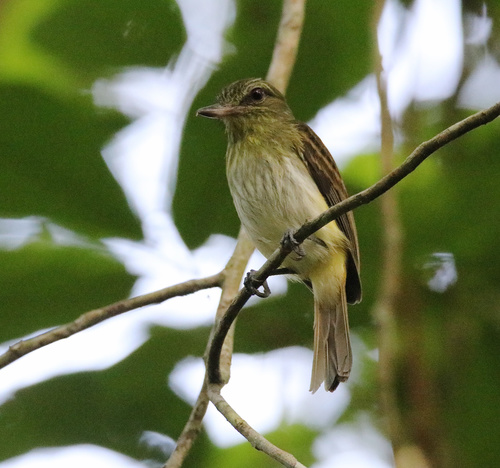 Atila Polimorfo
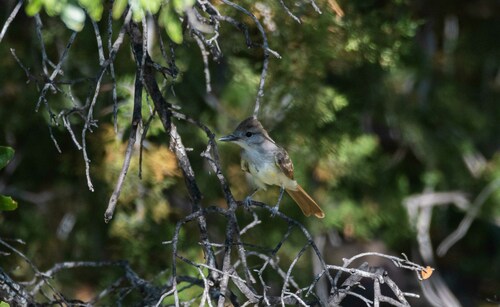 Copetón Tiranillo
En breve
La marca de campo más confiable entre el Atila Polimorfo y el Copetón Tiranillo es el inconfundible rump amarillo brillante del Atila, que destaca contra su espalda y cola más oscuras, especialmente cuando el pájaro está posado o agita su cola. Ambas especies muestran dos barras alares pálidas y partes inferiores amarillas, pero las llamativas estrías en el pecho del Atila y su iris rojo (en adultos) también son distintivas. El Copetón Tiranillo carece del rump brillante y en su lugar muestra partes superiores de color marrón o gris uniforme con rufo en la cola y alas. Los juveniles de ambas especies pueden ser complicados, pero la corona con borde canela del Atila y sus ojos marrones ayudan a separarlo de la cresta gris marrón y los ojos marrones del tiranillo.
Consejos de identificación
- Rump amarillo brillante (todas las edades): Solo el Atila Polimorfo tiene un rump amarillo brillante, que es conspicuo cuando está posado o agita su cola. El rump del Copetón Tiranillo es del mismo color que su espalda.
- Estrías en el pecho: El Atila muestra estrías oscuras variables pero a menudo obvias en el pecho y la garganta amarillos, especialmente en adultos. Las partes inferiores del Copetón Tiranillo son de un amarillo limpio con una garganta y parte superior del pecho gris claro, sin estrías.
- Barras alares y borde de plumas: Ambas especies tienen dos barras alares pálidas, pero las del Atila son a menudo más anchas y contrastantes, con un borde de plumas más pálido en las alas marrón oscuro. Las barras alares del tiranillo son de un marrón grisáceo más pálido a blanco marrón, y el borde rufo es más prominente en las alas y la cola.
- Patrón de la cola: El Copetón Tiranillo muestra webs internas rufas en todas menos en las plumas de cola más internas, visibles en vuelo o cuando la cola está abierta. La cola del Atila es marrón simple.
- Color del iris: El Atila adulto tiene un iris rojo (marrón en juveniles), mientras que el Copetón Tiranillo siempre tiene un iris marrón. Esto se ve mejor con buena luz y vistas cercanas.
- Corona y cresta: La cabeza del Atila es grande y redondeada, con verde oliva estriado de negro y, en juveniles, con borde canela. El Copetón Tiranillo tiene una cresta gris marrón espesa y un perfil de cabeza más alargado.
- Forma del pico: El Atila tiene un pico más pesado, curvado y ligeramente levantado, mientras que el pico del tiranillo es más recto y esbelto, a veces con una base más pálida.
- Postura y apariencia: El Atila se posa muy erguido y parece tener una cabeza grande y compacta. El tiranillo es más alargado, con una cola más larga y una postura más horizontal.
- Voz: La canción del Atila es fuerte, variable y musical, a menudo con notas repetidas de 'weery' y un final de 'woo-whit'. Los llamados del tiranillo son más agudos, secos y menos musicales.
- Marcas juveniles: El joven Atila muestra una corona con borde canela y ojos marrones; los jóvenes tiranillos tienen una cresta espesa y un iris marrón pero carecen de la corona canela.
- Contexto de hábitat: Si se ve en un jardín sombrío, pastizal o área perturbada, es más probable que sea un Atila. Si está en un bosque abierto o cerca de grandes árboles/cactus, especialmente si se ve entrando en una cavidad, sospeche del Copetón Tiranillo.
- Comportamiento: El Atila puede perseguir presas a pie o seguir a las hormigas ejército; el tiranillo típicamente sale de los posaderos y rara vez se alimenta en el suelo.
- Sexos: Ambas especies son monomórficas sexualmente en plumaje, por lo que el sexo no es una marca de campo.
- Impresión de tamaño: El tiranillo puede parecer ligeramente más grande y de cola más larga, especialmente en las subespecies del norte, pero la superposición es sustancial.
- Trampas: Ambas tienen partes inferiores amarillas y barras alares pálidas, así que enfóquese en el color del rump, las estrías del pecho y la estructura del pico/cabeza para una separación confiable.
Tamaño
Ambas especies son similares en longitud (alrededor de 18 cm), pero el Copetón Tiranillo puede ser ligeramente más grande, especialmente en las subespecies del norte (hasta 23 cm y 54 g), mientras que el Atila Polimorfo promedia alrededor de 35–40 g. En el campo, el Atila puede parecer más compacto y erguido, con un pico más pesado y curvado y un aspecto de cabeza grande. El Copetón Tiranillo a menudo parece más largo y delgado, con una cola proporcionalmente más larga y un pico más esbelto y recto.
Plumaje
Pájaros juveniles e inmaduros: Los juveniles del Atila Polimorfo tienen una corona con borde canela y ojos marrones, mientras que los juveniles del Copetón Tiranillo se parecen a los adultos pero con una cresta más espesa y un iris marrón. En todas las edades, el Atila muestra un rump amarillo brillante y un pecho amarillo con estrías variables, con dos barras alares pálidas y un borde de plumas más pálido en las alas marrón oscuro. El Copetón Tiranillo de todas las edades carece del rump brillante; en su lugar, tiene una espalda de marrón grisáceo a gris oliva, una cresta gris marrón espesa y bordes rufos en la cola y alas. Ambas especies tienen partes inferiores amarillas, pero las del Atila son más estriadas, y las del tiranillo son más limpias y brillantes, con una garganta y parte superior del pecho gris claro. El iris del Atila es rojo en adultos (marrón en jóvenes), mientras que el del tiranillo es siempre marrón. La cola del tiranillo muestra webs internas rufas (excepto el par más interno), que pueden ser visibles con buena luz o en vuelo.
Comportamiento
El Atila Polimorfo es a menudo solitario, se posa erguido y puede ser agresivo y ruidoso, a veces persiguiendo presas a pie o siguiendo a las hormigas ejército. Tiende a quedarse quieto cuando canta, lo que dificulta su localización. El Copetón Tiranillo también se ve a menudo solo o en parejas, típicamente saliendo de posaderos expuestos para atrapar insectos, y es menos probable que forraje en el suelo. La postura erguida y de cabeza grande del Atila contrasta con la silueta más alargada y con cresta del tiranillo.
Hábitat
Ambas especies se superponen en gran parte de América Central y del Sur, pero el Atila Polimorfo es más tolerante a hábitats perturbados, ocurriendo en bosques, crecimiento secundario, plantaciones, jardines sombríos e incluso pastizales con árboles. El Copetón Tiranillo está más estrechamente vinculado a bosques abiertos, bordes de bosques y áreas con grandes árboles o cactus para cavidades de anidación. El Atila es común desde tierras bajas hasta 2,100 m, mientras que el rango del tiranillo es más amplio pero más restringido por los requisitos de anidación.
Voz
El Atila Polimorfo tiene una canción fuerte y variable a menudo descrita como 'beat-it, beat-it' o una serie de notas lastimeras 'ooo weery weery weery weery woo', con una estructura altamente variable y a veces terminando en un 'woo-whit.' Tiende a cantar desde la cobertura y es difícil de ver mientras vocaliza. La voz del Copetón Tiranillo no se describe en detalle aquí, pero los tiranillos Myiarchus típicamente emiten llamados agudos y secos 'whit' o 'reep' y silbidos cortos y descendentes, que son menos musicales y menos variables que la canción del Atila.