

Aguja Colipinta vs Andarríos Chico
Limosa lapponica frente a Actitis hypoleucos
Juega un quiz con Aguja Colipinta y Andarríos Chico
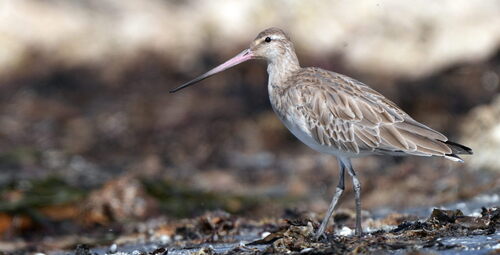 Aguja Colipinta
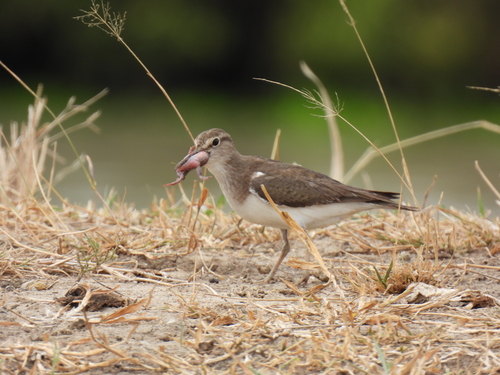 Andarríos Chico
En breve
La marca de campo más confiable para separar la Aguja Colipinta del Andarríos Chico es el tamaño y la estructura general: la Aguja Colipinta es un ave mucho más grande y pesada con un pico largo y ligeramente curvado hacia arriba y patas largas, mientras que el Andarríos Chico es pequeño, compacto, con un pico corto y recto y patas amarillentas cortas. En vuelo, la Aguja Colipinta carece del fuerte patrón de alas de muchas limícolas, mientras que los Andarríos Chicos juveniles y no reproductores muestran más rayas en el ala superior y un patrón de alas más nítido a corta distancia. La Aguja Colipinta en plumaje de cría muestra partes inferiores de un rojo intenso (especialmente los machos), que el Andarríos Chico nunca muestra. Si ves una limícola de tamaño mediano a grande con un pico largo y ligeramente curvado hacia arriba y patas azul-grisáceas, es una Aguja Colipinta; un ave pequeña, de pico corto y que mueve la cola con un vuelo rígido y bajo es un Andarríos Chico.
Consejos de identificación
- El tamaño es el separador más rápido: La Aguja Colipinta es más del doble de la longitud y volumen del Andarríos Chico; si ves una limícola grande, no es un Andarríos Chico.
- Forma y longitud del pico: La Aguja Colipinta tiene un pico largo y ligeramente curvado hacia arriba (rosado en la base, negro en la punta); el pico del Andarríos Chico es corto, recto y solo ligeramente bicolor. Esto es visible incluso a distancia media.
- Color y longitud de las patas: La Aguja Colipinta tiene patas largas de color azul-grisáceo; el Andarríos Chico tiene patas cortas de color amarillo oscuro. El color de las patas es especialmente útil en aves posadas.
- Plumaje de cría: Solo los machos de Aguja Colipinta (y en menor medida las hembras) muestran partes inferiores de color rojo ladrillo a castaño en primavera/verano. El Andarríos Chico es siempre marrón por encima, blanco por debajo.
- Plumaje no reproductor: Ambas especies se vuelven más simples, pero la Aguja Colipinta sigue siendo más grande, con un tono gris-marrón más uniforme por encima y rayas sutiles; el Andarríos Chico es más pequeño, con más rayas (aunque finas) en las alas a corta distancia.
- Patrón juvenil/inmaduro: El Andarríos Chico juvenil muestra más rayas por encima y plumas de ala con bordes color crema, dando un patrón de ala superior más nítido que el juvenil de Aguja Colipinta, que es más uniformemente color crema y estriado por debajo.
- Estilo de vuelo: La Aguja Colipinta vuela de manera fuerte y directa, a menudo alta y en bandadas; el Andarríos Chico vuela bajo sobre el agua con aleteos rígidos y rápidos y un camino ondulante distintivo.
- Cola y rabadilla: La Aguja Colipinta carece de la fuerte rabadilla blanca y la banda negra de la Aguja Colinegra, pero tiene un dorso y cola simples; el Andarríos Chico tiene una cola y un dorso marrón simples, sin un patrón de rabadilla llamativo.
- Comportamiento en el suelo: El Andarríos Chico está constantemente moviendo su cola y buscando alimento con un movimiento de bombeo; la Aguja Colipinta se mantiene y camina de manera más estable, sondeando el barro con su largo pico.
- Contexto de hábitat: La Aguja Colipinta está casi siempre en llanuras intermareales abiertas o estuarios; el Andarríos Chico se encuentra más a menudo en los bordes de áreas de agua dulce o costeras protegidas.
- Comportamiento social: La Aguja Colipinta suele estar en bandadas sueltas, especialmente durante la migración o en áreas de invernada; el Andarríos Chico suele ser solitario o estar en pequeños grupos.
- Dimorfismo sexual: Los machos de Aguja Colipinta en plumaje de cría son mucho más brillantes en rojo por debajo; las hembras son más apagadas pero aún muestran algo de castaño. El Andarríos Chico muestra poco dimorfismo sexual.
- Temporización estacional: Si ves una aguja de vientre rojo en primavera o principios de verano, es un macho de Aguja Colipinta; el Andarríos Chico nunca muestra esto.
- Riesgo de confusión: Las Agujas Colipintas distantes y solitarias en plumaje no reproductor pueden parecer simples y podrían confundirse con un limícola más grande, pero el tamaño y la forma del pico deberían aclarar. Los Andarríos Chicos juveniles pueden parecer tener un patrón por encima, pero siempre son mucho más pequeños y de pico más corto.
- Sin pistas vocales fuertes en las notas: Los llamados no se describen aquí, así que confía en las marcas visuales.
Tamaño
La Aguja Colipinta es dramáticamente más grande: la masa corporal promedia alrededor de 333.5 g, con una longitud de 37–41 cm y una envergadura de 70–80 cm. El Andarríos Chico es mucho más pequeño, con 18–20 cm de longitud y una envergadura de 32–35 cm (menos de la mitad de la masa y volumen). Incluso a distancia, el tamaño de la aguja y sus proporciones de patas largas y pico largo destacan en comparación con el aspecto compacto y de patas cortas del andarríos. Si ves ambos juntos, la confusión es casi imposible.
Plumaje
- Juveniles/immaduros en vuelo: El Andarríos Chico juvenil muestra más rayas extensas por encima y bordes color crema en las plumas de las alas, dando un aspecto más nítido y más patrón en el ala superior que los juveniles de Aguja Colipinta, que son más uniformemente color crema y estriados por debajo pero carecen de un fuerte patrón de alas.
- Plumaje no reproductor (invernal): La Aguja Colipinta es de un gris-marrón simple por encima con centros de plumas más oscuros y blanco por debajo, apareciendo bastante uniforme y sutilmente rayada. El Andarríos Chico es marrón grisáceo por encima y blanco por debajo, pero en invierno muestra más rayas evidentes en las alas (aunque solo a corta distancia).
- Plumaje de cría: El macho de Aguja Colipinta es strikingmente rojo ladrillo por debajo y marrón oscuro por encima; las hembras son más apagadas pero aún muestran tonos de castaño a canela en el vientre. El Andarríos Chico nunca muestra tonos rojos o castaños, permaneciendo marrón por encima y blanco por debajo durante todo el año.
- Color del pico y patas: La Aguja Colipinta tiene patas azul-grisáceas y un pico largo, ligeramente curvado y bicolor (rosado en la base, negro en la punta); el Andarríos Chico tiene patas cortas de color amarillo oscuro y un pico corto y recto con una base pálida y punta oscura.
Comportamiento
La Aguja Colipinta se ve generalmente sondeando llanuras de barro o estuarios, a menudo en bandadas sueltas, y puede realizar vuelos ceremoniales o de persecución, pero carece del vuelo errático y acrobático de la Aguja Colinegra. Su vuelo es fuerte y directo, propio de un migrante de larga distancia. El Andarríos Chico es típicamente solitario o en pequeños grupos, raramente en bandadas mixtas, y es famoso por su distintivo movimiento de cola y vuelo bajo, ondulante y rígido sobre el agua. En el suelo, el Andarríos Chico camina con un movimiento característico de bombeo de cola y movimiento de cabeza hacia adelante, que la Aguja Colipinta no realiza.
Hábitat
La Aguja Colipinta prefiere llanuras de barro costeras abiertas y estuarios, especialmente durante la migración y el invierno, y cría en la tundra ártica. El Andarríos Chico se encuentra más a menudo a lo largo de los bordes de lagos de agua dulce, ríos y arroyos, pero también ocurre en costas de barro o arena, especialmente durante la migración. Puede haber superposición durante la migración, pero la Aguja Colipinta está mucho más ligada a hábitats abiertos y tidal, mientras que el Andarríos Chico prefiere cuerpos de agua más pequeños y protegidos.