

Brandseeschwalbe vs Eilseeschwalbe
Thalasseus sandvicensis gegen Thalasseus bergii
Ein Quiz mit Brandseeschwalbe und Eilseeschwalbe spielen
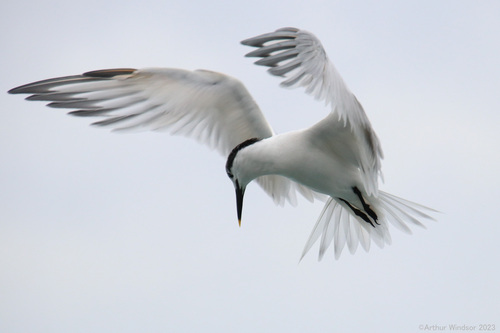 Brandseeschwalbe
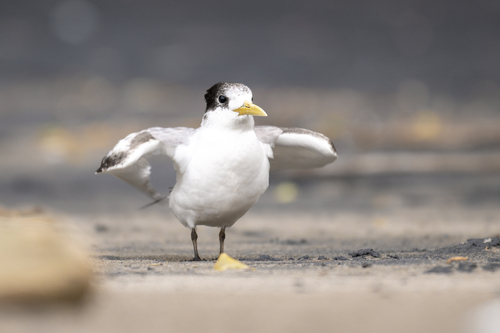 Eilseeschwalbe
Kurz gesagt
Das zuverlässigste Feldmerkmal zwischen Brandseeschwalbe und Eilseeschwalbe ist der Schnabel: Brandseeschwalbe hat einen schwarzen Schnabel mit einer gelben Spitze, während Eilseeschwalbe einen längeren, dickeren Schnabel zeigt, der durchgehend grünlich-gelb ist. Bei unreifen Vögeln konzentrieren Sie sich auf den Oberflügel: juvenile Brandseeschwalben sind oben schuppig mit dunklen Schwanzspitzen und einem ganz dunklen Schnabel, während juvenile Eilseeschwalben ein variierteres Flügelmuster mit dunklen Streifen und einem gelblichen Schnabel haben. Eilseeschwalbe ist auch deutlich größer und massiger, mit dunkleren Oberseiten und einer struppigeren Haube. Im Flug oder im Ruhezustand achten Sie besonders auf die Schnabelfarbe, die Größe und das Muster der Oberseite und des Kopfes, insbesondere bei nicht brütenden und jungen Vögeln.
Bestimmungstipps
- Bill color and shape: Brandseeschwalbe always shows a thin, sharp black bill with a yellow tip (adults); Eilseeschwalbe has a much longer, thicker bill that is greenish-yellow throughout. This is the fastest check in good light for adults.
- Juvenile bill: Juvenile Sandwich Terns have an all-blackish bill (sometimes with a yellowish base), while juvenile Great Crested Terns already show a yellowish tinge.
- Upperwing pattern (juveniles/immatures): Juvenile Sandwich Terns are scaly above, with pale grey upperwings and less black on the crown. Eilseeschwalbe juveniles have a variegated upperwing with dark bars and a more complex pattern, plus a dark bar on the inner flight feathers after the first moult.
- Tail tip (juveniles): Juvenile Sandwich Terns have dark tips to the tail, a feature not mentioned for Eilseeschwalbe.
- Crown and forehead (adults, all seasons): Brandseeschwalbe has a full black cap in breeding plumage, receding to a white forehead in winter. Eilseeschwalbe always shows a white forehead, even in breeding plumage, with a shaggier, more pronounced black crest at the rear.
- Upperparts color: Brandseeschwalbe is pale grey above; Eilseeschwalbe is noticeably darker, with battleship-grey upperparts.
- Primary feather edges (adults): Brandseeschwalbe has a broad white margin on the inner web of the primaries, which wears to a 'hook tip' in late summer. Eilseeschwalbe lacks this feature.
- Size and structure: Eilseeschwalbe is much larger, bulkier, and longer-billed. If seen together, the size difference is obvious.
- Flight jizz: Brandseeschwalbe is more buoyant and delicate in flight; Eilseeschwalbe is heavier and more powerful, with longer, broader wings.
- Leg color: Both have black legs; not useful for separation.
- Crest shape: Eilseeschwalbe's crest is shaggier and more pronounced at the rear; Brandseeschwalbe's is less so.
- Underparts: Both are white below; not a useful field mark.
- Vocalizations: Brandseeschwalbe gives a sharp, grating call; Eilseeschwalbe is deeper, more crow-like. Useful if calls are heard well.
- Habitat/context: If seen in tropical/subtropical Old World colonies, especially with other large terns, Eilseeschwalbe is more likely. In temperate Europe, Brandseeschwalbe predominates.
- Pitfalls: Beware of non-breeding and juvenile plumages, as both species show more white on the forehead and can look similar at a distance. Focus on bill color/shape and upperwing pattern for best separation.
Größe
Eilseeschwalbe ist erheblich größer: 46–49 cm in der Länge mit einer Flügelspannweite von 125–130 cm und einem Gewicht von 325–397 g. Brandseeschwalbe ist mittelgroß für eine Seeschwalbe, aber insgesamt kleiner: 36–41 cm lang, 95–105 cm Flügelspannweite, 200–300 g. Der Größenunterschied ist offensichtlich, wenn sie zusammen gesehen werden, wobei die Eilseeschwalbe massiger, mit längerem Schnabel und schwererem Körper erscheint.
Gefieder
- Juvenile und unreife: Juvenile Brandseeschwalben haben ein schuppiges Aussehen auf dem Rücken und den Flügeln, dunkle Spitzen am Schwanz und einen ganz schwarzlichen Schnabel (manchmal gelblich an der Basis). Ihr Oberflügel ist blass mit weniger Schwarz auf der Krone. Juvenile Eilseeschwalben haben ein Kopf-Muster ähnlich wie Wintererwachsene (weiße Stirn, schwarze Krone), aber die Oberseiten sind stark gemustert in Grau, Braun und Weiß, mit geschlossenen Flügeln, die dunkle Streifen und ein variierendes Aussehen zeigen. Nach der ersten Mauser zeigen junge Eilseeschwalben weiterhin einen dunklen Streifen auf den inneren Flugfedern, im Gegensatz zum schlichteren, schuppigen Aussehen junger Brandseeschwalben.
- Erwachsene (Brut): Erwachsene Brandseeschwalben haben blassgraue Oberflügel, weiße Unterseiten und eine schwarze Haube mit einem dünnen, scharfen schwarzen Schnabel, der gelbspitzig ist. Erwachsene Eilseeschwalben haben dunklere, schiffsgraue Oberseiten, eine weiße Stirn (auch im Brutkleid), eine struppigere Haube und einen langen, dicken grünlich-gelben Schnabel.
- Erwachsene (nicht brütend): Beide Arten zeigen mehr Weiß auf der Stirn, aber die schwarze Haube der Brandseeschwalbe zieht sich extensiver zurück, während die Eilseeschwalbe eine weiße Stirn behält, die in eine gepunktete schwarze Haube und Maske übergeht.
- Im Flug: Brandseeschwalbe sieht oben blasser aus, mit einem breiten weißen Rand an der inneren Membran der Primärfedern (abgenutzt zu einer 'Haken-Spitze' im Spätsommer). Eilseeschwalbe ist oben dunkler, ohne solchen weißen Rand, und erscheint massiger und mit längeren Flügeln.
Verhalten
Beide Arten sind sehr gesprächig und nisten in dichten Kolonien, oft mit anderen Seeschwalben. Eilseeschwalbe wird eher in großen, lauten Gruppen entlang tropischer und subtropischer Küsten gesehen, und ihre größere Größe und schwerer Flug sind offensichtlich, wenn sie mit anderen Seeschwalben vermischt sind. Brandseeschwalbe ist im Flug leichter und zierlicher, mit einer leichteren Statur und kürzeren Beinen.
Lebensraum
Brandseeschwalbe brütet und sucht hauptsächlich in gemäßigten Küstengebieten, während Eilseeschwalbe entlang tropischer und subtropischer Küsten von Südafrika über den Indischen Ozean bis Australien und den zentralen Pazifik vorkommt. Die Überlappung ist begrenzt, aber beide können in gemischten Seeschwalbenkolonien entlang geeigneter Küsten vorkommen. Der Kontext kann helfen, ist aber nicht diagnostisch, wo sich die Verbreitungsgebiete überschneiden.
Stimme
Beide sind laut und gesprächig in Kolonien. Brandseeschwalbe gibt einen charakteristischen kratzenden "kear-ik" oder "kerr ink" Ruf von sich. Der Hauptruf der Eilseeschwalbe ist ein lauter, rauer, krähartiger "kerrak"; sie gibt auch ein "korrkorrkorr" am Nest und ein hartes "wep wep" im Flug von sich. Die Rufe sind in ihrer Funktion ähnlich, unterscheiden sich jedoch im Ton: Brandseeschwalbe ist kratzend und schärfer, Eilseeschwalbe ist tiefer und krähartiger.