

Elsterschmätzer vs Schwarzrücken-Steinschmätzer
Saxicola caprata gegen Oenanthe lugens
Ein Quiz mit Elsterschmätzer und Schwarzrücken-Steinschmätzer spielen
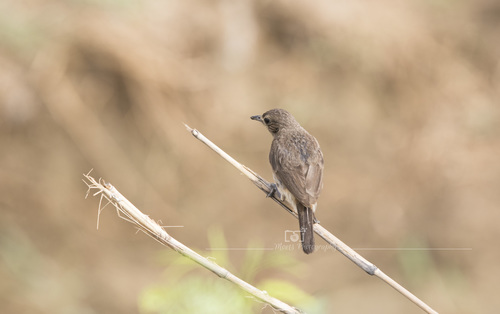 Elsterschmätzer
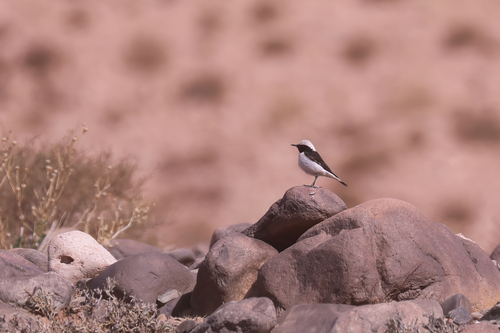 Schwarzrücken-Steinschmätzer
Kurz gesagt
The most reliable field mark to separate Pied Bushchat from Mourning Wheatear in the field is the tail and rump pattern: Mourning Wheatear of all ages shows a striking white tail with a black tip and central black 'T' pattern, while Pied Bushchat has a dark tail with only a white rump and vent (male). In flight, Mourning Wheatear flashes a bold white base to the tail and a white 'flag' on the wing, which Pied Bushchat lacks. Adult male Pied Bushchat is all black with a white wing patch and rump, but females and juveniles are drab brown and can be confused with female/immature Mourning Wheatear. Structure and jizz are similar, but Mourning Wheatear is slightly larger and longer-tailed. Habitat and range overlap is limited, but both can occur in open, scrubby areas.
Bestimmungstipps
- Tail pattern in all ages: Mourning Wheatear always shows a white tail with a black tip and a central black intrusion forming an inverted 'T'—this is visible both perched and in flight, and is the single best separator at any age or sex.
- Rump and vent: Male Pied Bushchat has a white rump and vent but a dark tail; Mourning Wheatear has a white rump merging into the white tail with black tip.
- Wing pattern in flight: Mourning Wheatear flashes a white 'flag' on the wing (white bases of flight feathers) when flying, while Pied Bushchat does not show any white in the wing except for a white shoulder patch in males, which is visible at rest.
- Shoulder/wing patch: Male Pied Bushchat has a distinct white wing patch (shoulder) at rest; Mourning Wheatear's wings are all black at rest (except in flight, when white bases show).
- Plumage color (males): Male Pied Bushchat is all black with white rump and wing patch; Mourning Wheatear male is black and white, with white crown, nape, chest, and belly, and black head, neck, and back.
- Plumage color (females): Female Pied Bushchat is brown above with rufous underparts and rump, lacking any white patches; female Mourning Wheatear is paler brown or grey-brown, but always shows the white tail with black tip.
- Juvenile confusion: Juvenile Pied Bushchat is dark above and scaly below, with no white in tail or wing; juvenile Mourning Wheatear, though not described in detail, will still show the white tail with black tip.
- Size and shape: Mourning Wheatear is slightly larger and longer-tailed, but this is subtle and not always reliable in the field.
- Perching behavior: Both perch upright, but Mourning Wheatear may appear more elongated and is often more conspicuous due to its plumage.
- Habitat context: If in arid, rocky, or desert-like terrain in the Middle East or North Africa, Mourning Wheatear is more likely; in grassy, scrubby, or cultivated land in South Asia, Pied Bushchat is expected.
- Geographic range: Overlap is limited; check local field guides for expected species.
- Voice: Pied Bushchat's whistling call is distinctive if heard, but Mourning Wheatear's call is not described here.
- Sexual dimorphism: Pied Bushchat shows strong sexual dimorphism (black male, brown female); Mourning Wheatear is less dimorphic except in some subspecies (e.g., Maghreb wheatear).
- White in wing: Only male Pied Bushchat shows a white wing patch at rest; Mourning Wheatear's white is only visible in flight.
- Pitfall: Female and juvenile Pied Bushchat can look superficially similar to female Mourning Wheatear, but always check the tail pattern for confirmation.
Größe
Mourning Wheatear is slightly larger, measuring 14–16 cm in length and weighing 19–25 g, while Pied Bushchat is smaller at about 13 cm (no mass given, but consistently described as smaller and dumpier) [wikipedia]. Both are small, upright passerines, but Mourning Wheatear may appear longer-tailed and more elongated in posture.
Gefieder
- Juvenile/immature birds: Juvenile Pied Bushchat is dark above and scaly below, resembling the female but with a more speckled underside. Juvenile Mourning Wheatear is not described in detail here, but even young birds show the distinctive white tail with black tip and central black intrusion, a key mark at all ages.
- Adult males: Pied Bushchat male is black with a white rump, lower belly, and a white wing patch (shoulder), but has a dark tail. Mourning Wheatear male is black and white: white crown, nape, chest, belly, and rump, with black head, neck, and back, and a white tail with a black tip and central black 'T'. The wings are black at rest but show a white base in flight.
- Adult females: Pied Bushchat female is drab brown above with rufous underparts and rump, lacking any white wing or tail patches. Mourning Wheatear female is paler than the male, with more brownish or grey-brown tones depending on subspecies, but still shows the white tail with black tip and central intrusion.
- In flight: Mourning Wheatear always shows a white tail with black tip and a white 'flag' on the wing (white bases of flight feathers), while Pied Bushchat lacks these and shows only a white rump (male) and dark tail.
Verhalten
Both species perch upright on shrubs or low trees, scanning for insects, and sally out to catch prey. Pied Bushchat is often seen on the tops of short thorn trees or shrubs, while Mourning Wheatear uses similar open perches but may appear more conspicuous due to its striking plumage. Both species are insectivorous and hunt from prominent perches. No major behavioral differences are diagnostic in the field.
Lebensraum
Pied Bushchat is widespread in open scrub, grassland, and cultivated areas across southern Asia, from the Middle East to Indonesia. Mourning Wheatear is found in northern Africa and the Middle East, favoring arid, rocky, or desert-like open habitats. While both use open country, Pied Bushchat is more associated with grassy or agricultural landscapes, and Mourning Wheatear with rocky or semi-desert terrain. Overlap is limited to the western edge of Pied Bushchat's range.
Stimme
Pied Bushchat has a whistling call, described as 'we are tea for two' with the 'tea' at a higher note, somewhat reminiscent of Indian Robin. No vocal description is provided for Mourning Wheatear here, so voice is not a reliable separator based on these notes.
Elsterschmätzer · Schwarzrücken-Steinschmätzer · Meine schwierigen Vögel