

Streifenwaldsänger vs Blaurücken-Waldsänger
Setophaga striata gegen Setophaga caerulescens
Ein Quiz mit Streifenwaldsänger und Blaurücken-Waldsänger spielen
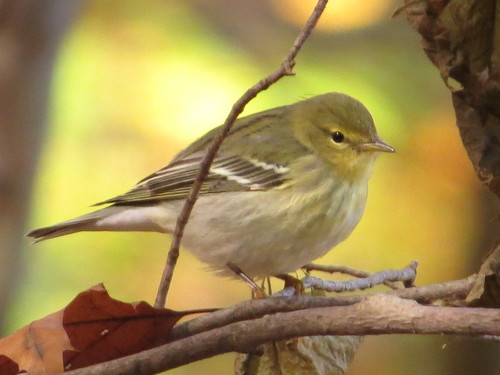 Streifenwaldsänger
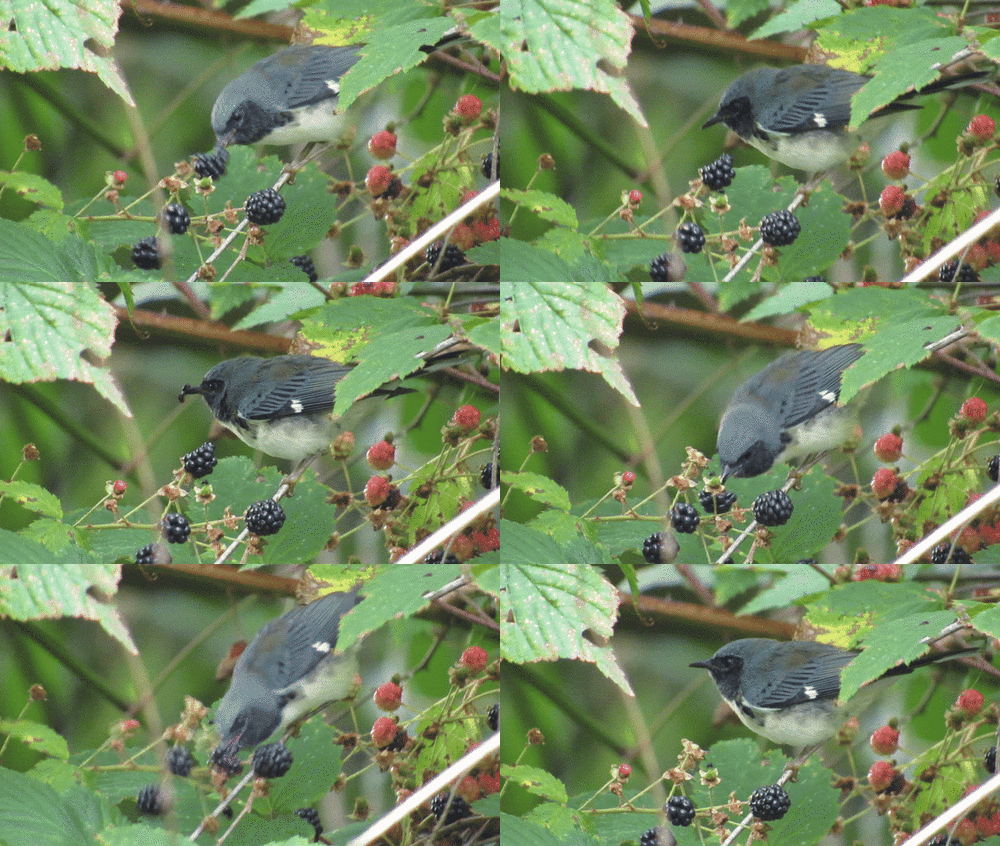 Blaurücken-Waldsänger
Kurz gesagt
The most reliable way to separate Blackpoll Warbler and Black-throated Blue Warbler is by focusing on head and wing pattern: Blackpolls (especially breeding males) show a bold black cap and white cheeks with two white wing bars, while Black-throated Blue males have a solid black face and throat with deep blue upperparts and a small, often hidden, white wing patch. Females and immatures of both species are much duller, but Blackpolls retain obvious wing bars and orangish-pink legs, whereas female Black-throated Blues have a single small white wing spot and lack bright leg color. In flight or perched, check for the presence and shape of wing markings and the overall contrast of the head and underparts. Both species can be confused in fall, especially as Blackpolls become greenish and Black-throated Blues lose their crisp breeding colors, but careful attention to wing pattern and leg color will usually resolve the ID.
Bestimmungstipps
- Wing Pattern (All Ages): Blackpoll Warbler always shows two white wing bars, while Black-throated Blue Warbler has a single small white wing patch (not a bar), often hidden. This is the most reliable mark for immatures and females.
- Head Pattern (Breeding Males): Blackpoll males have a bold black cap and white cheeks; Black-throated Blue males have a solid black face and throat with blue upperparts and white underparts.
- Leg Color: Blackpoll Warbler has bright orangish-pink legs in all plumages, a unique feature among eastern warblers. Black-throated Blue has dark legs.
- Back Color (Breeding Males): Blackpolls have dark-streaked brown backs; Black-throated Blues are deep blue above.
- Underpart Streaking: Blackpolls (especially males) have black streaks on white underparts; Black-throated Blues have clean white underparts (males) or pale yellowish (females) with no streaking.
- Female/Immature Confusion: Female Blackpolls are grayish with two wing bars and faint streaking, while female Black-throated Blues are olive-brown with a single white wing patch and no streaking below.
- Fall Plumage: Blackpolls become greenish above and yellowish below but retain wing bars and pink legs; Black-throated Blues become drabber but keep the single white wing patch.
- Juvenile Marks: Juvenile Black-throated Blues have a creamy eyebrow and brownish spots on the throat and belly; juvenile Blackpolls are more uniformly greenish with wing bars and yellowish underparts.
- Bill Shape: Both have thin, pointed bills typical of warblers; not a strong separator.
- Size: Blackpolls are slightly larger and bulkier, but this is rarely obvious in the field.
- Flight Jizz: Blackpolls may appear longer-winged and more robust, especially in migration.
- Habitat: During migration, both can overlap, but Black-throated Blues prefer dense understory in mature forests; Blackpolls are more often in open woodlands and edges.
- Voice: If singing, Black-throated Blue gives a buzzy, rising song; Blackpoll's song is high, thin, and hard to hear.
- Pitfalls: In fall, both species can look greenish and dull; focus on wing pattern (bars vs. patch) and leg color.
- Sexual Dimorphism: Black-throated Blue is strongly sexually dimorphic (males blue/black, females olive-brown); Blackpolls are less so, with females being a duller version of the male.
Größe
Blackpoll Warbler is slightly larger and heavier than Black-throated Blue Warbler, with an average mass of about 12.3 g compared to the Black-throated Blue's 8.4–12.4 g. Blackpolls measure 12.5–15 cm in length with a wingspan of 20–25 cm, while Black-throated Blues are about 13 cm long with a wingspan of 19–20 cm. In the field, this size difference is subtle and rarely diagnostic, but Blackpolls may appear a bit longer-winged and bulkier, especially during migration when they fatten up.
Gefieder
Juvenile and immature Blackpoll Warblers have greenish heads, streaked greenish upperparts, and yellowish underparts, but always show two white wing bars and orangish-pink legs. Their wing bars are prominent in all ages and seasons. In contrast, juvenile Black-throated Blue Warblers have brown upperparts, a creamy supercilium, and brownish spots on the throat and belly, with a single small white wing patch (sometimes hard to see). Adult male Blackpolls in breeding plumage are boldly patterned with a black cap, white cheeks, and streaked underparts, while adult male Black-throated Blues are deep blue above, with a solid black face and throat and white underparts. Females of both are much duller: female Blackpolls are grayish with faint streaking and two white wing bars, while female Black-throated Blues are olive-brown above, pale below, and have a small white wing spot but no wing bars. In fall, Blackpolls become greenish above and yellowish below, but still show wing bars; Black-throated Blues become drabber but retain the single white wing patch.
Verhalten
Both species are active foragers in the canopy and midstory, but Blackpoll Warblers are famous for their long migratory flights and may appear more restless or bulked-up during migration. Black-throated Blue Warblers often forage a bit lower in dense shrubs and are more likely to be seen in mature hardwood forests with thick understory. In flight, both are quick and agile, but Blackpolls may seem slightly longer-winged.
Lebensraum
Blackpoll Warblers breed in northern coniferous forests and migrate through a wide range of habitats, but are most often seen in migration in the northeastern US. Black-throated Blue Warblers breed in the interior of deciduous and mixed forests of eastern North America, especially where there is a dense shrub layer. During migration, both can occur in overlapping habitats, but Black-throated Blues are more tied to forest interiors and thick undergrowth, while Blackpolls are more likely in open woodlands and edge habitats during migration.
Stimme
Black-throated Blue Warbler has a distinctive buzzy song ('zee-zee-zeeee') with an upward inflection and a flat 'ctuk' call. Blackpoll Warbler's song is a very high-pitched, thin series of 'tsit' notes, often difficult for some listeners to hear. In migration, both are generally quiet, but if heard, the difference in song quality is clear: Black-throated Blue is buzzy and musical, Blackpoll is thin and insect-like.
Streifenwaldsänger · Blaurücken-Waldsänger · Meine schwierigen Vögel