
Zenaida Dove vs Carib Grackle
Zenaida aurita versus Quiscalus lugubris
Play a quiz with Zenaida Dove and Carib Grackle
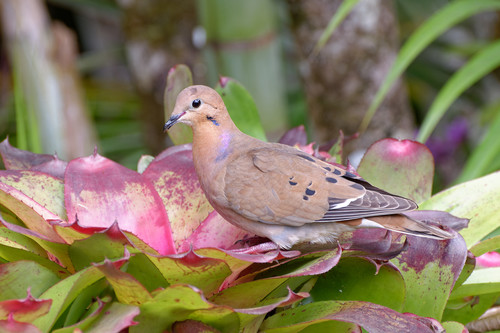 Zenaida Dove
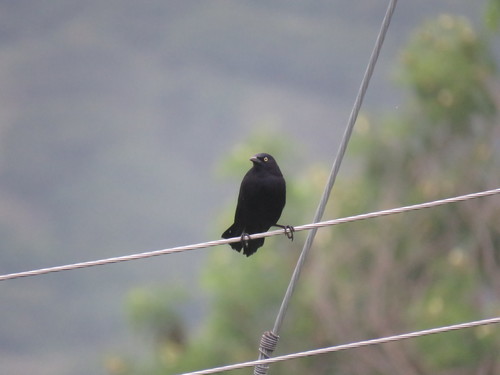 Carib Grackle
In short
The most reliable field mark to separate Zenaida Dove from Carib Grackle is the dove’s white trailing edge on the wings in flight, which is never present on the grackle. In perched or walking views, Zenaida Dove is a chunky, darkly-colored pigeon with a short, rounded tail, while Carib Grackle is a slender, long-tailed blackbird with a distinctive keel-shaped tail in males. Female and juvenile grackles are brownish but still show a much slimmer build and shorter, flatter tail than the dove. Voice, structure, and habitat also help, but the wing pattern in flight and overall jizz are the quickest clues.
Identification tips
- White trailing edge on wing (Zenaida Dove only): In any age or sex, look for a clear white line along the trailing edge of the wing in flight. Carib Grackle never shows this.
- Tail shape: Zenaida Dove has a short, rounded tail; Carib Grackle males have a very long, V-shaped tail, and females have a shorter, flat tail. The grackle’s tail is always longer in proportion to its body.
- Body structure: Doves are chunky and compact, with a thick neck and short bill. Grackles are slim, long-legged, and have a pointed bill.
- Bill shape: Zenaida Dove’s bill is short and pigeon-like; Carib Grackle’s is long, slender, and sharply pointed.
- Plumage gloss: Adult male grackles are glossy black with violet or greenish sheen, especially on wings and tail. Zenaida Dove is dark brownish with only subtle iridescence.
- Eye color: Adult Carib Grackles have striking yellow eyes (except juveniles and young females, which are dark); Zenaida Dove has dark eyes in all ages.
- Female and juvenile confusion: Female and juvenile grackles are brownish but much slimmer than the dove, with a longer tail and never a white wing edge.
- Flight style: Zenaida Dove flies with strong, direct wingbeats and shows the white trailing edge; Carib Grackle’s flight is more undulating, with the long tail trailing or held in a V.
- Foraging behavior: Doves walk with a bobbing gait and feed quietly on the ground; grackles are more active, often in noisy groups, and may forage in trees or on the ground.
- Vocalizations: Dove’s call is a soft, mournful coo; grackle’s is a harsh, varied chatter or squeak, never a coo.
- Habitat overlap: Both can be found in open, urban, or coastal habitats, so do not rely solely on location.
- Perched posture: Doves sit horizontally and appear thickset; grackles perch more upright and look lanky.
- Group size: Zenaida Dove is usually solitary or in small groups; Carib Grackle often forms larger, noisy flocks.
- Feeding near water: Both may be seen near water, but doves are more likely to be quietly feeding on seeds, while grackles may be more opportunistic and visible.
- Seasonal confusion: No seasonal plumage in either species creates confusion, but juvenile grackles are browner and streakier, still lacking the dove’s wing pattern.
Size
Zenaida Dove is significantly heavier and bulkier (body mass ~159 g) than Carib Grackle (male 66–80 g, female 49–58 g). The dove is also slightly longer (28–30 cm) than male grackles (26 cm) and much longer than female grackles (22 cm), but the grackle’s long tail can make it look deceptively large at a distance. The dove’s body is more compact and robust, while the grackle is slender and lightweight.
Plumage
The white trailing edge on the wings of Zenaida Dove in flight is the single best mark, present in all ages and sexes; Carib Grackle never shows this. Zenaida Dove is overall dark brownish with a slight iridescence and a short, rounded tail. Carib Grackle adult males are glossy black with violet or greenish gloss, especially on wings and tail, and have a long, V-shaped tail. Females and juveniles are brownish, with females showing paler throats and underparts, and juveniles being streaked in some subspecies. Both sexes of grackle have yellow eyes as adults (dark in juveniles and young females), while Zenaida Dove has dark eyes. The grackle’s bill is always black and pointed, while the dove’s is short and pigeon-like. No age or season of Carib Grackle ever shows the dove’s white wing edge.
Behaviour
Zenaida Dove forages mostly on the ground, walking with a pigeon’s bobbing gait, and is often seen alone or in small groups. In flight, it is direct and strong, with obvious white on the trailing wing. Carib Grackle is much more active and social, often in flocks, and displays a variety of behaviors including tail-raising, wing-shaking, and noisy group foraging. Grackles often perch high and walk with a more upright, strutting posture. In flight, the grackle’s long tail is very noticeable and often held in a V-shape, especially in males.
Habitat
Both species can be found in open and semi-open habitats, including urban parks and gardens. Zenaida Dove prefers lowlands, coastal plains, scrub, and sometimes higher elevations in the Caribbean, often near water and beaches. Carib Grackle is more likely to be seen in flocks in open areas, pastures, and urban settings, and is generally more conspicuous and noisy. Both can adapt to human-altered environments, so context alone is not always diagnostic.
Voice
Zenaida Dove gives a mournful, cooing call (cooOOoo-coo-coo-coo), similar to Mourning Dove but faster. Carib Grackle is much more vocal and varied, with harsh, chattering, and squeaky calls, never resembling a dove’s coo. The dove’s call is soft and repetitive, while the grackle’s is loud, sharp, and often given in groups.