

Motmot

Zappey's Flycatcher vs Mangrove Blue Flycatcher

Cyanoptila cumatilis versus Cyornis rufigastra

Play a quiz with Zappey's Flycatcher and Mangrove Blue Flycatcher
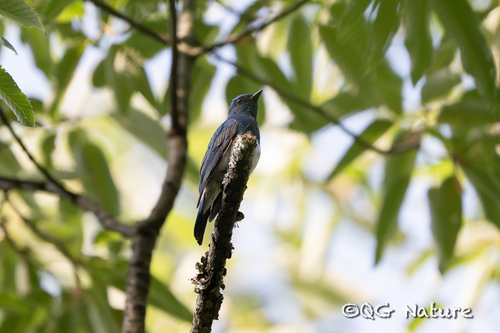
Zappey's Flycatcher (Cyanoptila cumatilis) Zappey's Flycatcher
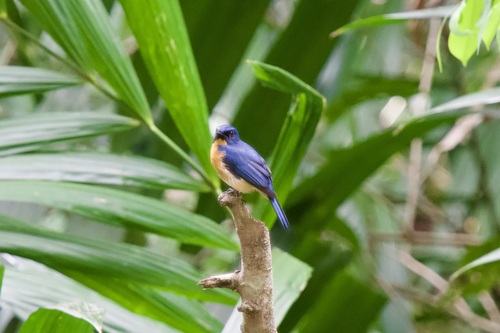
Mangrove Blue Flycatcher (Cyornis rufigastra) Mangrove Blue Flycatcher

Media

Loading…

In short

The most reliable field mark for separating Zappey's Flycatcher from Mangrove Blue Flycatcher is the overall plumage tone and underpart contrast: Zappey's (especially adult males) shows a strikingly white belly and vent with greenish-turquoise upperparts, while Mangrove Blue Flycatcher is richer blue above and has orange or rufous tones on the breast and flanks. Immature and female Zappey's can look duller, but still lack any orange below. Both species are similar in size and structure, but their habitat preferences are distinct: Zappey's is a migrant of forest and woodland, while Mangrove Blue is tied to mangroves. If you see a blue flycatcher with orange underparts in a mangrove, it's almost certainly Mangrove Blue; if it's white-bellied and greener-blue, especially inland, it's Zappey's.

Identification tips

  1. Underpart color is the most consistent mark: Zappey's Flycatcher of all ages and sexes shows pure white underparts (sometimes faintly greyish on the flanks), never orange or rufous. Mangrove Blue Flycatcher always has orange or rufous on the breast and flanks.
  2. Upperpart tone: Adult male Zappey's is greenish-turquoise blue above, with a greenish-black face and upper breast. Mangrove Blue is blue above, lacking the greenish cast.
  3. Tail base patches: Zappey's has two small white patches at the base of the tail (sides), visible in good views; Mangrove Blue is not described as having these.
  4. Female/immature confusion: Female and immature Zappey's are greyish-brown above with white throat and underparts, lacking any orange below. Mangrove Blue females/immatures are not detailed, but the presence of orange/rufous on the breast/flanks is diagnostic for Mangrove Blue at all ages.
  5. Yearling Zappey's males: These birds are intermediate, with blue wings/rump/tail but grey-brown head/mantle and white throat. They may be confused with Mangrove Blue, but again, lack any orange below.
  6. Bill and legs: Both species have dark grey to black bills and legs; this is not useful for separation.
  7. Habitat context: Zappey's is found in inland forests and woodlands, especially during migration and breeding in China. Mangrove Blue is restricted to mangrove forests in Southeast Asia and South Asia. Habitat is a strong clue.
  8. Geographic range: Zappey's breeds in central China and winters in Southeast Asia, but not in mangroves. Mangrove Blue is resident in mangroves of Southeast Asia, Philippines, Sri Lanka, and nearby regions.
  9. Size and structure: Both are similarly large flycatchers (about 17 cm for Zappey's), with no notable structural differences described.
  10. Flight and wing pattern: No distinctive upperwing or flight pattern marks are described for either species in the sources; focus on plumage and habitat.
  11. Seasonal context: Zappey's is migratory; Mangrove Blue is resident. Timing and location may help if you know the local flycatcher status.
  12. Face and upper breast color (males): Zappey's has a greenish-black face and upper breast; Mangrove Blue's face is not described as contrasting.
  13. Pitfall: Immature Zappey's males may look odd, with blue wings and brownish head, but always lack orange below. Do not mistake a dull Zappey's for a Mangrove Blue unless you see orange on the breast/flanks.
  14. If in doubt: If you see a blue flycatcher with white underparts (no orange) in a forest or woodland, especially in China or on migration, it's Zappey's. If you see a blue flycatcher with orange/rufous below in a mangrove, it's Mangrove Blue.
  15. When marks fail: If you cannot see the underparts clearly, try to note habitat and upperpart tone. The greenish-blue of Zappey's is subtly different from the blue of Mangrove Blue, but this is less reliable than underpart color and habitat.

Size

Both species are similar in size, with Zappey's Flycatcher described as a large flycatcher at about 17 cm in length [wikipedia]. There are no precise measurements for Mangrove Blue Flycatcher in the provided notes, but there is no indication of a significant size difference between the two. Structure (bill, tail, wing) is not described as notably different in the sources.

Plumage

For adult males, Zappey's Flycatcher is greenish-turquoise blue above with a greenish-black face and upper breast, and has pure white underparts (sometimes faintly greyish on the flanks). The tail matches the back and has two small white patches at the base. Immature (yearling) males are intermediate: blue wings, rump, and tail like adult males, but with a grey-brown head and mantle and a white throat, resembling females. Females are overall greyish-brown above, with a white throat and underparts. In all ages and sexes, Zappey's lacks any orange or rufous tones below.

Mangrove Blue Flycatcher, in contrast, is blue above (not described as greenish) and has orange or rufous on the breast and flanks, with the rest of the underparts paler. There is no mention of white patches at the base of the tail. Females and immatures are not described in detail in the notes, but the presence of orange/rufous on the underparts is a key difference at all ages.

No age-specific upperwing pattern or flight mark is described for either species in the provided notes.

Behaviour

No behavioral differences are described in the notes. Both are typical flycatchers in their habits, but no diagnostic jizz or flight style is mentioned.

Habitat

Habitat is a strong separator: Zappey's Flycatcher breeds in inland forests and woodlands of central China and winters in Southeast Asian forests, avoiding mangroves. Mangrove Blue Flycatcher is restricted to subtropical or tropical mangrove forests in Southeast Asia and parts of South Asia. If the bird is in a mangrove, Mangrove Blue is far more likely; if away from mangroves, especially in China, Zappey's is the better candidate.

Submit a better description

Use the same sections as the comparison. Your text is published immediately.

The most reliable field mark for separating Zappey's Flycatcher from Mangrove Blue Flycatcher is the overall plumage tone and underpart contrast: Zappey's (especially adult males) shows a strikingly white belly and vent with greenish-turquoise upperparts, while Mangrove Blue Flycatcher is richer blue above and has orange or rufous tones on the breast and flanks. Immature and female Zappey's can look duller, but still lack any orange below. Both species are similar in size and structure, but their habitat preferences are distinct: Zappey's is a migrant of forest and woodland, while Mangrove Blue is tied to mangroves. If you see a blue flycatcher with orange underparts in a mangrove, it's almost certainly Mangrove Blue; if it's white-bellied and greener-blue, especially inland, it's Zappey's.

  1. Underpart color is the most consistent mark: Zappey's Flycatcher of all ages and sexes shows pure white underparts (sometimes faintly greyish on the flanks), never orange or rufous. Mangrove Blue Flycatcher always has orange or rufous on the breast and flanks.
  2. Upperpart tone: Adult male Zappey's is greenish-turquoise blue above, with a greenish-black face and upper breast. Mangrove Blue is blue above, lacking the greenish cast.
  3. Tail base patches: Zappey's has two small white patches at the base of the tail (sides), visible in good views; Mangrove Blue is not described as having these.
  4. Female/immature confusion: Female and immature Zappey's are greyish-brown above with white throat and underparts, lacking any orange below. Mangrove Blue females/immatures are not detailed, but the presence of orange/rufous on the breast/flanks is diagnostic for Mangrove Blue at all ages.
  5. Yearling Zappey's males: These birds are intermediate, with blue wings/rump/tail but grey-brown head/mantle and white throat. They may be confused with Mangrove Blue, but again, lack any orange below.
  6. Bill and legs: Both species have dark grey to black bills and legs; this is not useful for separation.
  7. Habitat context: Zappey's is found in inland forests and woodlands, especially during migration and breeding in China. Mangrove Blue is restricted to mangrove forests in Southeast Asia and South Asia. Habitat is a strong clue.
  8. Geographic range: Zappey's breeds in central China and winters in Southeast Asia, but not in mangroves. Mangrove Blue is resident in mangroves of Southeast Asia, Philippines, Sri Lanka, and nearby regions.
  9. Size and structure: Both are similarly large flycatchers (about 17 cm for Zappey's), with no notable structural differences described.
  10. Flight and wing pattern: No distinctive upperwing or flight pattern marks are described for either species in the sources; focus on plumage and habitat.
  11. Seasonal context: Zappey's is migratory; Mangrove Blue is resident. Timing and location may help if you know the local flycatcher status.
  12. Face and upper breast color (males): Zappey's has a greenish-black face and upper breast; Mangrove Blue's face is not described as contrasting.
  13. Pitfall: Immature Zappey's males may look odd, with blue wings and brownish head, but always lack orange below. Do not mistake a dull Zappey's for a Mangrove Blue unless you see orange on the breast/flanks.
  14. If in doubt: If you see a blue flycatcher with white underparts (no orange) in a forest or woodland, especially in China or on migration, it's Zappey's. If you see a blue flycatcher with orange/rufous below in a mangrove, it's Mangrove Blue.
  15. When marks fail: If you cannot see the underparts clearly, try to note habitat and upperpart tone. The greenish-blue of Zappey's is subtly different from the blue of Mangrove Blue, but this is less reliable than underpart color and habitat.

Both species are similar in size, with Zappey's Flycatcher described as a large flycatcher at about 17 cm in length [wikipedia]. There are no precise measurements for Mangrove Blue Flycatcher in the provided notes, but there is no indication of a significant size difference between the two. Structure (bill, tail, wing) is not described as notably different in the sources.

For adult males, Zappey's Flycatcher is greenish-turquoise blue above with a greenish-black face and upper breast, and has pure white underparts (sometimes faintly greyish on the flanks). The tail matches the back and has two small white patches at the base. Immature (yearling) males are intermediate: blue wings, rump, and tail like adult males, but with a grey-brown head and mantle and a white throat, resembling females. Females are overall greyish-brown above, with a white throat and underparts. In all ages and sexes, Zappey's lacks any orange or rufous tones below.

Mangrove Blue Flycatcher, in contrast, is blue above (not described as greenish) and has orange or rufous on the breast and flanks, with the rest of the underparts paler. There is no mention of white patches at the base of the tail. Females and immatures are not described in detail in the notes, but the presence of orange/rufous on the underparts is a key difference at all ages.

No age-specific upperwing pattern or flight mark is described for either species in the provided notes.

No behavioral differences are described in the notes. Both are typical flycatchers in their habits, but no diagnostic jizz or flight style is mentioned.

Habitat is a strong separator: Zappey's Flycatcher breeds in inland forests and woodlands of central China and winters in Southeast Asian forests, avoiding mangroves. Mangrove Blue Flycatcher is restricted to subtropical or tropical mangrove forests in Southeast Asia and parts of South Asia. If the bird is in a mangrove, Mangrove Blue is far more likely; if away from mangroves, especially in China, Zappey's is the better candidate.

Discard your changes?

You have unsaved edits. If you leave now, those changes will be lost.

Zappey's Flycatcher · Mangrove Blue Flycatcher · My Tricky Birds