

Motmot

Yellow-bellied Prinia vs Zitting Cisticola

Prinia flaviventris versus Cisticola juncidis

Play a quiz with Yellow-bellied Prinia and Zitting Cisticola
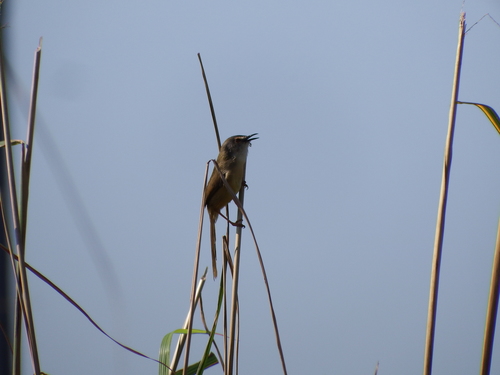
Yellow-bellied Prinia (Prinia flaviventris) Yellow-bellied Prinia
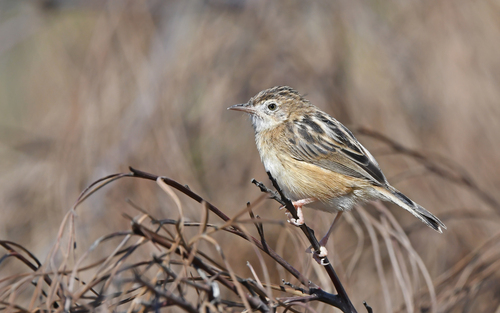
Zitting Cisticola (Cisticola juncidis) Zitting Cisticola

Media

Loading…

In short

The most reliable field mark to separate Yellow-bellied Prinia from Zitting Cisticola is the presence of a bright yellow belly in the prinia, versus the cisticola’s more streaked, earth-toned underparts and distinctive rufous rump. Zitting Cisticola also shows a brownish tail with white tips and lacks any gold or yellow on the collar, while Yellow-bellied Prinia is overall plainer above and below except for its yellow belly. Both are small, active warblers of grassy habitats, but the cisticola’s tail and flight display are distinctive if seen well. Immature and non-breeding birds can be especially confusing, so focus on underpart color and tail pattern for the most reliable separation.

Identification tips

  1. Yellow belly: Only Yellow-bellied Prinia shows a bright yellow belly in all plumages; Zitting Cisticola has pale, streaked underparts without yellow. This is the single most reliable field mark.
  2. Rufous rump: Zitting Cisticola always shows a rufous rump, visible in flight or when the tail is cocked; Yellow-bellied Prinia lacks this feature.
  3. Tail pattern: Zitting Cisticola has a brownish tail with white tips, especially visible when fanned or in flight. Prinia’s tail is plainer and lacks white tips.
  4. Collar/neck color: Zitting Cisticola lacks any gold or yellow on the collar or neck, while Yellow-bellied Prinia may show some yellowish wash extending up from the belly.
  5. Upperpart streaking: Zitting Cisticola is streaked and earth-toned above, while Yellow-bellied Prinia is plainer and less patterned on the back.
  6. Flight display: If you see a bird performing a zigzagging flight with regular 'zit' calls, it is a Zitting Cisticola. Yellow-bellied Prinia does not display this way.
  7. Perched behavior: Prinia is more likely to be seen moving through low vegetation or reeds, while cisticola often perches on exposed grass stems, especially during display.
  8. Habitat context: In very open, dry grasslands, Zitting Cisticola is more likely; in wetter, reedier, or bushier areas, Yellow-bellied Prinia is more expected, though overlap occurs.
  9. Vocalization: Listen for the mechanical, repetitive 'zit' song of the cisticola, especially if given in flight. Prinia’s song is not described here, so use caution if relying on voice alone.
  10. Tail length and shape: While both are small and short-tailed, the cisticola’s tail may appear more rounded and is often fanned, showing the white tips.
  11. Season and age: Juvenile and non-breeding birds can be confusing, but the yellow belly of the prinia is present year-round and in all ages; cisticola never shows yellow below.
  12. Subspecies variation: Zitting Cisticola shows some regional variation in song and slight plumage differences, but the rufous rump and tail pattern are consistent across subspecies.
  13. Pitfalls: In poor light, the yellow belly of the prinia may look pale or whitish—try to get a clear view in good light. Beware of worn or molting birds, but the tail pattern and rump color of cisticola remain reliable.
  14. Size: Both species are extremely small and similar in size; do not use size for separation.
  15. Local abundance: In some regions, one species may be much more common than the other. Use eBird or local checklists to set expectations, but always confirm with field marks.

Size

Yellow-bellied Prinia is extremely small, with a body mass of about 7.6g [wikidata]. Zitting Cisticola is similarly tiny, but no direct mass figure is provided for comparison. In the field, both appear equally diminutive and size is not a reliable separator between these two species.

Plumage

Juvenile and non-breeding Yellow-bellied Prinia retain the yellowish wash on the belly, which is absent in all ages of Zitting Cisticola. Zitting Cisticola, regardless of age or season, shows a rufous rump and a brownish tail with white tips, which is especially visible in flight or when the tail is fanned. The cisticola’s upperparts are streaked and earth-toned, while the prinia is plainer above. No distinctive age-specific upperwing patterns are noted for either species, so focus on underpart color and tail pattern. During the breeding season, Zitting Cisticola males may appear more striking due to their display behavior, but the basic plumage contrasts remain consistent year-round.

Behaviour

Zitting Cisticola is well known for its conspicuous flight display: males fly in a zigzag pattern above grasslands, giving regular 'zit' calls. This behavior is unique and diagnostic if observed. Yellow-bellied Prinia is more skulking, typically moving through low vegetation and less likely to perform aerial displays. Both species are active and restless, but the cisticola’s flight display is a strong behavioral clue.

Habitat

Both species favor grassy or shrubby habitats, but Zitting Cisticola is more strictly associated with open grasslands, especially in drier or agricultural areas. Yellow-bellied Prinia is found in a wider range of habitats including wet grasslands, reedbeds, and sometimes scrubby edges. Overlap is possible, so habitat alone is not diagnostic, but a bird in very open, dry grassland is more likely to be a cisticola.

Voice

Zitting Cisticola is named for its song: a series of evenly spaced 'zit' notes, often given in flight. In eastern Asia, some populations give a 'double zit' pattern, but the basic 'zit' call is widespread. Yellow-bellied Prinia’s vocalizations are not described in the provided notes, so the presence of a regular, mechanical 'zit' song in flight is a strong indicator of Zitting Cisticola.

Submit a better description

Use the same sections as the comparison. Your text is published immediately.

The most reliable field mark to separate Yellow-bellied Prinia from Zitting Cisticola is the presence of a bright yellow belly in the prinia, versus the cisticola’s more streaked, earth-toned underparts and distinctive rufous rump. Zitting Cisticola also shows a brownish tail with white tips and lacks any gold or yellow on the collar, while Yellow-bellied Prinia is overall plainer above and below except for its yellow belly. Both are small, active warblers of grassy habitats, but the cisticola’s tail and flight display are distinctive if seen well. Immature and non-breeding birds can be especially confusing, so focus on underpart color and tail pattern for the most reliable separation.

  1. Yellow belly: Only Yellow-bellied Prinia shows a bright yellow belly in all plumages; Zitting Cisticola has pale, streaked underparts without yellow. This is the single most reliable field mark.
  2. Rufous rump: Zitting Cisticola always shows a rufous rump, visible in flight or when the tail is cocked; Yellow-bellied Prinia lacks this feature.
  3. Tail pattern: Zitting Cisticola has a brownish tail with white tips, especially visible when fanned or in flight. Prinia’s tail is plainer and lacks white tips.
  4. Collar/neck color: Zitting Cisticola lacks any gold or yellow on the collar or neck, while Yellow-bellied Prinia may show some yellowish wash extending up from the belly.
  5. Upperpart streaking: Zitting Cisticola is streaked and earth-toned above, while Yellow-bellied Prinia is plainer and less patterned on the back.
  6. Flight display: If you see a bird performing a zigzagging flight with regular 'zit' calls, it is a Zitting Cisticola. Yellow-bellied Prinia does not display this way.
  7. Perched behavior: Prinia is more likely to be seen moving through low vegetation or reeds, while cisticola often perches on exposed grass stems, especially during display.
  8. Habitat context: In very open, dry grasslands, Zitting Cisticola is more likely; in wetter, reedier, or bushier areas, Yellow-bellied Prinia is more expected, though overlap occurs.
  9. Vocalization: Listen for the mechanical, repetitive 'zit' song of the cisticola, especially if given in flight. Prinia’s song is not described here, so use caution if relying on voice alone.
  10. Tail length and shape: While both are small and short-tailed, the cisticola’s tail may appear more rounded and is often fanned, showing the white tips.
  11. Season and age: Juvenile and non-breeding birds can be confusing, but the yellow belly of the prinia is present year-round and in all ages; cisticola never shows yellow below.
  12. Subspecies variation: Zitting Cisticola shows some regional variation in song and slight plumage differences, but the rufous rump and tail pattern are consistent across subspecies.
  13. Pitfalls: In poor light, the yellow belly of the prinia may look pale or whitish—try to get a clear view in good light. Beware of worn or molting birds, but the tail pattern and rump color of cisticola remain reliable.
  14. Size: Both species are extremely small and similar in size; do not use size for separation.
  15. Local abundance: In some regions, one species may be much more common than the other. Use eBird or local checklists to set expectations, but always confirm with field marks.

Yellow-bellied Prinia is extremely small, with a body mass of about 7.6g [wikidata]. Zitting Cisticola is similarly tiny, but no direct mass figure is provided for comparison. In the field, both appear equally diminutive and size is not a reliable separator between these two species.

Juvenile and non-breeding Yellow-bellied Prinia retain the yellowish wash on the belly, which is absent in all ages of Zitting Cisticola. Zitting Cisticola, regardless of age or season, shows a rufous rump and a brownish tail with white tips, which is especially visible in flight or when the tail is fanned. The cisticola’s upperparts are streaked and earth-toned, while the prinia is plainer above. No distinctive age-specific upperwing patterns are noted for either species, so focus on underpart color and tail pattern. During the breeding season, Zitting Cisticola males may appear more striking due to their display behavior, but the basic plumage contrasts remain consistent year-round.

Zitting Cisticola is well known for its conspicuous flight display: males fly in a zigzag pattern above grasslands, giving regular 'zit' calls. This behavior is unique and diagnostic if observed. Yellow-bellied Prinia is more skulking, typically moving through low vegetation and less likely to perform aerial displays. Both species are active and restless, but the cisticola’s flight display is a strong behavioral clue.

Both species favor grassy or shrubby habitats, but Zitting Cisticola is more strictly associated with open grasslands, especially in drier or agricultural areas. Yellow-bellied Prinia is found in a wider range of habitats including wet grasslands, reedbeds, and sometimes scrubby edges. Overlap is possible, so habitat alone is not diagnostic, but a bird in very open, dry grassland is more likely to be a cisticola.

Zitting Cisticola is named for its song: a series of evenly spaced 'zit' notes, often given in flight. In eastern Asia, some populations give a 'double zit' pattern, but the basic 'zit' call is widespread. Yellow-bellied Prinia’s vocalizations are not described in the provided notes, so the presence of a regular, mechanical 'zit' song in flight is a strong indicator of Zitting Cisticola.

Discard your changes?

You have unsaved edits. If you leave now, those changes will be lost.

Yellow-bellied Prinia · Zitting Cisticola · My Tricky Birds