

Motmot

Yellow-bellied Elaenia vs Mountain Elaenia

Elaenia flavogaster versus Elaenia frantzii

Play a quiz with Yellow-bellied Elaenia and Mountain Elaenia
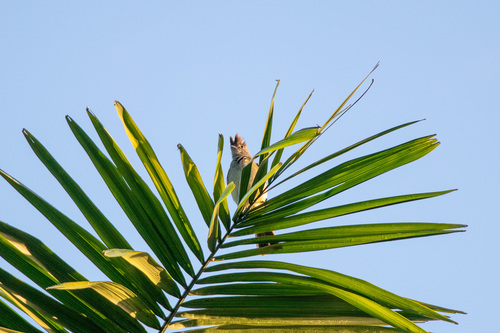
Yellow-bellied Elaenia (Elaenia flavogaster) Yellow-bellied Elaenia
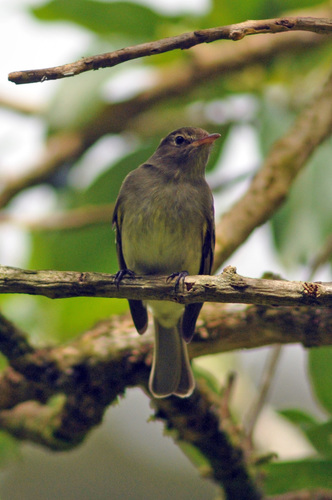
Mountain Elaenia (Elaenia frantzii) Mountain Elaenia

Media

Loading…

In short

The best field mark to separate Yellow-bellied Elaenia from Mountain Elaenia is the brighter, more extensive yellow on the underparts of Yellow-bellied Elaenia, especially on the belly, compared to the paler, straw-yellow lower underparts and more olive-tinged upper breast of Mountain Elaenia. Both species show two pale wing bars and a partially hidden white crown patch, but Yellow-bellied Elaenia is larger, with a bushier crest and a more contrasting face pattern. Mountain Elaenia is smaller, with a rounder crest, grayer-olive upperparts, and a less distinct facial contrast. Juvenile Mountain Elaenia are browner above and paler below than adults, but this difference is subtle in the field. Habitat and elevation can also help: Yellow-bellied Elaenia is found in lower, more open and varied habitats, while Mountain Elaenia prefers higher elevation cloud forests and edges.

Identification tips

  1. Underpart color: Yellow-bellied Elaenia shows a distinctly brighter and more extensive yellow belly, often obvious even at a distance. Mountain Elaenia's underparts are paler, with a straw-yellow belly and more olive-tinged upper breast and flanks.
  2. Crest shape: Yellow-bellied Elaenia has a bushy, often spiky crest that is frequently raised, sometimes revealing a white central stripe. Mountain Elaenia's crest is more rounded and less prominent, with a white crown patch that is usually hidden.
  3. Face pattern: Yellow-bellied Elaenia has a pale brownish olive face with noticeable whitish lores and a faint whitish eyering, giving a more contrasting facial appearance. Mountain Elaenia's face is less contrasting, with lighter cheeks and a thin, very pale olive eyering.
  4. Upperparts: Yellow-bellied Elaenia is brownish olive above, while Mountain Elaenia is grayer-olive (sometimes browner in some subspecies), which can be subtle but is useful in good light.
  5. Wing bars: Both species have two pale wing bars, but in Yellow-bellied Elaenia these are yellowish white, while in Mountain Elaenia they are yellowish olive. This difference is slight and often unreliable in poor light.
  6. Wing edges: The edges of the flight feathers are yellowish white in Yellow-bellied Elaenia and olive-yellow or pale olive in Mountain Elaenia. This is a subtle mark, best seen at close range.
  7. Tail: Yellow-bellied Elaenia's tail is slightly duskier than its back; Mountain Elaenia's tail is grayish brown with pale olive-green edges. Tail color is rarely diagnostic in the field.
  8. Bill color: Both have dark bills, but Mountain Elaenia has an orange mandible with a dark brown tip, while Yellow-bellied Elaenia's bill is black with a paler base to the mandible. This is only visible at very close range.
  9. Juvenile Mountain Elaenia: Juveniles are browner above and paler below than adults, but this is not a strong field mark and does not overlap with Yellow-bellied Elaenia's brighter yellow underparts.
  10. Size and structure: Yellow-bellied Elaenia is larger and bulkier, with a longer body and more prominent crest. Mountain Elaenia is smaller and more compact, with a rounder head profile.
  11. Habitat and elevation: If seen in lowland open or semi-open habitats, especially below 1,000 m, Yellow-bellied Elaenia is much more likely. In highland cloud forest or forest edge above 1,200 m, Mountain Elaenia is expected.
  12. Behavior: Yellow-bellied Elaenia often perches more conspicuously and may raise its crest frequently. Mountain Elaenia is more likely to be seen in the mid- to upper canopy and may be less conspicuous.
  13. Subspecies variation: Some subspecies of Yellow-bellied Elaenia (e.g., E. f. subpagana) are even yellower below, while some Mountain Elaenia subspecies (e.g., E. f. ultima) are browner above and darker below, but the underpart contrast remains reliable.
  14. Sex and season: Both species are sexually monomorphic and do not show strong seasonal plumage changes, so these marks are valid year-round and for both sexes.
  15. Pitfalls: In poor light, the yellow belly of Yellow-bellied Elaenia can look paler, and Mountain Elaenia may appear yellower than it is. Always combine underpart color with crest shape, face pattern, and habitat for best results.

Size

Yellow-bellied Elaenia is distinctly larger, measuring 15–17 cm in length and averaging 24 g in mass, while Mountain Elaenia is 14–15 cm and weighs 14–24 g. The size difference is subtle but can be apparent in direct comparison, with Yellow-bellied Elaenia appearing bulkier and longer. Both species are similar in overall proportions, but Yellow-bellied Elaenia tends to look more robust and has a bushier crest, while Mountain Elaenia is more compact with a rounded crest.

Plumage

No age-specific upperwing pattern is described for either species, but both show two pale wing bars formed by tips to the wing coverts. In adults, Yellow-bellied Elaenia has brownish olive upperparts and a bushy crest with a partially concealed white stripe, a pale brownish olive face with whitish lores and a faint eyering, and a bright yellow to pale yellow belly. Mountain Elaenia adults have grayish olive upperparts, a rounded crest with a mostly hidden white crown patch, lighter cheeks, a very pale olive eyering, and a pale yellowish olive chin, throat, and flanks, with the lower breast and belly a pale straw yellow. Juvenile Mountain Elaenia are browner above and paler below than adults, but otherwise similar. Both species have dusky wings with pale edges and two wing bars, but the wing edges are more yellowish white in Yellow-bellied Elaenia and olive-yellow in Mountain Elaenia. The tail of Yellow-bellied Elaenia is slightly duskier than the back, while Mountain Elaenia's is grayish brown with pale olive-green edges.

Behaviour

Both species are typical tyrant flycatchers, often sallying from perches to catch insects. Yellow-bellied Elaenia is more likely to be seen in open or semi-open areas, sometimes in gardens or parks, and may appear bolder and more conspicuous due to its brighter plumage and crest-raising behavior. Mountain Elaenia is more often found in the mid- to upper canopy of cloud forests or forest edges, and may appear shyer or more retiring.

Habitat

Yellow-bellied Elaenia is a habitat generalist, found from arid to humid environments, in open woodlands, savannas, scrub, secondary growth, forest edges, and even suburban parks and gardens, from sea level up to 2,400 m depending on region. It avoids dense forest interiors. Mountain Elaenia is more restricted to higher elevations (typically 1,200–3,000 m), favoring cloud forests, pine-oak forests, and forest edges in Central America and the Andes. In South America, it also occurs in open woodlands, pastures with scattered trees, and coffee plantations, but generally at higher elevations than Yellow-bellied Elaenia.

Submit a better description

Use the same sections as the comparison. Your text is published immediately.

The best field mark to separate Yellow-bellied Elaenia from Mountain Elaenia is the brighter, more extensive yellow on the underparts of Yellow-bellied Elaenia, especially on the belly, compared to the paler, straw-yellow lower underparts and more olive-tinged upper breast of Mountain Elaenia. Both species show two pale wing bars and a partially hidden white crown patch, but Yellow-bellied Elaenia is larger, with a bushier crest and a more contrasting face pattern. Mountain Elaenia is smaller, with a rounder crest, grayer-olive upperparts, and a less distinct facial contrast. Juvenile Mountain Elaenia are browner above and paler below than adults, but this difference is subtle in the field. Habitat and elevation can also help: Yellow-bellied Elaenia is found in lower, more open and varied habitats, while Mountain Elaenia prefers higher elevation cloud forests and edges.

  1. Underpart color: Yellow-bellied Elaenia shows a distinctly brighter and more extensive yellow belly, often obvious even at a distance. Mountain Elaenia's underparts are paler, with a straw-yellow belly and more olive-tinged upper breast and flanks.
  2. Crest shape: Yellow-bellied Elaenia has a bushy, often spiky crest that is frequently raised, sometimes revealing a white central stripe. Mountain Elaenia's crest is more rounded and less prominent, with a white crown patch that is usually hidden.
  3. Face pattern: Yellow-bellied Elaenia has a pale brownish olive face with noticeable whitish lores and a faint whitish eyering, giving a more contrasting facial appearance. Mountain Elaenia's face is less contrasting, with lighter cheeks and a thin, very pale olive eyering.
  4. Upperparts: Yellow-bellied Elaenia is brownish olive above, while Mountain Elaenia is grayer-olive (sometimes browner in some subspecies), which can be subtle but is useful in good light.
  5. Wing bars: Both species have two pale wing bars, but in Yellow-bellied Elaenia these are yellowish white, while in Mountain Elaenia they are yellowish olive. This difference is slight and often unreliable in poor light.
  6. Wing edges: The edges of the flight feathers are yellowish white in Yellow-bellied Elaenia and olive-yellow or pale olive in Mountain Elaenia. This is a subtle mark, best seen at close range.
  7. Tail: Yellow-bellied Elaenia's tail is slightly duskier than its back; Mountain Elaenia's tail is grayish brown with pale olive-green edges. Tail color is rarely diagnostic in the field.
  8. Bill color: Both have dark bills, but Mountain Elaenia has an orange mandible with a dark brown tip, while Yellow-bellied Elaenia's bill is black with a paler base to the mandible. This is only visible at very close range.
  9. Juvenile Mountain Elaenia: Juveniles are browner above and paler below than adults, but this is not a strong field mark and does not overlap with Yellow-bellied Elaenia's brighter yellow underparts.
  10. Size and structure: Yellow-bellied Elaenia is larger and bulkier, with a longer body and more prominent crest. Mountain Elaenia is smaller and more compact, with a rounder head profile.
  11. Habitat and elevation: If seen in lowland open or semi-open habitats, especially below 1,000 m, Yellow-bellied Elaenia is much more likely. In highland cloud forest or forest edge above 1,200 m, Mountain Elaenia is expected.
  12. Behavior: Yellow-bellied Elaenia often perches more conspicuously and may raise its crest frequently. Mountain Elaenia is more likely to be seen in the mid- to upper canopy and may be less conspicuous.
  13. Subspecies variation: Some subspecies of Yellow-bellied Elaenia (e.g., E. f. subpagana) are even yellower below, while some Mountain Elaenia subspecies (e.g., E. f. ultima) are browner above and darker below, but the underpart contrast remains reliable.
  14. Sex and season: Both species are sexually monomorphic and do not show strong seasonal plumage changes, so these marks are valid year-round and for both sexes.
  15. Pitfalls: In poor light, the yellow belly of Yellow-bellied Elaenia can look paler, and Mountain Elaenia may appear yellower than it is. Always combine underpart color with crest shape, face pattern, and habitat for best results.

Yellow-bellied Elaenia is distinctly larger, measuring 15–17 cm in length and averaging 24 g in mass, while Mountain Elaenia is 14–15 cm and weighs 14–24 g. The size difference is subtle but can be apparent in direct comparison, with Yellow-bellied Elaenia appearing bulkier and longer. Both species are similar in overall proportions, but Yellow-bellied Elaenia tends to look more robust and has a bushier crest, while Mountain Elaenia is more compact with a rounded crest.

No age-specific upperwing pattern is described for either species, but both show two pale wing bars formed by tips to the wing coverts. In adults, Yellow-bellied Elaenia has brownish olive upperparts and a bushy crest with a partially concealed white stripe, a pale brownish olive face with whitish lores and a faint eyering, and a bright yellow to pale yellow belly. Mountain Elaenia adults have grayish olive upperparts, a rounded crest with a mostly hidden white crown patch, lighter cheeks, a very pale olive eyering, and a pale yellowish olive chin, throat, and flanks, with the lower breast and belly a pale straw yellow. Juvenile Mountain Elaenia are browner above and paler below than adults, but otherwise similar. Both species have dusky wings with pale edges and two wing bars, but the wing edges are more yellowish white in Yellow-bellied Elaenia and olive-yellow in Mountain Elaenia. The tail of Yellow-bellied Elaenia is slightly duskier than the back, while Mountain Elaenia's is grayish brown with pale olive-green edges.

Both species are typical tyrant flycatchers, often sallying from perches to catch insects. Yellow-bellied Elaenia is more likely to be seen in open or semi-open areas, sometimes in gardens or parks, and may appear bolder and more conspicuous due to its brighter plumage and crest-raising behavior. Mountain Elaenia is more often found in the mid- to upper canopy of cloud forests or forest edges, and may appear shyer or more retiring.

Yellow-bellied Elaenia is a habitat generalist, found from arid to humid environments, in open woodlands, savannas, scrub, secondary growth, forest edges, and even suburban parks and gardens, from sea level up to 2,400 m depending on region. It avoids dense forest interiors. Mountain Elaenia is more restricted to higher elevations (typically 1,200–3,000 m), favoring cloud forests, pine-oak forests, and forest edges in Central America and the Andes. In South America, it also occurs in open woodlands, pastures with scattered trees, and coffee plantations, but generally at higher elevations than Yellow-bellied Elaenia.

Discard your changes?

You have unsaved edits. If you leave now, those changes will be lost.

Yellow-bellied Elaenia · Mountain Elaenia · My Tricky Birds