

Motmot

Woodlark vs Eurasian Skylark

Lullula arborea versus Alauda arvensis

Play a quiz with Woodlark and Eurasian Skylark
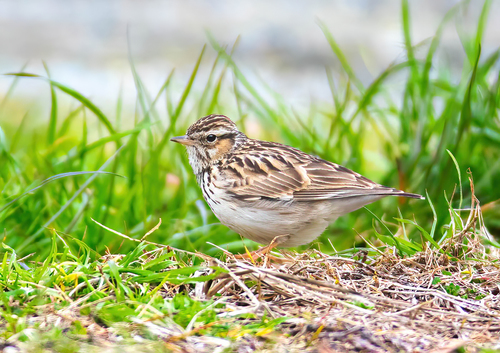
Woodlark (Lullula arborea) Woodlark
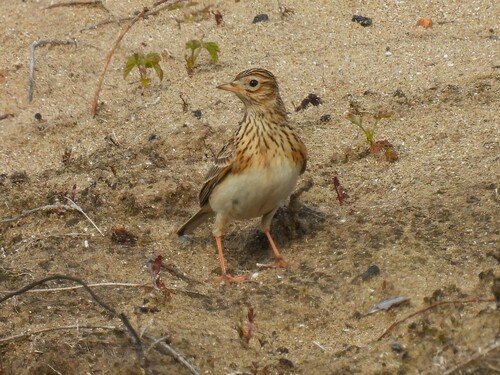
Eurasian Skylark (Alauda arvensis) Eurasian Skylark

Media

Loading…

In short

The most reliable field mark to separate Woodlark from Eurasian Skylark is the presence or absence of white edges on the tail and rear wing in flight: Skylark shows clear white on both the tail sides and the rear edge of the wings, while Woodlark lacks these white edges, showing only a white tip to the tail. Woodlark is also noticeably smaller and more compact, with a shorter tail and broader wings, and has a distinctive white supercilium that meets at the nape, unlike Skylark. Both species are brown above and pale below, but Woodlark's supercilium and smaller, less obvious crest help distinguish it when perched. In song flight, Skylark hovers at great height for long periods, while Woodlark's display is lower, more fluttery, and involves circling. Habitat overlap can occur, but Woodlark favors open heaths and clearings, while Skylark is more typical of open farmland.

Identification tips

  1. White tail and wing edges in flight: Eurasian Skylark shows obvious white along the tail sides and rear wing edge when flying away; Woodlark lacks these, showing only a white tail tip. This is the single most reliable field mark for all ages and seasons.
  2. Size and structure: Woodlark is distinctly smaller (about 20% shorter) and more compact, with a shorter tail and broader wings. Skylark appears longer-tailed and bulkier.
  3. Supercilium (eyebrow stripe): Woodlark has a strong white supercilium that meets at the nape, forming a pale 'headband'; Skylark's supercilium is less marked and does not meet at the nape.
  4. Crest: Both species have a crest, but Woodlark's is smaller and usually inconspicuous, while Skylark's is short but more likely to be raised and visible.
  5. Perched appearance: On the ground, Woodlark looks neater and rounder, with a short tail and broad wings folded over the back. Skylark appears longer and more elongated, with a longer tail and a more upright posture.
  6. Flight style: Skylark rises high and hovers for long periods, often singing for several minutes; Woodlark's song flight is lower, more fluttery, and involves circling rather than hovering.
  7. Song: Skylark's song is a long, continuous, bubbling warble delivered from high above; Woodlark's is shorter, more melodious, and often described as 'lu-lu-lu' or 'toolooeet'.
  8. Habitat: Woodlark is most often found in heathland, clearings, and young plantations; Skylark prefers open farmland and grassland. If in doubt, consider the habitat context.
  9. Juvenile/immature confusion: No specific juvenile upperwing pattern differences are noted, but the flight pattern of white in the tail and wings remains diagnostic for all ages.
  10. Sex differences: Male Skylarks have broader wings than females, but this is not a reliable field mark for separation from Woodlark.
  11. Group size and behavior: Skylark is more likely to be seen in larger flocks outside the breeding season, while Woodlark is usually in pairs or small groups.
  12. Song timing: Woodlark may start singing earlier in the year (as early as February in Britain), while Skylark's display peaks later.
  13. Pitfalls: At a distance, both species can appear as small brown birds with pale underparts and a crest. Focus on the flight pattern and tail/wing markings for confident separation.
  14. When marks fail: In poor light or at great distance, size and structure may be hard to judge. Wait for a flight view to check for white tail and wing edges, or try to glimpse the supercilium on a perched bird.
  15. Local abundance: In much of Europe, Skylark is more widespread and numerous, especially in farmland; Woodlark is patchier and more localized, especially in Britain.

Size

Woodlark is smaller (13.5–15 cm) than Eurasian Skylark (18–19 cm), being about 20% shorter in length. This size difference is evident in the field, especially if both species are seen together. Woodlark also appears more compact, with a shorter tail and broader wings relative to its body size. Skylark is more elongated, with a longer tail and a generally larger, bulkier appearance. Both have similar proportions when perched, but the difference in overall size and tail length is a useful supporting clue.

Plumage

The most diagnostic plumage difference, especially in flight and for all ages, is the white patterning on the tail and wings: Eurasian Skylark shows prominent white edges on the tail sides and along the rear edge of the wings, visible as it flies away. Woodlark lacks these white edges, having only a white tip to the tail, and no white on the wing rear edge. On the ground, Woodlark shows a conspicuous white supercilium that meets at the nape, forming a pale 'headband', while Skylark's supercilium is less marked and does not meet at the nape. Both are brown above and pale below, with streaking, but Woodlark's smaller, less obvious crest is usually flattened, making it less prominent than Skylark's short, blunt crest. Juvenile and immature plumages are not described as distinctly different between the two in the sources, but the flight pattern of white in the wings and tail is consistent and reliable for all ages.

Behaviour

In display flight, Skylark typically rises high (50–100 m or more), hovers for extended periods, and delivers a long, continuous song, often appearing as a distant dot. Woodlark's song flight is lower, more fluttery, and involves circling at a steady height, with more visible wing action. On the ground, both species may sing from a perch, but Woodlark is more likely to be seen in open clearings or on the ground in heathland, while Skylark prefers open fields. Both species may be seen singly or in pairs during the breeding season.

Habitat

Woodlark prefers heathland, open clearings in pine forests, and sparsely wooded areas, especially with some ground disturbance or young plantations. Skylark is more typical of open farmland, grasslands, and arable fields, and is less tied to woodland edges or clearings. While some overlap can occur, especially in open landscapes, Woodlark is less likely to be found in intensively farmed areas, and Skylark is less common in wooded or heathland habitats.

Voice

Skylark's song is a long, unbroken, bubbling warble delivered from high in the air, often lasting several minutes and sometimes up to 20 minutes later in the season. Woodlark's song is shorter, more melodious, and warbling, often described as 'lu-lu-lu' or 'toolooeet', delivered in a lower, circling song flight or from a perch. The difference in song length, delivery height, and phrase structure is noticeable with experience, but both are musical and can be confusing at a distance.

Submit a better description

Use the same sections as the comparison. Your text is published immediately.

The most reliable field mark to separate Woodlark from Eurasian Skylark is the presence or absence of white edges on the tail and rear wing in flight: Skylark shows clear white on both the tail sides and the rear edge of the wings, while Woodlark lacks these white edges, showing only a white tip to the tail. Woodlark is also noticeably smaller and more compact, with a shorter tail and broader wings, and has a distinctive white supercilium that meets at the nape, unlike Skylark. Both species are brown above and pale below, but Woodlark's supercilium and smaller, less obvious crest help distinguish it when perched. In song flight, Skylark hovers at great height for long periods, while Woodlark's display is lower, more fluttery, and involves circling. Habitat overlap can occur, but Woodlark favors open heaths and clearings, while Skylark is more typical of open farmland.

  1. White tail and wing edges in flight: Eurasian Skylark shows obvious white along the tail sides and rear wing edge when flying away; Woodlark lacks these, showing only a white tail tip. This is the single most reliable field mark for all ages and seasons.
  2. Size and structure: Woodlark is distinctly smaller (about 20% shorter) and more compact, with a shorter tail and broader wings. Skylark appears longer-tailed and bulkier.
  3. Supercilium (eyebrow stripe): Woodlark has a strong white supercilium that meets at the nape, forming a pale 'headband'; Skylark's supercilium is less marked and does not meet at the nape.
  4. Crest: Both species have a crest, but Woodlark's is smaller and usually inconspicuous, while Skylark's is short but more likely to be raised and visible.
  5. Perched appearance: On the ground, Woodlark looks neater and rounder, with a short tail and broad wings folded over the back. Skylark appears longer and more elongated, with a longer tail and a more upright posture.
  6. Flight style: Skylark rises high and hovers for long periods, often singing for several minutes; Woodlark's song flight is lower, more fluttery, and involves circling rather than hovering.
  7. Song: Skylark's song is a long, continuous, bubbling warble delivered from high above; Woodlark's is shorter, more melodious, and often described as 'lu-lu-lu' or 'toolooeet'.
  8. Habitat: Woodlark is most often found in heathland, clearings, and young plantations; Skylark prefers open farmland and grassland. If in doubt, consider the habitat context.
  9. Juvenile/immature confusion: No specific juvenile upperwing pattern differences are noted, but the flight pattern of white in the tail and wings remains diagnostic for all ages.
  10. Sex differences: Male Skylarks have broader wings than females, but this is not a reliable field mark for separation from Woodlark.
  11. Group size and behavior: Skylark is more likely to be seen in larger flocks outside the breeding season, while Woodlark is usually in pairs or small groups.
  12. Song timing: Woodlark may start singing earlier in the year (as early as February in Britain), while Skylark's display peaks later.
  13. Pitfalls: At a distance, both species can appear as small brown birds with pale underparts and a crest. Focus on the flight pattern and tail/wing markings for confident separation.
  14. When marks fail: In poor light or at great distance, size and structure may be hard to judge. Wait for a flight view to check for white tail and wing edges, or try to glimpse the supercilium on a perched bird.
  15. Local abundance: In much of Europe, Skylark is more widespread and numerous, especially in farmland; Woodlark is patchier and more localized, especially in Britain.

Woodlark is smaller (13.5–15 cm) than Eurasian Skylark (18–19 cm), being about 20% shorter in length. This size difference is evident in the field, especially if both species are seen together. Woodlark also appears more compact, with a shorter tail and broader wings relative to its body size. Skylark is more elongated, with a longer tail and a generally larger, bulkier appearance. Both have similar proportions when perched, but the difference in overall size and tail length is a useful supporting clue.

The most diagnostic plumage difference, especially in flight and for all ages, is the white patterning on the tail and wings: Eurasian Skylark shows prominent white edges on the tail sides and along the rear edge of the wings, visible as it flies away. Woodlark lacks these white edges, having only a white tip to the tail, and no white on the wing rear edge. On the ground, Woodlark shows a conspicuous white supercilium that meets at the nape, forming a pale 'headband', while Skylark's supercilium is less marked and does not meet at the nape. Both are brown above and pale below, with streaking, but Woodlark's smaller, less obvious crest is usually flattened, making it less prominent than Skylark's short, blunt crest. Juvenile and immature plumages are not described as distinctly different between the two in the sources, but the flight pattern of white in the wings and tail is consistent and reliable for all ages.

In display flight, Skylark typically rises high (50–100 m or more), hovers for extended periods, and delivers a long, continuous song, often appearing as a distant dot. Woodlark's song flight is lower, more fluttery, and involves circling at a steady height, with more visible wing action. On the ground, both species may sing from a perch, but Woodlark is more likely to be seen in open clearings or on the ground in heathland, while Skylark prefers open fields. Both species may be seen singly or in pairs during the breeding season.

Woodlark prefers heathland, open clearings in pine forests, and sparsely wooded areas, especially with some ground disturbance or young plantations. Skylark is more typical of open farmland, grasslands, and arable fields, and is less tied to woodland edges or clearings. While some overlap can occur, especially in open landscapes, Woodlark is less likely to be found in intensively farmed areas, and Skylark is less common in wooded or heathland habitats.

Skylark's song is a long, unbroken, bubbling warble delivered from high in the air, often lasting several minutes and sometimes up to 20 minutes later in the season. Woodlark's song is shorter, more melodious, and warbling, often described as 'lu-lu-lu' or 'toolooeet', delivered in a lower, circling song flight or from a perch. The difference in song length, delivery height, and phrase structure is noticeable with experience, but both are musical and can be confusing at a distance.

Discard your changes?

You have unsaved edits. If you leave now, those changes will be lost.

Woodlark · Eurasian Skylark · My Tricky Birds