

Motmot

モリヒバリ 対 ヒバリ

Lullula arborea 対 Alauda arvensis

モリヒバリとヒバリのクイズ
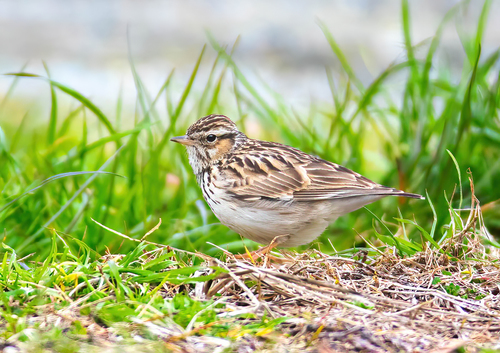
モリヒバリ (Lullula arborea) モリヒバリ
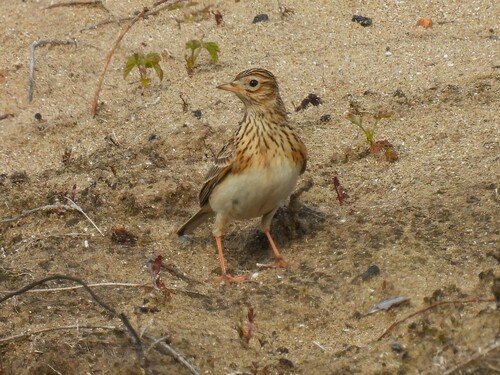
ヒバリ (Alauda arvensis) ヒバリ

メディア

読み込み中…

要点

モリヒバリとヒバリを区別する最も信頼できるフィールドマークは、飛行中の尾と後ろの翼の白いエッジの有無です:ヒバリは尾の両側と翼の後ろのエッジに明確な白を示しますが、モリヒバリはこれらの白いエッジがなく、尾の先端にのみ白を示します。モリヒバリはまた、明らかに小さく、よりコンパクトで、尾が短く、翼が広く、ヒバリとは異なり、後頭部で出会う特徴的な白いスーパシリウムを持っています。両種は上面が茶色で下面が淡いですが、モリヒバリのスーパシリウムと小さく目立たない冠羽は、止まっているときに区別するのに役立ちます。歌の飛行中、ヒバリは高い位置で長時間ホバリングしますが、モリヒバリのディスプレイは低く、よりフラッターし、円を描くことを含みます。生息地の重複は起こる可能性がありますが、モリヒバリは開けたヒースやクリアリングを好み、ヒバリは開けた農地に典型的です。

識別のコツ

  1. 飛行中の白い尾と翼のエッジ:ヒバリは飛び去るときに尾の両側と後ろの翼のエッジに明らかな白を示しますが、モリヒバリはこれらがなく、尾の先端にのみ白を示します。これはすべての年齢と季節において最も信頼できるフィールドマークです。
  2. サイズと構造:モリヒバリは明らかに小さく(約20%短い)よりコンパクトで、尾が短く、翼が広いです。ヒバリは尾が長く、より大きく見えます。
  3. スーパシリウム(眉のストライプ):モリヒバリは後頭部で出会う強い白いスーパシリウムを持ち、淡い「ヘッドバンド」を形成します;ヒバリのスーパシリウムはあまり目立たず、後頭部で出会いません。
  4. 冠羽:両種は冠羽を持っていますが、モリヒバリの冠羽は小さく、通常は目立たず、ヒバリの冠羽は短いですが、より立ち上がって見える可能性があります。
  5. 止まっているときの外観:地面では、モリヒバリは整然として丸みを帯びて見え、短い尾と背中に折りたたまれた広い翼を持っています。ヒバリは長く、より細長く見え、尾が長く、より直立した姿勢を持っています。
  6. 飛行スタイル:ヒバリは高く上昇し、長時間ホバリングし、しばしば数分間歌います;モリヒバリの歌の飛行は低く、よりフラッターし、ホバリングではなく円を描くことを含みます。
  7. 歌:ヒバリの歌は高い位置から届けられる長く、連続した、泡立つようなさえずりです;モリヒバリの歌は短く、よりメロディックで、「ル・ル・ル」または「トゥールーイート」と表現されることが多いです。
  8. 生息地:モリヒバリは最も頻繁にヒース、クリアリング、若いプランテーションに見られます;ヒバリは開けた農地や草地を好みます。疑わしい場合は、生息地の文脈を考慮してください。
  9. 幼鳥/未熟な混乱:特定の幼鳥の上翼パターンの違いは記載されていませんが、尾と翼の白の飛行パターンはすべての年齢において診断的です。
  10. 性差:オスのヒバリはメスよりも翼が広いですが、これはモリヒバリとの区別には信頼できるフィールドマークではありません。
  11. 群れのサイズと行動:ヒバリは繁殖シーズン外でより大きな群れで見られる可能性が高いですが、モリヒバリは通常ペアまたは小さなグループで見られます。
  12. 歌のタイミング:モリヒバリは年の初めに早く歌い始めることがあります(イギリスでは2月の早い時期から)、ヒバリのディスプレイは後でピークに達します。
  13. 落とし穴:距離があると、両種は淡い下部を持つ小さな茶色の鳥として見えることがあります。自信を持って区別するために、飛行パターンと尾/翼のマークに焦点を当ててください。
  14. マークが失敗したとき:光が悪い場合や遠くからでは、サイズと構造を判断するのが難しいことがあります。白い尾と翼のエッジを確認するために飛行ビューを待つか、止まっている鳥のスーパシリウムをちら見することを試みてください。
  15. 地域の豊富さ:ヨーロッパの多くの地域では、ヒバリはより広範囲に分布し、特に農地で数が多いです;モリヒバリはより点在しており、特にイギリスでは地域的です。

大きさ

モリヒバリは小さく(13.5–15 cm)、ヒバリ(18–19 cm)よりも約20%短いです。このサイズの違いはフィールドで明らかで、特に両種が一緒に見られる場合に顕著です。モリヒバリはまた、体のサイズに対して短い尾と広い翼を持ち、よりコンパクトに見えます。ヒバリはより細長く、長い尾と一般的に大きく、重い外観を持っています。両者は止まっているときに似たプロポーションを持っていますが、全体的なサイズと尾の長さの違いは有用な補助的手がかりです。

羽色

最も診断的な羽毛の違い、特に飛行中およびすべての年齢においては、尾と翼の白いパターンです:ヒバリは尾の両側と翼の後ろのエッジに目立つ白いエッジを示し、飛び去るときに見えます。モリヒバリはこれらの白いエッジがなく、尾の先端にのみ白を持ち、翼の後ろのエッジには白がありません。地面では、モリヒバリは後頭部で出会う目立つ白いスーパシリウムを示し、淡い「ヘッドバンド」を形成しますが、ヒバリのスーパシリウムはあまり目立たず、後頭部で出会いません。両者は上面が茶色で下面が淡く、ストライピングがありますが、モリヒバリの小さく目立たない冠羽は通常平らになっており、ヒバリの短く鈍い冠羽よりも目立たなくなります。幼鳥と未熟な羽毛は、両者の間で明確に異なるとは記載されていませんが、翼と尾の白の飛行パターンはすべての年齢において一貫して信頼できます。

行動

ディスプレイ飛行中、ヒバリは通常高く上昇し(50–100 m以上)、長時間ホバリングし、長く連続した歌を届け、しばしば遠くの点のように見えます。モリヒバリの歌の飛行は低く、よりフラッターし、一定の高さで円を描くことを含み、翼の動きがより目立ちます。地面では、両種は止まり木から歌うことがありますが、モリヒバリは開けたクリアリングやヒースの地面で見られる可能性が高く、ヒバリは開けた野原を好みます。両種は繁殖シーズン中に単独またはペアで見られることがあります。

生息環境

モリヒバリはヒース、松林の開けたクリアリング、そしてまばらな森林地域を好み、特に地面の攪乱や若いプランテーションがある場所です。ヒバリは開けた農地、草地、耕作地に典型的で、森林の端やクリアリングにあまり結びついていません。特に開けた風景では重複が起こることがありますが、モリヒバリは集中的に農業が行われている地域では見つかりにくく、ヒバリは森林やヒースの生息地ではあまり一般的ではありません。

声

ヒバリの歌は長く、途切れのない、泡立つようなさえずりで、高い空から届けられ、しばしば数分間続き、時にはシーズンの後半に20分まで続くことがあります。モリヒバリの歌は短く、よりメロディックで、さえずりで、「ル・ル・ル」または「トゥールーイート」と表現されることが多く、低い位置での円を描く歌の飛行または止まり木から届けられます。歌の長さ、届ける高さ、フレーズの構造の違いは経験によって顕著ですが、両者は音楽的であり、距離があると混乱を招くことがあります。

より良い説明を送る

比較と同じ項目を使ってください。文章はすぐに公開されます。

The most reliable field mark to separate Woodlark from Eurasian Skylark is the presence or absence of white edges on the tail and rear wing in flight: Skylark shows clear white on both the tail sides and the rear edge of the wings, while Woodlark lacks these white edges, showing only a white tip to the tail. Woodlark is also noticeably smaller and more compact, with a shorter tail and broader wings, and has a distinctive white supercilium that meets at the nape, unlike Skylark. Both species are brown above and pale below, but Woodlark's supercilium and smaller, less obvious crest help distinguish it when perched. In song flight, Skylark hovers at great height for long periods, while Woodlark's display is lower, more fluttery, and involves circling. Habitat overlap can occur, but Woodlark favors open heaths and clearings, while Skylark is more typical of open farmland.

  1. White tail and wing edges in flight: Eurasian Skylark shows obvious white along the tail sides and rear wing edge when flying away; Woodlark lacks these, showing only a white tail tip. This is the single most reliable field mark for all ages and seasons.
  2. Size and structure: Woodlark is distinctly smaller (about 20% shorter) and more compact, with a shorter tail and broader wings. Skylark appears longer-tailed and bulkier.
  3. Supercilium (eyebrow stripe): Woodlark has a strong white supercilium that meets at the nape, forming a pale 'headband'; Skylark's supercilium is less marked and does not meet at the nape.
  4. Crest: Both species have a crest, but Woodlark's is smaller and usually inconspicuous, while Skylark's is short but more likely to be raised and visible.
  5. Perched appearance: On the ground, Woodlark looks neater and rounder, with a short tail and broad wings folded over the back. Skylark appears longer and more elongated, with a longer tail and a more upright posture.
  6. Flight style: Skylark rises high and hovers for long periods, often singing for several minutes; Woodlark's song flight is lower, more fluttery, and involves circling rather than hovering.
  7. Song: Skylark's song is a long, continuous, bubbling warble delivered from high above; Woodlark's is shorter, more melodious, and often described as 'lu-lu-lu' or 'toolooeet'.
  8. Habitat: Woodlark is most often found in heathland, clearings, and young plantations; Skylark prefers open farmland and grassland. If in doubt, consider the habitat context.
  9. Juvenile/immature confusion: No specific juvenile upperwing pattern differences are noted, but the flight pattern of white in the tail and wings remains diagnostic for all ages.
  10. Sex differences: Male Skylarks have broader wings than females, but this is not a reliable field mark for separation from Woodlark.
  11. Group size and behavior: Skylark is more likely to be seen in larger flocks outside the breeding season, while Woodlark is usually in pairs or small groups.
  12. Song timing: Woodlark may start singing earlier in the year (as early as February in Britain), while Skylark's display peaks later.
  13. Pitfalls: At a distance, both species can appear as small brown birds with pale underparts and a crest. Focus on the flight pattern and tail/wing markings for confident separation.
  14. When marks fail: In poor light or at great distance, size and structure may be hard to judge. Wait for a flight view to check for white tail and wing edges, or try to glimpse the supercilium on a perched bird.
  15. Local abundance: In much of Europe, Skylark is more widespread and numerous, especially in farmland; Woodlark is patchier and more localized, especially in Britain.

Woodlark is smaller (13.5–15 cm) than Eurasian Skylark (18–19 cm), being about 20% shorter in length. This size difference is evident in the field, especially if both species are seen together. Woodlark also appears more compact, with a shorter tail and broader wings relative to its body size. Skylark is more elongated, with a longer tail and a generally larger, bulkier appearance. Both have similar proportions when perched, but the difference in overall size and tail length is a useful supporting clue.

The most diagnostic plumage difference, especially in flight and for all ages, is the white patterning on the tail and wings: Eurasian Skylark shows prominent white edges on the tail sides and along the rear edge of the wings, visible as it flies away. Woodlark lacks these white edges, having only a white tip to the tail, and no white on the wing rear edge. On the ground, Woodlark shows a conspicuous white supercilium that meets at the nape, forming a pale 'headband', while Skylark's supercilium is less marked and does not meet at the nape. Both are brown above and pale below, with streaking, but Woodlark's smaller, less obvious crest is usually flattened, making it less prominent than Skylark's short, blunt crest. Juvenile and immature plumages are not described as distinctly different between the two in the sources, but the flight pattern of white in the wings and tail is consistent and reliable for all ages.

In display flight, Skylark typically rises high (50–100 m or more), hovers for extended periods, and delivers a long, continuous song, often appearing as a distant dot. Woodlark's song flight is lower, more fluttery, and involves circling at a steady height, with more visible wing action. On the ground, both species may sing from a perch, but Woodlark is more likely to be seen in open clearings or on the ground in heathland, while Skylark prefers open fields. Both species may be seen singly or in pairs during the breeding season.

Woodlark prefers heathland, open clearings in pine forests, and sparsely wooded areas, especially with some ground disturbance or young plantations. Skylark is more typical of open farmland, grasslands, and arable fields, and is less tied to woodland edges or clearings. While some overlap can occur, especially in open landscapes, Woodlark is less likely to be found in intensively farmed areas, and Skylark is less common in wooded or heathland habitats.

Skylark's song is a long, unbroken, bubbling warble delivered from high in the air, often lasting several minutes and sometimes up to 20 minutes later in the season. Woodlark's song is shorter, more melodious, and warbling, often described as 'lu-lu-lu' or 'toolooeet', delivered in a lower, circling song flight or from a perch. The difference in song length, delivery height, and phrase structure is noticeable with experience, but both are musical and can be confusing at a distance.

変更を破棄しますか?

保存していない編集があります。今離れると失われます。

モリヒバリ · ヒバリ · 苦手な鳥