

Motmot

Wood Thrush vs Song Thrush

Hylocichla mustelina versus Turdus philomelos

Play a quiz with Wood Thrush and Song Thrush
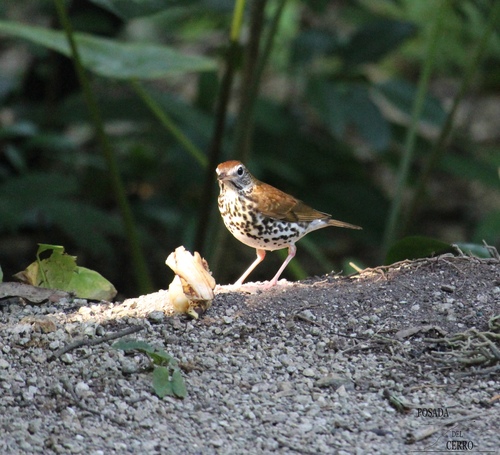
Wood Thrush (Hylocichla mustelina) Wood Thrush
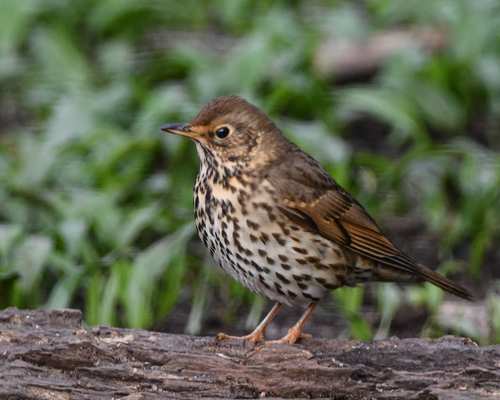
Song Thrush (Turdus philomelos) Song Thrush

Media

Loading…

In short

The most reliable field mark between Wood Thrush and Song Thrush is the pattern and boldness of the breast spots: Wood Thrush shows large, well-separated dark spots on a white background, while Song Thrush has smaller, denser, and more neatly arranged black spots on cream or buff underparts. Juveniles of both species are similar to adults but Wood Thrush juveniles have extra spots on the back and wing coverts, a feature not found on Song Thrush. Structurally, Wood Thrush is slightly smaller and more compact, with a warmer cinnamon tone on the crown and nape, whereas Song Thrush is a bit heavier and colder brown above. Both species have pinkish legs, but Wood Thrush has a more distinct white eyering. In flight, underwing color is a useful clue: Song Thrush flashes warm yellow underwings, while Wood Thrush does not.

Identification tips

  1. Juvenile upperparts: Juvenile Wood Thrush shows extra spots on the back, neck, and wing coverts; Song Thrush juveniles have buff or orange streaks on these areas instead. This is a key mark in late summer and early autumn.
  2. Breast spotting: Wood Thrush has large, bold, round dark spots on a white breast and flanks, widely spaced. Song Thrush has smaller, neater, and denser black spots on cream or buff underparts. This is reliable in all plumages.
  3. Underwing color in flight: Song Thrush flashes warm yellow underwings, especially obvious when banking or landing. Wood Thrush lacks this yellow underwing.
  4. Crown and nape color: Wood Thrush has a rich cinnamon-brown crown and nape, contrasting with duller brown back. Song Thrush is plain brown above, with no warm tones.
  5. Eyering: Wood Thrush shows a prominent white eyering, which stands out in the field. Song Thrush’s eyering is much less distinct.
  6. Bill color: Song Thrush has a yellowish bill, especially at the base; Wood Thrush’s bill is darker overall.
  7. Leg color: Both have pinkish legs, but this is not a strong separator.
  8. Size and structure: Song Thrush is slightly larger and heavier, with a bulkier build and longer body. Wood Thrush is more compact and daintier, but size overlap is considerable.
  9. Habitat: Wood Thrush prefers mature, dense forests with thick undergrowth; Song Thrush is common in gardens, parks, hedgerows, and open woodland. In North America, Song Thrush is a vagrant; in Europe, Wood Thrush is extremely rare.
  10. Behavior: Wood Thrush is more secretive, often foraging alone in leaf litter; Song Thrush is bolder, sings from exposed perches, and may be seen in more open areas.
  11. Song: Wood Thrush’s song is flute-like and ethereal, with clear, spaced phrases. Song Thrush’s song is repetitive, loud, and often includes mimicry and repeated phrases.
  12. Calls: Song Thrush gives sharp 'tsip' and 'chook-chook' calls; Wood Thrush’s calls are less sharp and not as repetitive.
  13. Seasonal context: In North America, Song Thrush is only likely as a vagrant; in Europe, Wood Thrush is a mega-rarity. Always consider location and time of year.
  14. Sex differences: Both species are sexually monomorphic in plumage; do not rely on sex for identification.
  15. Pitfalls: Beware of confusing juvenile Wood Thrush with Song Thrush due to similar size and general brown/white pattern, but check for back and wing covert spotting in Wood Thrush juveniles and underwing color in Song Thrush.

Size

Song Thrush is slightly larger and heavier, with a body mass averaging 72 g (range 50–107 g), while Wood Thrush is a bit smaller and lighter (48–72 g). In length, Song Thrush measures 20–23.5 cm, compared to Wood Thrush’s 18–21.5 cm. Both are medium-sized thrushes, but Song Thrush has a bulkier, more robust appearance, while Wood Thrush is more compact and daintier. Wing chord and wingspan are similar, but Song Thrush may appear longer-bodied and heavier-billed in direct comparison.

Plumage

Juvenile Wood Thrush is distinctive with extra spots on the back, neck, and wing coverts—look for these scattered pale or dark marks on the upperparts, which are absent in Song Thrush juveniles (which instead show buff or orange streaks on the back and wing coverts). Adult Wood Thrush has a rich cinnamon-brown crown and nape, fading to duller brown on the back, wings, and tail, with bold, round dark spots on a white breast and flanks. Song Thrush adults are colder brown above, with cream or yellow-buff underparts covered in smaller, sharply defined black spots, arranged more neatly and densely, especially on the breast and flanks. The Song Thrush’s underwing is warm yellow, visible in flight, while Wood Thrush lacks this feature. Both have pink legs, but Wood Thrush shows a more prominent white eyering. Bill color differs: Song Thrush’s bill is yellowish, while Wood Thrush’s is darker.

Behaviour

Wood Thrush is often solitary, especially in breeding season, and forages mainly on the forest floor, flipping leaves in search of insects. Song Thrush is more likely to be seen in pairs or small groups, and is also a ground forager, but may be more visible in open areas or gardens. Both species hop on the ground, but Wood Thrush is more secretive and prefers dense forest understorey, whereas Song Thrush is bolder and more likely to sing from exposed perches. In winter, Wood Thrush may join mixed-species flocks, but this is less typical for Song Thrush.

Habitat

Wood Thrush breeds in mature deciduous or mixed forests with dense undergrowth in eastern North America, and winters in lowland forests of Central America. Song Thrush breeds across the West Palearctic in a wide range of wooded habitats, including gardens, parks, and hedgerows, and is much more adaptable to human-altered landscapes. If seen in deep, humid forest, Wood Thrush is more likely; in open woodland, gardens, or urban parks, Song Thrush is the default in its range.

Voice

Wood Thrush’s song is considered one of the most beautiful in North America, a flute-like, ethereal series of clear, musical phrases, each separated by pauses. Song Thrush’s song is loud, clear, and repetitive, with musical phrases repeated two to four times and interspersed with grating notes and mimicry. Song Thrush is much more likely to mimic other birds and even mechanical sounds. Calls differ: Song Thrush gives a sharp 'tsip' or 'chook-chook', while Wood Thrush’s calls are less well described in the sources, but are not as sharp or repetitive.

Submit a better description

Use the same sections as the comparison. Your text is published immediately.

The most reliable field mark between Wood Thrush and Song Thrush is the pattern and boldness of the breast spots: Wood Thrush shows large, well-separated dark spots on a white background, while Song Thrush has smaller, denser, and more neatly arranged black spots on cream or buff underparts. Juveniles of both species are similar to adults but Wood Thrush juveniles have extra spots on the back and wing coverts, a feature not found on Song Thrush. Structurally, Wood Thrush is slightly smaller and more compact, with a warmer cinnamon tone on the crown and nape, whereas Song Thrush is a bit heavier and colder brown above. Both species have pinkish legs, but Wood Thrush has a more distinct white eyering. In flight, underwing color is a useful clue: Song Thrush flashes warm yellow underwings, while Wood Thrush does not.

  1. Juvenile upperparts: Juvenile Wood Thrush shows extra spots on the back, neck, and wing coverts; Song Thrush juveniles have buff or orange streaks on these areas instead. This is a key mark in late summer and early autumn.
  2. Breast spotting: Wood Thrush has large, bold, round dark spots on a white breast and flanks, widely spaced. Song Thrush has smaller, neater, and denser black spots on cream or buff underparts. This is reliable in all plumages.
  3. Underwing color in flight: Song Thrush flashes warm yellow underwings, especially obvious when banking or landing. Wood Thrush lacks this yellow underwing.
  4. Crown and nape color: Wood Thrush has a rich cinnamon-brown crown and nape, contrasting with duller brown back. Song Thrush is plain brown above, with no warm tones.
  5. Eyering: Wood Thrush shows a prominent white eyering, which stands out in the field. Song Thrush’s eyering is much less distinct.
  6. Bill color: Song Thrush has a yellowish bill, especially at the base; Wood Thrush’s bill is darker overall.
  7. Leg color: Both have pinkish legs, but this is not a strong separator.
  8. Size and structure: Song Thrush is slightly larger and heavier, with a bulkier build and longer body. Wood Thrush is more compact and daintier, but size overlap is considerable.
  9. Habitat: Wood Thrush prefers mature, dense forests with thick undergrowth; Song Thrush is common in gardens, parks, hedgerows, and open woodland. In North America, Song Thrush is a vagrant; in Europe, Wood Thrush is extremely rare.
  10. Behavior: Wood Thrush is more secretive, often foraging alone in leaf litter; Song Thrush is bolder, sings from exposed perches, and may be seen in more open areas.
  11. Song: Wood Thrush’s song is flute-like and ethereal, with clear, spaced phrases. Song Thrush’s song is repetitive, loud, and often includes mimicry and repeated phrases.
  12. Calls: Song Thrush gives sharp 'tsip' and 'chook-chook' calls; Wood Thrush’s calls are less sharp and not as repetitive.
  13. Seasonal context: In North America, Song Thrush is only likely as a vagrant; in Europe, Wood Thrush is a mega-rarity. Always consider location and time of year.
  14. Sex differences: Both species are sexually monomorphic in plumage; do not rely on sex for identification.
  15. Pitfalls: Beware of confusing juvenile Wood Thrush with Song Thrush due to similar size and general brown/white pattern, but check for back and wing covert spotting in Wood Thrush juveniles and underwing color in Song Thrush.

Song Thrush is slightly larger and heavier, with a body mass averaging 72 g (range 50–107 g), while Wood Thrush is a bit smaller and lighter (48–72 g). In length, Song Thrush measures 20–23.5 cm, compared to Wood Thrush’s 18–21.5 cm. Both are medium-sized thrushes, but Song Thrush has a bulkier, more robust appearance, while Wood Thrush is more compact and daintier. Wing chord and wingspan are similar, but Song Thrush may appear longer-bodied and heavier-billed in direct comparison.

Juvenile Wood Thrush is distinctive with extra spots on the back, neck, and wing coverts—look for these scattered pale or dark marks on the upperparts, which are absent in Song Thrush juveniles (which instead show buff or orange streaks on the back and wing coverts). Adult Wood Thrush has a rich cinnamon-brown crown and nape, fading to duller brown on the back, wings, and tail, with bold, round dark spots on a white breast and flanks. Song Thrush adults are colder brown above, with cream or yellow-buff underparts covered in smaller, sharply defined black spots, arranged more neatly and densely, especially on the breast and flanks. The Song Thrush’s underwing is warm yellow, visible in flight, while Wood Thrush lacks this feature. Both have pink legs, but Wood Thrush shows a more prominent white eyering. Bill color differs: Song Thrush’s bill is yellowish, while Wood Thrush’s is darker.

Wood Thrush is often solitary, especially in breeding season, and forages mainly on the forest floor, flipping leaves in search of insects. Song Thrush is more likely to be seen in pairs or small groups, and is also a ground forager, but may be more visible in open areas or gardens. Both species hop on the ground, but Wood Thrush is more secretive and prefers dense forest understorey, whereas Song Thrush is bolder and more likely to sing from exposed perches. In winter, Wood Thrush may join mixed-species flocks, but this is less typical for Song Thrush.

Wood Thrush breeds in mature deciduous or mixed forests with dense undergrowth in eastern North America, and winters in lowland forests of Central America. Song Thrush breeds across the West Palearctic in a wide range of wooded habitats, including gardens, parks, and hedgerows, and is much more adaptable to human-altered landscapes. If seen in deep, humid forest, Wood Thrush is more likely; in open woodland, gardens, or urban parks, Song Thrush is the default in its range.

Wood Thrush’s song is considered one of the most beautiful in North America, a flute-like, ethereal series of clear, musical phrases, each separated by pauses. Song Thrush’s song is loud, clear, and repetitive, with musical phrases repeated two to four times and interspersed with grating notes and mimicry. Song Thrush is much more likely to mimic other birds and even mechanical sounds. Calls differ: Song Thrush gives a sharp 'tsip' or 'chook-chook', while Wood Thrush’s calls are less well described in the sources, but are not as sharp or repetitive.

Discard your changes?

You have unsaved edits. If you leave now, those changes will be lost.

Wood Thrush · Song Thrush · My Tricky Birds