

Motmot

Willow Ptarmigan vs Grey Partridge

Lagopus lagopus versus Perdix perdix

Play a quiz with Willow Ptarmigan and Grey Partridge
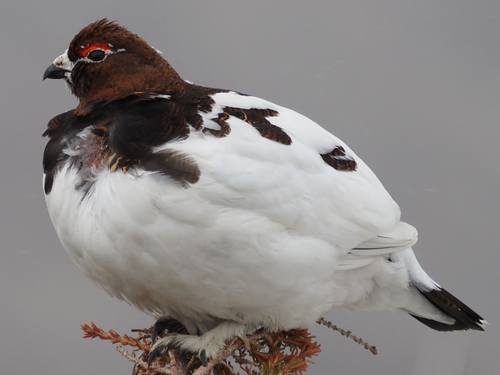
Willow Ptarmigan (Lagopus lagopus) Willow Ptarmigan
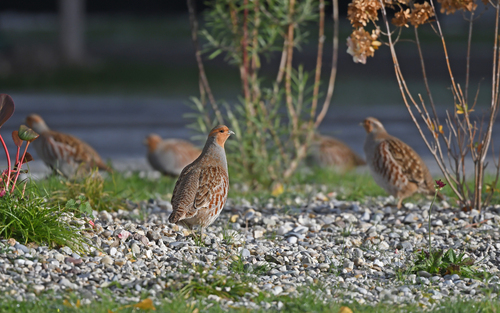
Grey Partridge (Perdix perdix) Grey Partridge

Media

Loading…

In short

The most reliable field mark to separate Willow Ptarmigan from Grey Partridge is the all-white wing (in all seasons and ages) of the ptarmigan, especially visible in flight, contrasting with the grey-brown wings of the partridge. Willow Ptarmigan is a much larger, heavier, and bulkier bird with a thicker bill and a tendency to show a deep chest and long neck, while Grey Partridge is smaller, rounder, and more compact. In winter, Willow Ptarmigan turns almost entirely white except for black tail feathers, while Grey Partridge remains earth-toned year-round. Habitat is also a strong clue: ptarmigan are birds of northern moorland and tundra, partridges of farmland and grassland. Voice and behavior can help, but the white wing and seasonal plumage are the fastest field checks.

Identification tips

  1. White wings in flight (all ages/seasons): Willow Ptarmigan always shows white wings, even in summer or juvenile plumage; Grey Partridge never does. This is the quickest field mark, especially when birds flush.
  2. Winter plumage: In winter, Willow Ptarmigan is almost entirely white with only black outer tail feathers; Grey Partridge remains brown and grey year-round.
  3. Summer plumage: Willow Ptarmigan in summer is marbled brown with a reddish neck and breast, black tail, and white wings/underparts; Grey Partridge is earth-toned with a chestnut face and grey flanks, never reddish or marbled.
  4. Juvenile birds: Juvenile Willow Ptarmigan resembles adults but with white wings; juvenile Grey Partridge is yellow-brown overall, lacking strong face or underpart markings, and never shows white in the wing.
  5. Size and structure: Willow Ptarmigan is much larger, bulkier, and deeper-chested with a longer neck and thicker bill; Grey Partridge is smaller, rounder, and more compact.
  6. Tail: Willow Ptarmigan has a short, rounded, black tail (visible in summer) or black outer tail feathers (in winter); Grey Partridge's tail is short and brown, blending with the back.
  7. Bill: Ptarmigan has a thick, broad bill suited to browsing; partridge's bill is finer and shorter.
  8. Sex differences: Both species have subtle sex differences, but these are not reliable in the field; focus on overall structure and plumage.
  9. Habitat: Willow Ptarmigan is found in northern moorland, tundra, or birch forest; Grey Partridge is in farmland, grassland, or field edges. Location is a strong clue.
  10. Flight style: Both flush with whirring, rounded wings, but ptarmigan's flight is heavier and more direct; partridge is quicker and drops to cover sooner.
  11. Voice: If you hear a harsh 'kieerr-ik' or 'rick rick rick' as the bird flushes, it's a Grey Partridge; Willow Ptarmigan's calls are not described here.
  12. Flock behavior: In autumn/winter, both may form groups, but ptarmigan flocks are often in remote, open country, while partridge coveys are in fields.
  13. Facial markings: Grey Partridge has a distinctive chestnut face; Willow Ptarmigan lacks this and may show red eye combs in males during breeding.
  14. Underparts: Willow Ptarmigan's underparts are white in all seasons; Grey Partridge has grey underparts with a dark belly patch (smaller in females).
  15. When in doubt: If you see a white-winged, white-bodied bird in winter, it's a ptarmigan; if the bird is brown/grey with no white in the wing, it's a partridge.

Size

Willow Ptarmigan is significantly larger and heavier than Grey Partridge. Ptarmigan averages about 650 g in mass, with a length of 35–44 cm and a wingspan of 60–65 cm. In contrast, Grey Partridge is much lighter (typically 320–455 g), shorter (29–31 cm), and with a smaller wingspan (45–48 cm). In the field, ptarmigan looks bulkier, deeper-chested, and longer-necked, while partridge is more compact and rounded.

Plumage

Juvenile and adult Willow Ptarmigan of all ages and seasons show white wings, which are especially obvious in flight and contrast with their body color. In summer, Willow Ptarmigan is marbled brown above with reddish neck and breast, black tail, and white wings and underparts; in winter, it turns almost entirely white except for black outer tail feathers. Grey Partridge, in all ages, has grey-brown wings and never shows white in the wing. Juvenile partridges are yellow-brown overall and lack the adult's face and underpart markings. Adult Grey Partridge has a brown back, grey flanks, and a chestnut face, with both sexes similar but females duller and with a smaller dark belly patch. Willow Ptarmigan in winter is strikingly white, while Grey Partridge remains earth-toned throughout the year.

Behaviour

Willow Ptarmigan is a ground-dwelling bird that often forms flocks in autumn and winter, and males are territorial in the breeding season. They may be seen in open moorland or tundra, sometimes perching on low shrubs. Grey Partridge is also ground-dwelling but is much more likely to be seen in open farmland, grassland, or field margins, often in coveys. When flushed, both species fly on rounded wings, but ptarmigan's flight is heavier and more direct, while partridge tends to fly low and quickly drop back to cover.

Habitat

Habitat is a strong separator. Willow Ptarmigan is found in northern birch forests, moorlands, and tundra—rarely below the tree line. Grey Partridge is a classic farmland bird, favoring open fields, grasslands, and agricultural margins, and is not found in tundra or moorland. If you are in open farmland or lowland grassland, it is almost certainly a partridge; if in remote northern moors or tundra, it is likely a ptarmigan.

Voice

Grey Partridge has a harsh, high-pitched 'kieerr-ik' song and a 'rick rick rick' call when flushed. Willow Ptarmigan's vocalizations are not described in the provided notes, so voice is less reliable for separation unless the partridge's distinctive calls are heard.

Submit a better description

Use the same sections as the comparison. Your text is published immediately.

The most reliable field mark to separate Willow Ptarmigan from Grey Partridge is the all-white wing (in all seasons and ages) of the ptarmigan, especially visible in flight, contrasting with the grey-brown wings of the partridge. Willow Ptarmigan is a much larger, heavier, and bulkier bird with a thicker bill and a tendency to show a deep chest and long neck, while Grey Partridge is smaller, rounder, and more compact. In winter, Willow Ptarmigan turns almost entirely white except for black tail feathers, while Grey Partridge remains earth-toned year-round. Habitat is also a strong clue: ptarmigan are birds of northern moorland and tundra, partridges of farmland and grassland. Voice and behavior can help, but the white wing and seasonal plumage are the fastest field checks.

  1. White wings in flight (all ages/seasons): Willow Ptarmigan always shows white wings, even in summer or juvenile plumage; Grey Partridge never does. This is the quickest field mark, especially when birds flush.
  2. Winter plumage: In winter, Willow Ptarmigan is almost entirely white with only black outer tail feathers; Grey Partridge remains brown and grey year-round.
  3. Summer plumage: Willow Ptarmigan in summer is marbled brown with a reddish neck and breast, black tail, and white wings/underparts; Grey Partridge is earth-toned with a chestnut face and grey flanks, never reddish or marbled.
  4. Juvenile birds: Juvenile Willow Ptarmigan resembles adults but with white wings; juvenile Grey Partridge is yellow-brown overall, lacking strong face or underpart markings, and never shows white in the wing.
  5. Size and structure: Willow Ptarmigan is much larger, bulkier, and deeper-chested with a longer neck and thicker bill; Grey Partridge is smaller, rounder, and more compact.
  6. Tail: Willow Ptarmigan has a short, rounded, black tail (visible in summer) or black outer tail feathers (in winter); Grey Partridge's tail is short and brown, blending with the back.
  7. Bill: Ptarmigan has a thick, broad bill suited to browsing; partridge's bill is finer and shorter.
  8. Sex differences: Both species have subtle sex differences, but these are not reliable in the field; focus on overall structure and plumage.
  9. Habitat: Willow Ptarmigan is found in northern moorland, tundra, or birch forest; Grey Partridge is in farmland, grassland, or field edges. Location is a strong clue.
  10. Flight style: Both flush with whirring, rounded wings, but ptarmigan's flight is heavier and more direct; partridge is quicker and drops to cover sooner.
  11. Voice: If you hear a harsh 'kieerr-ik' or 'rick rick rick' as the bird flushes, it's a Grey Partridge; Willow Ptarmigan's calls are not described here.
  12. Flock behavior: In autumn/winter, both may form groups, but ptarmigan flocks are often in remote, open country, while partridge coveys are in fields.
  13. Facial markings: Grey Partridge has a distinctive chestnut face; Willow Ptarmigan lacks this and may show red eye combs in males during breeding.
  14. Underparts: Willow Ptarmigan's underparts are white in all seasons; Grey Partridge has grey underparts with a dark belly patch (smaller in females).
  15. When in doubt: If you see a white-winged, white-bodied bird in winter, it's a ptarmigan; if the bird is brown/grey with no white in the wing, it's a partridge.

Willow Ptarmigan is significantly larger and heavier than Grey Partridge. Ptarmigan averages about 650 g in mass, with a length of 35–44 cm and a wingspan of 60–65 cm. In contrast, Grey Partridge is much lighter (typically 320–455 g), shorter (29–31 cm), and with a smaller wingspan (45–48 cm). In the field, ptarmigan looks bulkier, deeper-chested, and longer-necked, while partridge is more compact and rounded.

Juvenile and adult Willow Ptarmigan of all ages and seasons show white wings, which are especially obvious in flight and contrast with their body color. In summer, Willow Ptarmigan is marbled brown above with reddish neck and breast, black tail, and white wings and underparts; in winter, it turns almost entirely white except for black outer tail feathers. Grey Partridge, in all ages, has grey-brown wings and never shows white in the wing. Juvenile partridges are yellow-brown overall and lack the adult's face and underpart markings. Adult Grey Partridge has a brown back, grey flanks, and a chestnut face, with both sexes similar but females duller and with a smaller dark belly patch. Willow Ptarmigan in winter is strikingly white, while Grey Partridge remains earth-toned throughout the year.

Willow Ptarmigan is a ground-dwelling bird that often forms flocks in autumn and winter, and males are territorial in the breeding season. They may be seen in open moorland or tundra, sometimes perching on low shrubs. Grey Partridge is also ground-dwelling but is much more likely to be seen in open farmland, grassland, or field margins, often in coveys. When flushed, both species fly on rounded wings, but ptarmigan's flight is heavier and more direct, while partridge tends to fly low and quickly drop back to cover.

Habitat is a strong separator. Willow Ptarmigan is found in northern birch forests, moorlands, and tundra—rarely below the tree line. Grey Partridge is a classic farmland bird, favoring open fields, grasslands, and agricultural margins, and is not found in tundra or moorland. If you are in open farmland or lowland grassland, it is almost certainly a partridge; if in remote northern moors or tundra, it is likely a ptarmigan.

Grey Partridge has a harsh, high-pitched 'kieerr-ik' song and a 'rick rick rick' call when flushed. Willow Ptarmigan's vocalizations are not described in the provided notes, so voice is less reliable for separation unless the partridge's distinctive calls are heard.

Discard your changes?

You have unsaved edits. If you leave now, those changes will be lost.

Willow Ptarmigan · Grey Partridge · My Tricky Birds