

Motmot

Willow Ptarmigan vs Black Grouse

Lagopus lagopus versus Lyrurus tetrix

Play a quiz with Willow Ptarmigan and Black Grouse
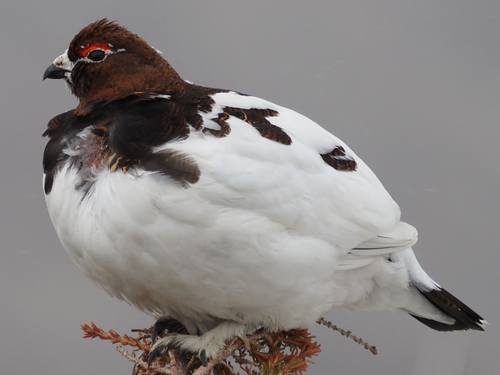
Willow Ptarmigan (Lagopus lagopus) Willow Ptarmigan
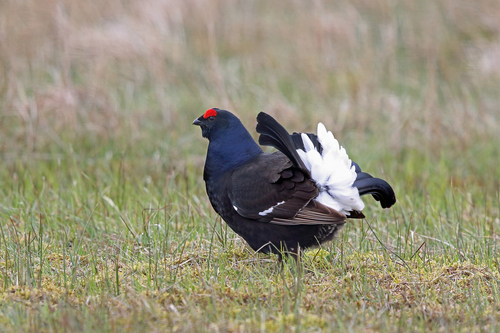
Black Grouse (Lyrurus tetrix) Black Grouse

Media

Loading…

In short

The most reliable way to separate Willow Ptarmigan from Black Grouse is by overall structure and tail shape: Willow Ptarmigan is a compact, deep-chested bird with a short, rounded tail, while Black Grouse is much larger and the male has a distinctive lyre-shaped, long outer tail. In flight or perched, Willow Ptarmigan always shows white wings and a short black tail (with white in winter), whereas male Black Grouse is strikingly black with a white wing bar and undertail, and a dramatically lyre-shaped tail. Females of both are brown and cryptic, but Black Grouse hens are larger and longer-tailed. Habitat can help: Willow Ptarmigan favors tundra and moorland with willows, while Black Grouse is more often near open moorland and woodland edges. Size, structure, and tail are the best field clues, especially at distance or in flight.

Identification tips

  1. Tail shape and length: Male Black Grouse has a long, lyre-shaped tail with outer feathers curving outward—unique and visible in display, flight, or perched. Willow Ptarmigan has a short, rounded tail, black in summer and winter (with white in winter plumage).
  2. Overall size and bulk: Black Grouse is much larger and heavier than Willow Ptarmigan. Even female Black Grouse are bulkier than Willow Ptarmigan of either sex. Use size when birds are together or near familiar objects.
  3. Wing color in flight: Willow Ptarmigan always shows white wings, regardless of season or sex. Black Grouse has dark wings with a white wing bar (male), never fully white.
  4. Plumage seasonality: Willow Ptarmigan turns almost entirely white in winter (except for black tail), while Black Grouse remains dark year-round. Any mostly white grouse in winter is Willow Ptarmigan, not Black Grouse.
  5. Male plumage: Male Black Grouse is glossy black with blue sheen, white undertail, and white wing bar; male Willow Ptarmigan is marbled brown with reddish tones in summer, white in winter.
  6. Female plumage: Both species' females are brown and cryptic, but Black Grouse hens are larger, longer-tailed, and more uniform in color; Willow Ptarmigan females are smaller and show more white, especially on the belly (with brown mottling).
  7. Bill structure: Willow Ptarmigan has a thicker, broader bill relative to head size; Black Grouse's bill is proportionally smaller and less deep.
  8. Eye combs: Both males have red eye combs, but Willow Ptarmigan's are semicircular and prominent in breeding season; not a reliable field mark at distance.
  9. Behavior: Black Grouse males display at communal leks, fanning tails and calling at dawn. Willow Ptarmigan males are territorial and display alone, not in groups.
  10. Habitat: Willow Ptarmigan prefers open tundra, moorland, and willow/birch scrub; Black Grouse is more likely near woodland edges, moorland with scattered trees, or in dense forest in winter.
  11. Flight style: Black Grouse flushes powerfully and may fly high and direct; Willow Ptarmigan flushes low and drops quickly to cover.
  12. Vocalizations: Black Grouse's bubbling, cooing display song is distinctive and not matched by Willow Ptarmigan.
  13. Winter context: Any grouse seen in dense coniferous forest in winter is more likely Black Grouse; Willow Ptarmigan stays in open or shrubby areas.
  14. Mixed flocks: Willow Ptarmigan forms family flocks in autumn; Black Grouse males may gather in small groups outside the lek.
  15. Pitfalls: Female Black Grouse and Willow Ptarmigan can be confused at distance—use size, tail length, and habitat for separation, and look for white in wing (Willow Ptarmigan) or wing bar (Black Grouse).

Size

Black Grouse is significantly larger and heavier than Willow Ptarmigan. Adult Black Grouse males reach about 60 cm in length and can weigh over 1,100 g, with females around 45 cm and 750–1,100 g. Willow Ptarmigan is smaller, with adults 35–44 cm long and weighing 430–810 g (average 650 g). In the field, Black Grouse appears much bulkier and longer-bodied, especially the males. Even female Black Grouse are noticeably larger than Willow Ptarmigan of either sex.

Plumage

Juvenile and immature plumages are not detailed for either species in the sources, but adult and seasonal differences are strong. In summer, Willow Ptarmigan males are marbled brown with reddish neck and breast, black tail, and white wings and underparts; females are similar but duller and more mottled. In winter, both sexes turn almost entirely white except for the black tail (outer feathers remain black), and the wings stay white year-round. Black Grouse males are glossy black with blue sheen, a bold white wing bar, white undertail coverts, and a lyre-shaped tail; females are brown and cryptic, blending with undergrowth. Black Grouse never turns fully white in winter. The white wings of Willow Ptarmigan (all seasons) contrast with the dark wings and white bar of Black Grouse. Eye combs are red in both males, but Willow Ptarmigan's are semicircular and prominent in breeding season, while Black Grouse's are also red but less diagnostic at distance. Tail shape is a key mark: Willow Ptarmigan has a short, rounded tail (black with white in winter), while male Black Grouse has long, outwardly curved lyre-shaped tail feathers.

Behaviour

Willow Ptarmigan is ground-dwelling and often seen walking or running in open tundra or moorland, sometimes perching low in shrubs. Males are territorial in spring and may display by strutting or aerial maneuvers, but do not lek. Black Grouse males are famous for their communal dawn lekking displays, fanning their lyre-shaped tails and inflating their necks on open ground, often with many birds present. Outside the lek, Black Grouse may be seen perched in trees, especially in winter, and are more likely to flush with a powerful, direct flight. Willow Ptarmigan tends to flush low and drop quickly back to cover.

Habitat

Willow Ptarmigan prefers tundra, moorland, and birch or willow scrub, often below treeline and in more open, shrubby areas. It is rarely found in dense forest or above treeline. Black Grouse favors moorland and steppe near woodland edges, often at higher elevations or in areas with scattered trees and dense undergrowth. In winter, Black Grouse may retreat into dense coniferous forests, feeding on needles; Willow Ptarmigan remains in open country or moves to lower, shrubby valleys. Overlap can occur in mixed moorland, but Willow Ptarmigan avoids the forested habitats favored by Black Grouse in winter.

Voice

Black Grouse males have a distinctive, bubbling coo or murmur, especially during lekking displays at dawn. Willow Ptarmigan's vocalizations are not described in detail in the sources, but are not similar to the Black Grouse's bubbling song. Voice is a strong separator if heard: Black Grouse's display calls are unique and carry far.

Submit a better description

Use the same sections as the comparison. Your text is published immediately.

The most reliable way to separate Willow Ptarmigan from Black Grouse is by overall structure and tail shape: Willow Ptarmigan is a compact, deep-chested bird with a short, rounded tail, while Black Grouse is much larger and the male has a distinctive lyre-shaped, long outer tail. In flight or perched, Willow Ptarmigan always shows white wings and a short black tail (with white in winter), whereas male Black Grouse is strikingly black with a white wing bar and undertail, and a dramatically lyre-shaped tail. Females of both are brown and cryptic, but Black Grouse hens are larger and longer-tailed. Habitat can help: Willow Ptarmigan favors tundra and moorland with willows, while Black Grouse is more often near open moorland and woodland edges. Size, structure, and tail are the best field clues, especially at distance or in flight.

  1. Tail shape and length: Male Black Grouse has a long, lyre-shaped tail with outer feathers curving outward—unique and visible in display, flight, or perched. Willow Ptarmigan has a short, rounded tail, black in summer and winter (with white in winter plumage).
  2. Overall size and bulk: Black Grouse is much larger and heavier than Willow Ptarmigan. Even female Black Grouse are bulkier than Willow Ptarmigan of either sex. Use size when birds are together or near familiar objects.
  3. Wing color in flight: Willow Ptarmigan always shows white wings, regardless of season or sex. Black Grouse has dark wings with a white wing bar (male), never fully white.
  4. Plumage seasonality: Willow Ptarmigan turns almost entirely white in winter (except for black tail), while Black Grouse remains dark year-round. Any mostly white grouse in winter is Willow Ptarmigan, not Black Grouse.
  5. Male plumage: Male Black Grouse is glossy black with blue sheen, white undertail, and white wing bar; male Willow Ptarmigan is marbled brown with reddish tones in summer, white in winter.
  6. Female plumage: Both species' females are brown and cryptic, but Black Grouse hens are larger, longer-tailed, and more uniform in color; Willow Ptarmigan females are smaller and show more white, especially on the belly (with brown mottling).
  7. Bill structure: Willow Ptarmigan has a thicker, broader bill relative to head size; Black Grouse's bill is proportionally smaller and less deep.
  8. Eye combs: Both males have red eye combs, but Willow Ptarmigan's are semicircular and prominent in breeding season; not a reliable field mark at distance.
  9. Behavior: Black Grouse males display at communal leks, fanning tails and calling at dawn. Willow Ptarmigan males are territorial and display alone, not in groups.
  10. Habitat: Willow Ptarmigan prefers open tundra, moorland, and willow/birch scrub; Black Grouse is more likely near woodland edges, moorland with scattered trees, or in dense forest in winter.
  11. Flight style: Black Grouse flushes powerfully and may fly high and direct; Willow Ptarmigan flushes low and drops quickly to cover.
  12. Vocalizations: Black Grouse's bubbling, cooing display song is distinctive and not matched by Willow Ptarmigan.
  13. Winter context: Any grouse seen in dense coniferous forest in winter is more likely Black Grouse; Willow Ptarmigan stays in open or shrubby areas.
  14. Mixed flocks: Willow Ptarmigan forms family flocks in autumn; Black Grouse males may gather in small groups outside the lek.
  15. Pitfalls: Female Black Grouse and Willow Ptarmigan can be confused at distance—use size, tail length, and habitat for separation, and look for white in wing (Willow Ptarmigan) or wing bar (Black Grouse).

Black Grouse is significantly larger and heavier than Willow Ptarmigan. Adult Black Grouse males reach about 60 cm in length and can weigh over 1,100 g, with females around 45 cm and 750–1,100 g. Willow Ptarmigan is smaller, with adults 35–44 cm long and weighing 430–810 g (average 650 g). In the field, Black Grouse appears much bulkier and longer-bodied, especially the males. Even female Black Grouse are noticeably larger than Willow Ptarmigan of either sex.

Juvenile and immature plumages are not detailed for either species in the sources, but adult and seasonal differences are strong. In summer, Willow Ptarmigan males are marbled brown with reddish neck and breast, black tail, and white wings and underparts; females are similar but duller and more mottled. In winter, both sexes turn almost entirely white except for the black tail (outer feathers remain black), and the wings stay white year-round. Black Grouse males are glossy black with blue sheen, a bold white wing bar, white undertail coverts, and a lyre-shaped tail; females are brown and cryptic, blending with undergrowth. Black Grouse never turns fully white in winter. The white wings of Willow Ptarmigan (all seasons) contrast with the dark wings and white bar of Black Grouse. Eye combs are red in both males, but Willow Ptarmigan's are semicircular and prominent in breeding season, while Black Grouse's are also red but less diagnostic at distance. Tail shape is a key mark: Willow Ptarmigan has a short, rounded tail (black with white in winter), while male Black Grouse has long, outwardly curved lyre-shaped tail feathers.

Willow Ptarmigan is ground-dwelling and often seen walking or running in open tundra or moorland, sometimes perching low in shrubs. Males are territorial in spring and may display by strutting or aerial maneuvers, but do not lek. Black Grouse males are famous for their communal dawn lekking displays, fanning their lyre-shaped tails and inflating their necks on open ground, often with many birds present. Outside the lek, Black Grouse may be seen perched in trees, especially in winter, and are more likely to flush with a powerful, direct flight. Willow Ptarmigan tends to flush low and drop quickly back to cover.

Willow Ptarmigan prefers tundra, moorland, and birch or willow scrub, often below treeline and in more open, shrubby areas. It is rarely found in dense forest or above treeline. Black Grouse favors moorland and steppe near woodland edges, often at higher elevations or in areas with scattered trees and dense undergrowth. In winter, Black Grouse may retreat into dense coniferous forests, feeding on needles; Willow Ptarmigan remains in open country or moves to lower, shrubby valleys. Overlap can occur in mixed moorland, but Willow Ptarmigan avoids the forested habitats favored by Black Grouse in winter.

Black Grouse males have a distinctive, bubbling coo or murmur, especially during lekking displays at dawn. Willow Ptarmigan's vocalizations are not described in detail in the sources, but are not similar to the Black Grouse's bubbling song. Voice is a strong separator if heard: Black Grouse's display calls are unique and carry far.

Discard your changes?

You have unsaved edits. If you leave now, those changes will be lost.

Willow Ptarmigan · Black Grouse · My Tricky Birds