

White-winged Scoter vs Black Scoter
Melanitta deglandi versus Melanitta americana
Play a quiz with White-winged Scoter and Black Scoter
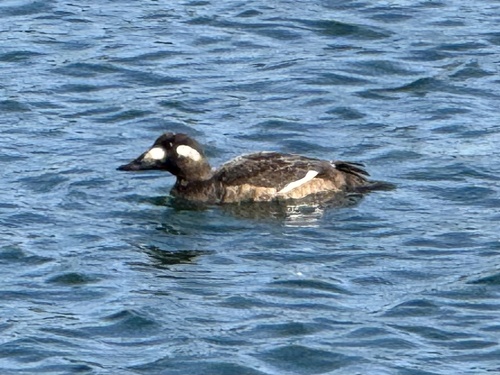 White-winged Scoter
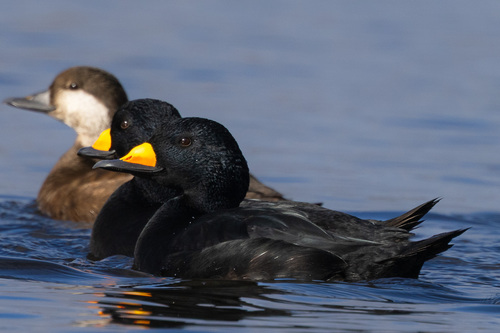 Black Scoter
In short
The most reliable field mark between White-winged Scoter and Black Scoter is the presence of a bold white speculum (wing patch) on White-winged Scoter of all ages, which is visible in flight and sometimes at rest, but completely absent in Black Scoter. Adult males are both mostly black, but White-winged Scoter males show white around the eye and a bicolored bill with a less prominent knob, while Black Scoter males are all black with a very bulbous, mostly yellow bill and no white anywhere. Females of both are brown, but White-winged Scoter females have a distinctive head profile and variable white facial spots, while Black Scoter females have a more uniform brown face with pale cheeks. Size and structure also help: White-winged Scoter is bulkier and larger overall.
Identification tips
- White wing patch in flight: Look for a bold white speculum (patch on the upperwing) in all ages of White-winged Scoter, especially obvious in juveniles and adult males; Black Scoter never shows white in the wing. This is the single most reliable mark in flight.
- Head profile (females/immatures): White-winged Scoter females and immatures have a 'two-stepped' head profile with a distinct angle between bill and forehead, while Black Scoter females have a smoother, sloping 'Roman nose' profile. This is best seen in profile at close range.
- Facial pattern (females/immatures): Young White-winged Scoters often show two white spots (in front of and behind the eye), which fade with age but are usually visible in first-winter birds. Black Scoter females lack these spots and instead have a more uniform pale cheek.
- Bill shape and color (adult males): White-winged Scoter males have a large, sloping bill with an orange/red base and a less prominent black knob; Black Scoter males have a very bulbous, mostly yellow bill with a large knob. Bill color and shape are best seen in good light and at close range.
- White around the eye (adult males): Only White-winged Scoter males show a white comma-shaped mark around the eye; Black Scoter males are all black on the head.
- Bulk and size: White-winged Scoter is noticeably larger and bulkier than Black Scoter, with a longer neck and body. This is most useful when both species are present or with experience.
- Juvenile belly: Juvenile White-winged Scoters have a mottled white belly, which is less distinct or absent in Black Scoter juveniles. This is rarely visible in the field but can help in close views.
- Bill feathering (females): The feathering along the base of the upper mandible forms a right angle in White-winged Scoter, but is more acute in Black Scoter. This is subtle and best seen in photos or very close views.
- No white anywhere (Black Scoter): If you see a scoter with no white on the head or wings, especially in a compact, all-black male with a yellow bill, it's a Black Scoter.
- White-winged Scoter variability: Female and immature White-winged Scoters can sometimes lack obvious white facial spots in winter, making them appear more uniformly brown; in these cases, rely on head profile and size.
- Flock structure: Black Scoter flocks are often more tightly packed and synchronized in flight and takeoff, while White-winged Scoter flocks can be looser.
- Habitat overlap: Both species can occur together on migration and in winter, so do not rely on habitat alone for separation.
- Voice: No diagnostic vocal differences are described in the sources for field separation.
- Seasonal change: White-winged Scoter facial spots fade with age and season, so young birds are easier to separate than adults in winter plumage.
- Bill knob size: The bill knob is more prominent in Black Scoter males than in White-winged Scoter males, but this can be subtle at distance.
Size
White-winged Scoter is significantly larger and heavier than Black Scoter. Female White-winged Scoters average about 1,180 g and 52.3 cm, males about 1,380 g and 55 cm. In contrast, Black Scoter females average 980 g and 45 cm, males about 1,100 g and 49 cm. The difference is most noticeable in direct comparison or with experience, but White-winged Scoter generally appears bulkier and longer-necked, while Black Scoter is more compact.
Plumage
- Juvenile/immature in flight: Juvenile White-winged Scoters show a white speculum (white patch on the greater secondary coverts), especially in males, which is lacking or extremely reduced in Black Scoter of any age. This white wing patch is the most consistent separation in flight for young birds.
- Adult males: White-winged Scoter males are all black with a white comma-shaped mark around the eye and a bicolored (orange/red with black knob) bill; Black Scoter males are also all black but lack any white on the head or wings, and have a very bulbous, mostly yellow bill.
- Females/immatures: Both are brown, but White-winged Scoter females show variable white spots in front of and behind the eye (especially in young birds), and have a more two-stepped head profile; Black Scoter females are brown with pale cheeks but lack the distinct facial spots, and have a more sloping 'Roman nose' profile. Juvenile White-winged Scoters also have a mottled white belly, which is less marked in Black Scoter.
- At rest: The white wing patch of White-winged Scoter may be hidden when swimming, but can sometimes be glimpsed; Black Scoter never shows white in the wings.
Behaviour
Both species are large sea ducks that dive for food and form large flocks in winter. Black Scoter flocks are often tightly packed and take off together, while White-winged Scoter may appear bulkier and more loosely associated. Both species nest on the ground near water, but Black Scoter is noted for nesting later in the season. In flight, White-winged Scoter may appear heavier and longer-necked, while Black Scoter is more compact and rounded.
Habitat
Both species occupy similar habitats, breeding near lakes, rivers, or the sea in northern woodland or tundra. In winter, both are found on coastal waters, but Black Scoter is more likely to be found in sheltered embayments and prefers waters with mixed depths. Habitat is rarely diagnostic unless you are in a region where only one species is expected.