

White-winged Scoter vs Black Scoter
Melanitta deglandi contro Melanitta americana
Fai un quiz con White-winged Scoter e Black Scoter
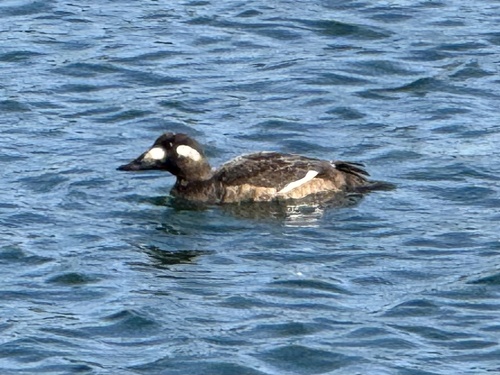 White-winged Scoter
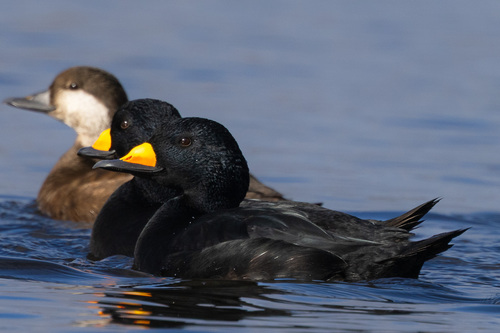 Black Scoter
In breve
Il segno di campo più affidabile tra il White-winged Scoter e il Black Scoter è la presenza di un audace speculum bianco (macchia alare) sul White-winged Scoter di tutte le età, visibile in volo e a volte a riposo, ma completamente assente nel Black Scoter. I maschi adulti sono entrambi per lo più neri, ma i maschi del White-winged Scoter mostrano bianco attorno all'occhio e un becco bicolore con un nodulo meno prominente, mentre i maschi del Black Scoter sono completamente neri con un becco molto bulboso, per lo più giallo e senza bianco da nessuna parte. Le femmine di entrambi sono marroni, ma le femmine del White-winged Scoter hanno un profilo della testa distintivo e macchie facciali bianche variabili, mentre le femmine del Black Scoter hanno un volto marrone più uniforme con guance chiare. Anche la dimensione e la struttura aiutano: il White-winged Scoter è più robusto e più grande nel complesso.
Consigli di identificazione
- Macchia bianca in volo: Cerca un audace speculum bianco (macchia sull'ala superiore) in tutte le età del White-winged Scoter, particolarmente evidente nei giovani e nei maschi adulti; il Black Scoter non mostra mai bianco nell'ala. Questo è il segno più affidabile in volo.
- Profilo della testa (femmine/immaturi): Le femmine e gli immaturi del White-winged Scoter hanno un profilo della testa 'a due gradini' con un angolo distinto tra becco e fronte, mentre le femmine del Black Scoter hanno un profilo 'naso romano' più liscio e inclinato. Questo è meglio visto di profilo a distanza ravvicinata.
- Schema facciale (femmine/immaturi): I giovani White-winged Scoters mostrano spesso due macchie bianche (davanti e dietro l'occhio), che svaniscono con l'età ma sono solitamente visibili negli uccelli di primo inverno. Le femmine del Black Scoter mancano di queste macchie e hanno invece una guancia chiara più uniforme.
- Forma e colore del becco (maschi adulti): I maschi del White-winged Scoter hanno un becco grande e inclinato con una base arancione/rossa e un nodulo nero meno prominente; i maschi del Black Scoter hanno un becco molto bulboso, per lo più giallo, con un grande nodulo. Il colore e la forma del becco sono meglio visti in buona luce e a distanza ravvicinata.
- Bianco attorno all'occhio (maschi adulti): Solo i maschi del White-winged Scoter mostrano un segno a forma di virgola bianca attorno all'occhio; i maschi del Black Scoter sono completamente neri sulla testa.
- Robustezza e dimensione: Il White-winged Scoter è notevolmente più grande e robusto del Black Scoter, con un collo e un corpo più lunghi. Questo è più utile quando entrambe le specie sono presenti o con esperienza.
- Pancia degli immaturi: Gli immaturi del White-winged Scoter hanno una pancia bianca maculata, che è meno distinta o assente negli immaturi del Black Scoter. Questo è raramente visibile sul campo ma può aiutare in viste ravvicinate.
- Piumaggio del becco (femmine): Il piumaggio lungo la base del mandibolo superiore forma un angolo retto nel White-winged Scoter, ma è più acuto nel Black Scoter. Questo è sottile e meglio visto in foto o in viste molto ravvicinate.
- Nessun bianco da nessuna parte (Black Scoter): Se vedi un scoter senza bianco sulla testa o sulle ali, specialmente in un maschio compatto e completamente nero con un becco giallo, è un Black Scoter.
- Variabilità del White-winged Scoter: Le femmine e gli immaturi del White-winged Scoter possono a volte mancare di evidenti macchie facciali bianche in inverno, facendoli apparire più uniformemente marroni; in questi casi, fai affidamento sul profilo della testa e sulla dimensione.
- Struttura del gruppo: I gruppi di Black Scoter sono spesso più compatti e sincronizzati in volo e decollo, mentre i gruppi di White-winged Scoter possono essere più sciolti.
- Sovrapposizione dell'habitat: Entrambe le specie possono verificarsi insieme durante la migrazione e in inverno, quindi non fare affidamento solo sull'habitat per la separazione.
- Voce: Non sono descritte differenze vocali diagnostiche nelle fonti per la separazione sul campo.
- Cambiamento stagionale: Le macchie facciali del White-winged Scoter svaniscono con l'età e la stagione, quindi i giovani uccelli sono più facili da separare rispetto agli adulti in abbigliamento invernale.
- Dimensione del nodulo del becco: Il nodulo del becco è più prominente nei maschi del Black Scoter rispetto ai maschi del White-winged Scoter, ma questo può essere sottile a distanza.
Taglia
Il White-winged Scoter è significativamente più grande e pesante del Black Scoter. Le femmine del White-winged Scoter pesano in media circa 1.180 g e 52,3 cm, i maschi circa 1.380 g e 55 cm. Al contrario, le femmine del Black Scoter pesano in media 980 g e 45 cm, i maschi circa 1.100 g e 49 cm. La differenza è più evidente in un confronto diretto o con esperienza, ma il White-winged Scoter appare generalmente più robusto e con un collo più lungo, mentre il Black Scoter è più compatto.
Piumaggio
- Giovane/immaturo in volo: I giovani White-winged Scoters mostrano uno speculum bianco (macchia bianca sulle copritrici secondarie maggiori), specialmente nei maschi, che è assente o estremamente ridotto nel Black Scoter di qualsiasi età. Questa macchia bianca è la separazione più consistente in volo per i giovani uccelli.
- Maschi adulti: I maschi del White-winged Scoter sono completamente neri con un segno a forma di virgola bianca attorno all'occhio e un becco bicolore (arancione/rosso con nodulo nero); i maschi del Black Scoter sono anch'essi completamente neri ma mancano di bianco sulla testa o sulle ali, e hanno un becco molto bulboso, per lo più giallo.
- Femmine/immaturi: Entrambi sono marroni, ma le femmine del White-winged Scoter mostrano macchie bianche variabili davanti e dietro l'occhio (specialmente nei giovani uccelli), e hanno un profilo della testa più a due gradini; le femmine del Black Scoter sono marroni con guance chiare ma mancano delle distintive macchie facciali, e hanno un profilo 'naso romano' più inclinato. I giovani White-winged Scoters hanno anche una pancia bianca maculata, che è meno marcata nel Black Scoter.
- A riposo: La macchia bianca del White-winged Scoter può essere nascosta quando nuota, ma a volte può essere intravista; il Black Scoter non mostra mai bianco nelle ali.
Comportamento
Entrambe le specie sono grandi anatre marine che si tuffano per cercare cibo e formano grandi gruppi in inverno. I gruppi di Black Scoter sono spesso molto compatti e decollano insieme, mentre il White-winged Scoter può apparire più robusto e più sciolto. Entrambe le specie nidificano a terra vicino all'acqua, ma il Black Scoter è noto per nidificare più tardi nella stagione. In volo, il White-winged Scoter può apparire più pesante e con un collo più lungo, mentre il Black Scoter è più compatto e arrotondato.
Habitat
Entrambe le specie occupano habitat simili, nidificando vicino a laghi, fiumi o al mare in foreste settentrionali o tundra. In inverno, entrambe si trovano in acque costiere, ma il Black Scoter è più probabile che si trovi in insenature riparate e preferisce acque con profondità miste. L'habitat è raramente diagnostico a meno che tu non sia in una regione in cui ci si aspetta solo una specie.
White-winged Scoter · Black Scoter · I miei uccelli difficili