

Motmot

White-winged Dove vs Mourning Dove

Zenaida asiatica versus Zenaida macroura

Play a quiz with White-winged Dove and Mourning Dove
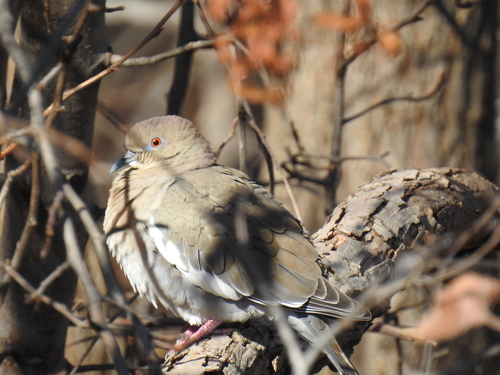
White-winged Dove (Zenaida asiatica) White-winged Dove
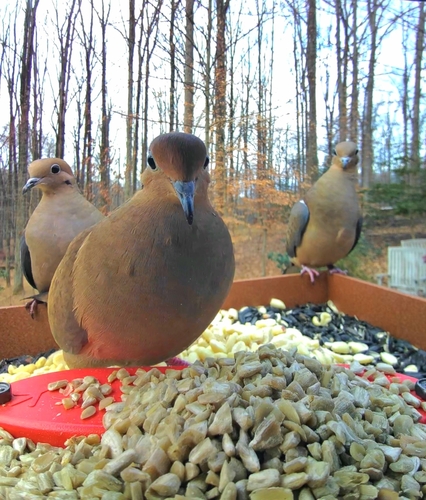
Mourning Dove (Zenaida macroura) Mourning Dove

Media

Loading…

In short

The most reliable way to separate White-winged Dove from Mourning Dove is the bold white edge on the folded and spread wing of White-winged Dove, which forms a striking white crescent in flight and is also visible at rest. Mourning Dove lacks this white wing patch and instead shows black spots on the wing and a long, tapered tail with white outer feathers. Both species are medium-sized doves, but White-winged Dove is bulkier with a shorter, more squared tail, while Mourning Dove is more slender and long-tailed. Juvenile plumages can be confusingly dull, but the white wing edge of White-winged Dove remains a key distinction at all ages.

Identification tips

  1. White wing edge (all ages): White-winged Dove always shows a bold white edge on the folded wing, forming a bright white crescent in flight—never present on Mourning Dove.
  2. Wing spots: Mourning Dove has black spots on the wing coverts; White-winged Dove lacks these spots.
  3. Tail shape: Mourning Dove has a long, tapered, pointed tail with white outer feathers and black inner feathers, visible both perched and in flight. White-winged Dove has a short, rounded tail without this strong contrast.
  4. Body shape: White-winged Dove is plumper and bulkier, while Mourning Dove is more slender and streamlined.
  5. Eyering and eye color: White-winged Dove adults have a blue eyering and red eyes (brown in juveniles); Mourning Dove has a light blue eyering and dark eyes.
  6. Leg color: Both have reddish legs, but this is not a strong separator.
  7. Crown and neck iridescence: Male Mourning Doves may show purple-pink iridescence on the neck and a bluish-gray crown; White-winged Dove males may show some iridescence but it's less distinctive and not reliable in the field.
  8. Juvenile confusion: Juvenile Mourning Doves are darker and scaly, but still lack the white wing edge. Juvenile White-winged Doves are duller but retain the white wing edge.
  9. Flight pattern: Mourning Dove's long, pointed tail is obvious in flight, while White-winged Dove's short, rounded tail and white wing crescent stand out.
  10. Perched posture: Mourning Dove often looks longer and more horizontal due to its tail; White-winged Dove appears more compact.
  11. Habitat context: In open fields or agricultural areas, Mourning Dove is more likely; in urban or arid woodland settings, especially in the Southwest, White-winged Dove is more likely.
  12. Flock size: Large flocks, especially in the Southwest, often indicate White-winged Dove; smaller groups or pairs may be either species.
  13. Vocalizations: If you hear the classic mournful coo, it's Mourning Dove; White-winged Dove's calls are different and less likely to be confused.
  14. Sex differences: Both species are difficult to sex in the field; subtle color differences are not reliable for identification.
  15. Seasonal molt: Both species molt in summer, but this does not affect the key field marks for separation.

Size

White-winged Dove is slightly larger and heavier (body mass ~153 g, length 29 cm, wingspan 48–58 cm) compared to Mourning Dove (length ~31 cm, wingspan 37–45 cm, typical mass 112–170 g but usually closer to 128 g). White-winged Dove is plumper and more robust, while Mourning Dove is more slender and streamlined, especially noticeable in flight and when perched. Mourning Dove's tail is distinctly longer and more pointed, giving it a more elongated appearance overall.

Plumage

Juvenile and adult White-winged Doves always show a bold white edge on the folded wing, which becomes a bright white crescent in flight—this is the single most diagnostic feature at all ages. Mourning Doves never show a white wing patch; instead, they have black spots on the wing coverts and a long, pointed tail with white outer feathers and black inner tail feathers. Juvenile Mourning Doves are darker and have a scaly appearance, while juvenile White-winged Doves are duller and grayer than adults but still show the white wing edge. Adult White-winged Doves have a blue eyering and red eyes (brown in juveniles), whereas Mourning Doves have a light blue eyering and dark eyes. Male Mourning Doves may show iridescent purple-pink patches on the neck and a bluish-gray crown, but these are subtle and not always visible; White-winged Dove males may have slightly more iridescence, but this is not a reliable field mark. The tail of White-winged Dove is short and rounded, while Mourning Dove's is long and pointed.

Behaviour

Both species forage on the ground and perch in trees, but White-winged Doves are more likely to be seen in flocks, especially outside the breeding season. Mourning Doves are also social but often appear in smaller groups or pairs. Display behaviors differ: White-winged Dove males circle females with tail spread and wings raised, while Mourning Dove males perform cooing displays and may inflate their throats during calls. Both species build flimsy stick nests, but White-winged Doves tend to nest higher in trees and less often on man-made structures.

Habitat

White-winged Dove is native to the Southwestern US, Mexico, Central America, and the Caribbean, and is most often found in arid or semi-arid regions, urban areas, and woodlands with abundant trees for nesting. Mourning Dove is much more widespread and abundant across North America, occupying a broader range of habitats including open fields, grasslands, urban parks, and woodland edges. Overlap occurs in much of the southern US, but Mourning Dove is far more likely in open country and agricultural areas.

Voice

Mourning Dove has a distinctive, plaintive cooing song (cooOOoo-wooo-woo-woooo), often mistaken for an owl, and males may produce a grating or rattling sound before the main call. White-winged Dove's vocalizations are not described in detail here, but are generally less likely to be confused with the classic mournful coo of the Mourning Dove. Voice is a useful supporting clue, especially if the classic 'mourning' coo is heard.

Submit a better description

Use the same sections as the comparison. Your text is published immediately.

The most reliable way to separate White-winged Dove from Mourning Dove is the bold white edge on the folded and spread wing of White-winged Dove, which forms a striking white crescent in flight and is also visible at rest. Mourning Dove lacks this white wing patch and instead shows black spots on the wing and a long, tapered tail with white outer feathers. Both species are medium-sized doves, but White-winged Dove is bulkier with a shorter, more squared tail, while Mourning Dove is more slender and long-tailed. Juvenile plumages can be confusingly dull, but the white wing edge of White-winged Dove remains a key distinction at all ages.

  1. White wing edge (all ages): White-winged Dove always shows a bold white edge on the folded wing, forming a bright white crescent in flight—never present on Mourning Dove.
  2. Wing spots: Mourning Dove has black spots on the wing coverts; White-winged Dove lacks these spots.
  3. Tail shape: Mourning Dove has a long, tapered, pointed tail with white outer feathers and black inner feathers, visible both perched and in flight. White-winged Dove has a short, rounded tail without this strong contrast.
  4. Body shape: White-winged Dove is plumper and bulkier, while Mourning Dove is more slender and streamlined.
  5. Eyering and eye color: White-winged Dove adults have a blue eyering and red eyes (brown in juveniles); Mourning Dove has a light blue eyering and dark eyes.
  6. Leg color: Both have reddish legs, but this is not a strong separator.
  7. Crown and neck iridescence: Male Mourning Doves may show purple-pink iridescence on the neck and a bluish-gray crown; White-winged Dove males may show some iridescence but it's less distinctive and not reliable in the field.
  8. Juvenile confusion: Juvenile Mourning Doves are darker and scaly, but still lack the white wing edge. Juvenile White-winged Doves are duller but retain the white wing edge.
  9. Flight pattern: Mourning Dove's long, pointed tail is obvious in flight, while White-winged Dove's short, rounded tail and white wing crescent stand out.
  10. Perched posture: Mourning Dove often looks longer and more horizontal due to its tail; White-winged Dove appears more compact.
  11. Habitat context: In open fields or agricultural areas, Mourning Dove is more likely; in urban or arid woodland settings, especially in the Southwest, White-winged Dove is more likely.
  12. Flock size: Large flocks, especially in the Southwest, often indicate White-winged Dove; smaller groups or pairs may be either species.
  13. Vocalizations: If you hear the classic mournful coo, it's Mourning Dove; White-winged Dove's calls are different and less likely to be confused.
  14. Sex differences: Both species are difficult to sex in the field; subtle color differences are not reliable for identification.
  15. Seasonal molt: Both species molt in summer, but this does not affect the key field marks for separation.

White-winged Dove is slightly larger and heavier (body mass ~153 g, length 29 cm, wingspan 48–58 cm) compared to Mourning Dove (length ~31 cm, wingspan 37–45 cm, typical mass 112–170 g but usually closer to 128 g). White-winged Dove is plumper and more robust, while Mourning Dove is more slender and streamlined, especially noticeable in flight and when perched. Mourning Dove's tail is distinctly longer and more pointed, giving it a more elongated appearance overall.

Juvenile and adult White-winged Doves always show a bold white edge on the folded wing, which becomes a bright white crescent in flight—this is the single most diagnostic feature at all ages. Mourning Doves never show a white wing patch; instead, they have black spots on the wing coverts and a long, pointed tail with white outer feathers and black inner tail feathers. Juvenile Mourning Doves are darker and have a scaly appearance, while juvenile White-winged Doves are duller and grayer than adults but still show the white wing edge. Adult White-winged Doves have a blue eyering and red eyes (brown in juveniles), whereas Mourning Doves have a light blue eyering and dark eyes. Male Mourning Doves may show iridescent purple-pink patches on the neck and a bluish-gray crown, but these are subtle and not always visible; White-winged Dove males may have slightly more iridescence, but this is not a reliable field mark. The tail of White-winged Dove is short and rounded, while Mourning Dove's is long and pointed.

Both species forage on the ground and perch in trees, but White-winged Doves are more likely to be seen in flocks, especially outside the breeding season. Mourning Doves are also social but often appear in smaller groups or pairs. Display behaviors differ: White-winged Dove males circle females with tail spread and wings raised, while Mourning Dove males perform cooing displays and may inflate their throats during calls. Both species build flimsy stick nests, but White-winged Doves tend to nest higher in trees and less often on man-made structures.

White-winged Dove is native to the Southwestern US, Mexico, Central America, and the Caribbean, and is most often found in arid or semi-arid regions, urban areas, and woodlands with abundant trees for nesting. Mourning Dove is much more widespread and abundant across North America, occupying a broader range of habitats including open fields, grasslands, urban parks, and woodland edges. Overlap occurs in much of the southern US, but Mourning Dove is far more likely in open country and agricultural areas.

Mourning Dove has a distinctive, plaintive cooing song (cooOOoo-wooo-woo-woooo), often mistaken for an owl, and males may produce a grating or rattling sound before the main call. White-winged Dove's vocalizations are not described in detail here, but are generally less likely to be confused with the classic mournful coo of the Mourning Dove. Voice is a useful supporting clue, especially if the classic 'mourning' coo is heard.

Discard your changes?

You have unsaved edits. If you leave now, those changes will be lost.

White-winged Dove · Mourning Dove · My Tricky Birds