

White-throated Robin-Chat vs White-starred Robin
Dessonornis humeralis versus Pogonocichla stellata
Play a quiz with White-throated Robin-Chat and White-starred Robin
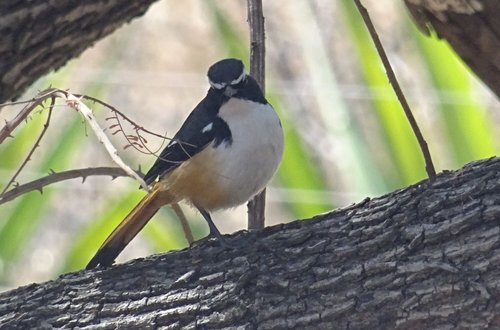 White-throated Robin-Chat
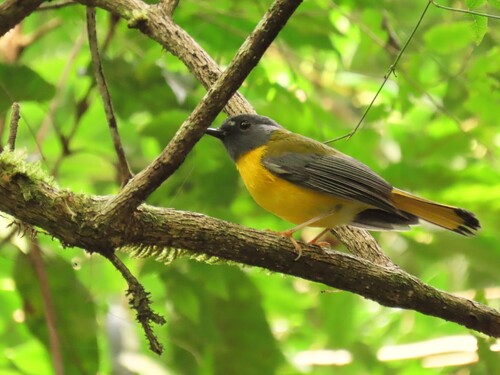 White-starred Robin
In short
The best field separation between White-throated Robin-Chat and White-starred Robin is the strong white throat and plain face of the robin-chat versus the white-starred robin’s distinctive white facial spots (in front of the eye and on the throat) and bright yellow underparts. Juvenile and subadult White-starred Robins show dark, scaly upperparts with golden flecks and a yellow, scaled belly, unlike the more uniform robin-chat. In adults, the White-starred Robin’s greenish mantle, olive wings, and black tail with yellow sides are unique, while the White-throated Robin-Chat is plainer and lacks these contrasting colors. Both species are similar in size, but their preferred habitats differ: robin-chat in dry savannah/shrubland, white-starred robin in moist forest with dense understory.
Identification tips
- Juvenile and subadult plumage: Juvenile White-starred Robins are blackish-brown above with golden flecks and yellow with brown scaling below; subadults are dusky olive above with a yellow belly and grey streaks, with a brownish tail. White-throated Robin-Chat juveniles are not described as having such strong patterning, so a scaly, flecked young bird is likely a White-starred Robin.
- White facial spots: Adult White-starred Robins have a clear white spot in front of the eye and a small white spot on the throat, visible even at a distance. White-throated Robin-Chat lacks these facial spots, instead showing a strong white throat but a plainer face.
- Underparts color: White-starred Robin has bright yellow breast and belly, often striking in the field. White-throated Robin-Chat is much duller below, lacking any bright yellow.
- Mantle and wing color: White-starred Robin shows a moss-green mantle and olive-green wings, with bluish-grey in the rest of the wing. Robin-chat is more uniformly colored, lacking green or olive tones.
- Tail pattern: White-starred Robin’s tail is black with yellow lateral stripes (adults), or brownish in subadults. White-throated Robin-Chat’s tail is not described as having such contrasting colors.
- Bill and rictal bristles: White-starred Robin has a broad, black bill with prominent rictal bristles (used for flycatching), which may be visible at close range. Robin-chat’s bill is less distinctive in this regard.
- Leg color: White-starred Robin has pinkish legs, which may help at close range; robin-chat’s leg color is not noted as distinctive.
- Sexes: Both species are sexually monomorphic in plumage, so sex is not a separator.
- Habitat: Robin-chat in dry savannah or shrubland; white-starred robin in moist forest with dense understory or at forest edge. If seen in deep forest, favor White-starred Robin; in open, dry country, favor robin-chat.
- Perched vs. foraging behavior: White-starred Robin often forages low in dense cover or on the ground, while robin-chat may perch more openly.
- Flight views: If you glimpse a bird with a black tail and yellow sides in flight, it is likely a White-starred Robin. A plainer, less contrasting tail points to robin-chat.
- Regional context: Both are southern African, but White-starred Robin’s range is more tied to forested areas, while robin-chat is absent from true forest.
- Pitfalls: Immature White-starred Robins can look very different from adults, so always check for scaly or flecked plumage in young birds. Robin-chat is more uniform at all ages.
- Voice: Not described in the notes, so do not rely on song or call for separation here.
- Season: No strong seasonal plumage changes in either species, but habitat use may shift slightly with breeding.
Size
Both species are similar in mass, with White-throated Robin-Chat averaging 21.25g [wikidata] and White-starred Robin ranging from 18–25g [wikipedia]. Length is also close: White-starred Robin is 15–16 cm. In the field, size alone is not a reliable separator, as overlap is considerable and both are small, robin-like birds.
Plumage
Juvenile and subadult White-starred Robins are distinctive: juveniles are blackish-brown above with golden flecks and yellow below with brown scaling; subadults are dusky olive above with grey streaks and a yellow belly, and their tail is brownish rather than black. Adults of both sexes have a slate-grey head, white spot in front of the eye, a small white throat spot, moss-green mantle, olive-green wings, black tail with yellow sides, and bright yellow underparts. In contrast, adult White-throated Robin-Chat is much plainer, with a strong white throat and a less contrasting face, lacking the white facial spots and green/olive tones. The robin-chat’s plumage is more uniform and lacks the bright yellow underparts and bold tail pattern of the white-starred robin.
Behaviour
White-starred Robins are territorial in moist forests and often remain close to dense understory or forest edge, sometimes foraging low or on the ground. Their domed nests are well hidden. White-throated Robin-Chats prefer drier, more open habitats and are more likely to be seen in shrubland or savannah, often perching in the open or singing from prominent spots. Both species are generally unobtrusive but may be detected by movement or song.
Habitat
White-throated Robin-Chat is found in dry savannah and subtropical or tropical dry shrubland, endemic to southern Africa (Botswana, Eswatini, Mozambique, South Africa, Zimbabwe) [wikipedia]. White-starred Robin is a species of moist evergreen forest, requiring dense understory, and is also found at forest edges, in plantations, and sometimes in evergreen woodlands or gardens near forest [wikipedia]. Habitat context is a strong clue: robin-chat in open, dry country; white-starred robin in wet, forested areas.
White-throated Robin-Chat · White-starred Robin · My Tricky Birds