
White-throated Dipper vs Common Starling
Cinclus cinclus versus Sturnus vulgaris
Play a quiz with White-throated Dipper and Common Starling
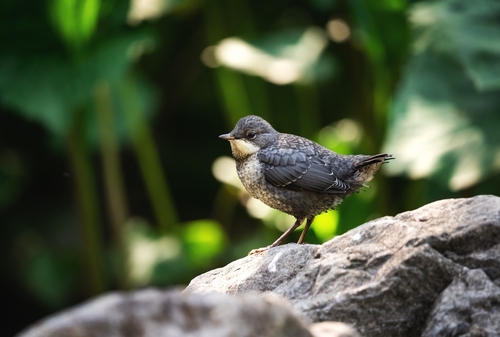 White-throated Dipper
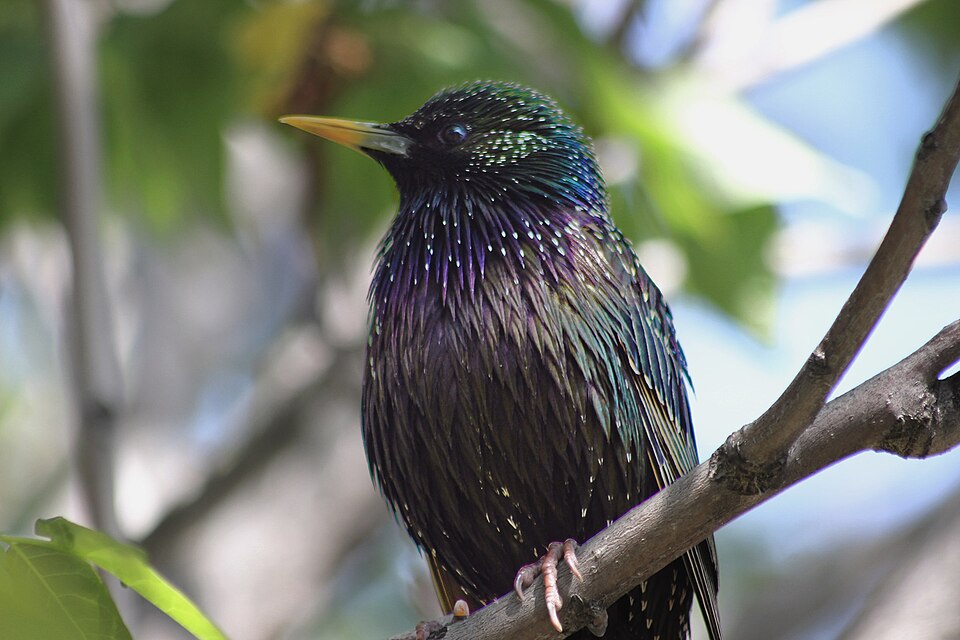 Common Starling
In short
The most reliable way to separate White-throated Dipper from Common Starling is by their overall shape, plumage contrast, and habitat. Dippers are compact, short-tailed birds with a striking white throat and chest, often seen bobbing on rocks in or beside fast-flowing streams. Starlings are longer, slimmer, and have a pointed bill, with glossy, iridescent black plumage spangled with white in winter, and are usually found in open country, fields, or urban areas. Juvenile dippers are plain and greyish, lacking the white throat, while juvenile starlings are brownish and never show the dipper's sharp color contrasts. In flight, starlings have pointed wings and a direct, sometimes gliding flight, whereas dippers fly low and fast over water with rapid, whirring wingbeats.
Identification tips
- Habitat is key: If the bird is on rocks in or beside a fast-flowing stream, it's almost certainly a dipper; if it's in a field, park, or urban area, it's almost certainly a starling.
- Body shape: Dippers are compact, round-bodied, and short-tailed; starlings are longer, slimmer, and have a more elongated shape with a proportionally longer tail.
- Bill shape and color: Dippers have a short, dark bill year-round; starlings have a long, slender, pointed bill, dark in winter and bright yellow in breeding season.
- Leg color: Dippers have brown legs; starlings have pinkish or reddish legs, especially in spring and summer.
- Plumage contrast (adults): Adult dippers have a crisp white throat and chest, often with a chestnut or dark band below, and otherwise dark plumage. Starlings are glossy black with purple/green iridescence and white spots in winter, lacking any white throat or chestnut band.
- Plumage (juveniles): Juvenile dippers are plain greyish-brown, lacking the white throat; juvenile starlings are brownish-grey, never showing sharp white or chestnut contrasts.
- Iridescence: Starlings show a metallic sheen in good light, especially in spring and summer; dippers are always matte, never iridescent.
- Wing shape in flight: Starlings have sharply pointed wings and a short tail, giving a triangular look; dippers have broad, rounded wings and an even shorter tail, appearing stubby in flight.
- Flight style: Dippers fly low and fast over water with rapid, whirring wingbeats, never gliding; starlings fly higher, with bursts of rapid wingbeats and short glides, often in flocks.
- Perched posture: Dippers often bob up and down with their tail cocked; starlings stand upright or slightly forward, never bobbing.
- Social behavior: Dippers are usually alone or in pairs; starlings are often in flocks, especially outside the breeding season.
- Voice: Dipper's call is a simple, high 'zil, zil, zil'; starling's song is a complex mix of whistles, clicks, and mimicry.
- Seasonal changes: Starling's bill and leg color change with season (yellow bill and pink legs in breeding season); dipper's colors are stable year-round.
- Contextual clues: If you see a bird diving or swimming underwater, it's a dipper; starlings do not enter water except to bathe.
- Pitfalls: In dull light, both can look dark and plain, but the dipper's white throat and compact shape are distinctive at any age if seen well. Juvenile starlings may seem plain but never show the dipper's bobbing or aquatic habits.
Size
White-throated Dipper is smaller and more rotund, measuring about 18 cm in length [wikipedia], while Common Starling is longer and slimmer at 19–23 cm [wikipedia][avonet]. Starlings also have a longer wingspan (31–44 cm vs. the dipper's much shorter wings), and are heavier (58–101 g vs. dipper's smaller mass). Dipper's short tail and compact body make it look stockier, especially when perched.
Plumage
- Juveniles: Juvenile White-throated Dippers are greyish-brown overall, lacking the white throat and chestnut band of adults [wikipedia]. Juvenile starlings are brownish-grey, with a uniform color and no sharp white or chestnut contrasts, but may show some retained brown head feathers into first winter [wikipedia].
- Adults: Adult dippers have a white throat and upper chest, a chestnut or dark band below, and otherwise dark, slate-grey to blackish plumage. Starlings are glossy black with purple or green iridescence, spangled with white spots in winter (from pale feather tips), and lose most spots by spring. Dippers never show iridescence or overall spangling. The dipper's bill is always dark, while the starling's bill is dark in winter but turns bright yellow in breeding season. Dipper legs are brown; starling legs are pinkish or reddish, especially in breeding season. In flight, starlings show pointed wings and a short tail, while dippers have broad, rounded wings and a very short tail.
Behaviour
White-throated Dippers are almost always found near fast-moving streams or rivers, where they bob on rocks and frequently dive or walk into the water, often submerging completely to feed. Their movement is characterized by rapid, low, direct flights over water, and a distinctive bobbing motion when perched. Starlings are highly gregarious, often in flocks, and are seen walking or running on open ground, lawns, or in trees. Their flight is strong and direct with rapid, pointed wingbeats, often interspersed with short glides, and they frequently wheel and turn in tight flocks. Starlings rarely, if ever, enter water like dippers do.
Habitat
Dippers are tightly associated with clean, fast-flowing streams, rivers, and sometimes lakes, especially in upland or hilly areas. They are rarely seen away from water and are most often found perched on rocks or low branches near rapids. Starlings are habitat generalists, common in open country, farmland, parks, gardens, towns, and cities, and are rarely seen near fast-flowing water. A dipper in a city park or a starling on a mountain stream would be highly unusual.
Voice
Dippers give a sharp, high-pitched 'zil, zil, zil' call, often in flight or when disturbed. Starlings have a wide repertoire of whistles, clicks, and mimicry, and their song is much more complex and varied, often delivered from a perch. The two species' calls are not easily confused: dipper is simple and high-pitched, starling is chattering and musical.