

Motmot

White Stork vs Northern Gannet

Ciconia ciconia versus Morus bassanus

Play a quiz with White Stork and Northern Gannet
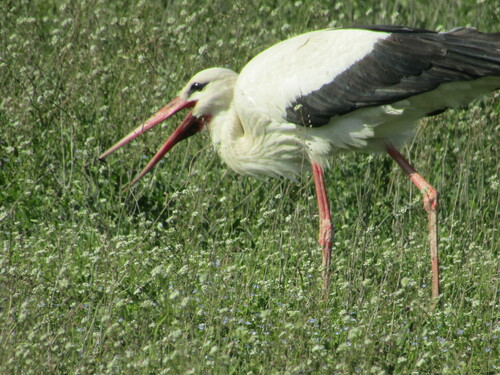
White Stork (Ciconia ciconia) White Stork
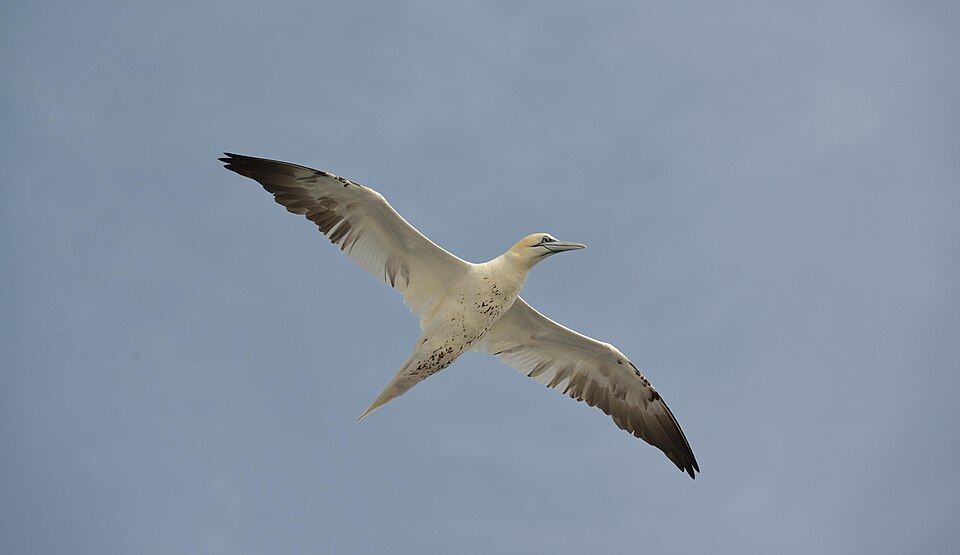
Northern Gannet (Morus bassanus) Northern Gannet

Media

Loading…

In short

The most reliable field mark for separating White Stork and Northern Gannet in the field is their bill and head coloration: White Stork has a long, straight, bright red bill and red legs, while Northern Gannet shows a long, pointed blue-grey bill with black facial skin and no red anywhere. For flying birds, note that adult White Stork has black only on the flight feathers of the wings, while adult Northern Gannet has black wingtips and a buff-tinged head. Juvenile gannets are mostly dark brown and can look very different from adult storks. Structure and flight style also differ: storks are taller, longer-legged, and fly with necks outstretched, while gannets are more streamlined with shorter legs and fly with necks slightly retracted. Habitat is a strong clue: storks are terrestrial and often seen in fields or on nests, while gannets are strictly marine, usually seen over open sea or on coastal cliffs.

Identification tips

  1. Bill color and shape: White Stork has a long, straight, bright red bill; Northern Gannet has a long, pointed blue-grey bill with black facial skin. This is visible at moderate range and is diagnostic for adults.
  2. Leg color and length: White Stork has long, bright red legs that trail far beyond the tail in flight and are obvious when perched. Gannet's legs are short, dark, and never extend beyond the tail in flight.
  3. Head and facial pattern: Stork's head is pure white with no facial markings; gannet has a buff-tinged head (especially in breeding season) and black skin around the bill and eyes.
  4. Plumage (adult): Both species are mostly white with black on the wings, but stork's black is limited to the flight feathers (primaries and secondaries), forming a sharp contrast, while gannet's black is confined to the wingtips and the rest of the wing is white.
  5. Plumage (juvenile/immature): Juvenile gannets are mostly dark brown with white speckling, very different from the always white-bodied stork. Immature gannets gradually become whiter over several years, but never show the stork's clean white body with black wings.
  6. Tail: Both have white tails as adults, but gannet's is more pointed; not a strong field mark.
  7. Flight profile: Stork flies with neck and legs fully extended, giving a long, straight profile. Gannet flies with neck slightly retracted and legs not visible, appearing more streamlined and compact.
  8. Perched posture: Storks stand upright on long legs, often on rooftops, nests, or in fields. Gannets are rarely seen perched except on steep cliffs or islands, and never on buildings or in fields.
  9. Habitat: Stork is terrestrial and often seen far from water; gannet is strictly marine and never found inland except as a rare storm-blown vagrant.
  10. Behavior: Stork forages by walking and probing in fields; gannet is seen diving for fish at sea or gliding over waves.
  11. Group behavior: Storks may be seen singly or in loose flocks, especially during migration. Gannets are often seen in large, dense colonies or flocks at sea.
  12. Size impression: Stork appears taller and more upright, especially on land; gannet is heavier but more compact and streamlined.
  13. Confusion risk: In poor light or at great distance, both can appear as large white birds with black wings, but habitat and flight style are strong clues.
  14. Voice: Not a useful separator in the field; neither species is especially vocal away from the nest.
  15. Season: Both species are migratory, but gannet is never expected inland, while stork is absent from marine environments.

Size

White Stork is the taller and longer bird, measuring 100–115 cm in length with a wingspan of 155–215 cm (39–45 in long, 61–85 in wingspan) [wikipedia]. Northern Gannet is slightly shorter and more compact, at 87–100 cm long with a 170–180 cm wingspan (34.5–39.5 in long, 67–71 in wingspan) [wikipedia]. Gannet is heavier on average (adult mass ~3000 g [wikidata]), but the stork's longer legs and neck make it appear much larger and more upright, especially on land.

Plumage

Juvenile and immature Northern Gannets are mostly dark grey-brown overall, with extensive dark on the upperwings and body, gradually acquiring more white over several years. This is a key difference: White Stork of all ages is mainly white with black restricted to the flight feathers of the wings, never brownish or mottled. Adult Northern Gannet is white-bodied with a buff-tinged head (especially in breeding season), black wingtips, and all-white tail. In contrast, adult White Stork has a pure white body and head, with black only on the primaries and secondaries, and a white tail. The stork's red bill and legs are always obvious, while gannet's bill is blue-grey with black facial skin and legs. In flight, the stork's underwing is white with a sharp black trailing edge, while the gannet's underwing shows black tips and a more pointed wing shape. No seasonal or sex-based plumage differences are noted for either species.

Behaviour

White Stork is often seen walking on the ground, foraging in fields, or standing on large stick nests on rooftops or trees. It flies with slow, steady wingbeats and soars on thermals with neck and legs fully extended. Northern Gannet is strictly marine, rarely if ever seen inland or on the ground away from colonies. It is usually seen flying low over the sea, gliding or making spectacular high-speed plunge dives for fish. In flight, gannets hold their necks slightly retracted and their legs are short and not visible beyond the tail, unlike the stork's long trailing legs. Gannets nest in dense colonies on cliffs or offshore islands, never in trees or on buildings.

Habitat

Habitat is a major separator: White Stork is a terrestrial species, favoring open fields, wetlands, and human settlements for nesting, often far from the coast. Northern Gannet is strictly marine, found over open ocean or nesting on steep coastal cliffs and offshore islands. Seeing a large white bird with black wings inland almost always rules out Northern Gannet.

Submit a better description

Use the same sections as the comparison. Your text is published immediately.

The most reliable field mark for separating White Stork and Northern Gannet in the field is their bill and head coloration: White Stork has a long, straight, bright red bill and red legs, while Northern Gannet shows a long, pointed blue-grey bill with black facial skin and no red anywhere. For flying birds, note that adult White Stork has black only on the flight feathers of the wings, while adult Northern Gannet has black wingtips and a buff-tinged head. Juvenile gannets are mostly dark brown and can look very different from adult storks. Structure and flight style also differ: storks are taller, longer-legged, and fly with necks outstretched, while gannets are more streamlined with shorter legs and fly with necks slightly retracted. Habitat is a strong clue: storks are terrestrial and often seen in fields or on nests, while gannets are strictly marine, usually seen over open sea or on coastal cliffs.

  1. Bill color and shape: White Stork has a long, straight, bright red bill; Northern Gannet has a long, pointed blue-grey bill with black facial skin. This is visible at moderate range and is diagnostic for adults.
  2. Leg color and length: White Stork has long, bright red legs that trail far beyond the tail in flight and are obvious when perched. Gannet's legs are short, dark, and never extend beyond the tail in flight.
  3. Head and facial pattern: Stork's head is pure white with no facial markings; gannet has a buff-tinged head (especially in breeding season) and black skin around the bill and eyes.
  4. Plumage (adult): Both species are mostly white with black on the wings, but stork's black is limited to the flight feathers (primaries and secondaries), forming a sharp contrast, while gannet's black is confined to the wingtips and the rest of the wing is white.
  5. Plumage (juvenile/immature): Juvenile gannets are mostly dark brown with white speckling, very different from the always white-bodied stork. Immature gannets gradually become whiter over several years, but never show the stork's clean white body with black wings.
  6. Tail: Both have white tails as adults, but gannet's is more pointed; not a strong field mark.
  7. Flight profile: Stork flies with neck and legs fully extended, giving a long, straight profile. Gannet flies with neck slightly retracted and legs not visible, appearing more streamlined and compact.
  8. Perched posture: Storks stand upright on long legs, often on rooftops, nests, or in fields. Gannets are rarely seen perched except on steep cliffs or islands, and never on buildings or in fields.
  9. Habitat: Stork is terrestrial and often seen far from water; gannet is strictly marine and never found inland except as a rare storm-blown vagrant.
  10. Behavior: Stork forages by walking and probing in fields; gannet is seen diving for fish at sea or gliding over waves.
  11. Group behavior: Storks may be seen singly or in loose flocks, especially during migration. Gannets are often seen in large, dense colonies or flocks at sea.
  12. Size impression: Stork appears taller and more upright, especially on land; gannet is heavier but more compact and streamlined.
  13. Confusion risk: In poor light or at great distance, both can appear as large white birds with black wings, but habitat and flight style are strong clues.
  14. Voice: Not a useful separator in the field; neither species is especially vocal away from the nest.
  15. Season: Both species are migratory, but gannet is never expected inland, while stork is absent from marine environments.

White Stork is the taller and longer bird, measuring 100–115 cm in length with a wingspan of 155–215 cm (39–45 in long, 61–85 in wingspan) [wikipedia]. Northern Gannet is slightly shorter and more compact, at 87–100 cm long with a 170–180 cm wingspan (34.5–39.5 in long, 67–71 in wingspan) [wikipedia]. Gannet is heavier on average (adult mass ~3000 g [wikidata]), but the stork's longer legs and neck make it appear much larger and more upright, especially on land.

Juvenile and immature Northern Gannets are mostly dark grey-brown overall, with extensive dark on the upperwings and body, gradually acquiring more white over several years. This is a key difference: White Stork of all ages is mainly white with black restricted to the flight feathers of the wings, never brownish or mottled. Adult Northern Gannet is white-bodied with a buff-tinged head (especially in breeding season), black wingtips, and all-white tail. In contrast, adult White Stork has a pure white body and head, with black only on the primaries and secondaries, and a white tail. The stork's red bill and legs are always obvious, while gannet's bill is blue-grey with black facial skin and legs. In flight, the stork's underwing is white with a sharp black trailing edge, while the gannet's underwing shows black tips and a more pointed wing shape. No seasonal or sex-based plumage differences are noted for either species.

White Stork is often seen walking on the ground, foraging in fields, or standing on large stick nests on rooftops or trees. It flies with slow, steady wingbeats and soars on thermals with neck and legs fully extended. Northern Gannet is strictly marine, rarely if ever seen inland or on the ground away from colonies. It is usually seen flying low over the sea, gliding or making spectacular high-speed plunge dives for fish. In flight, gannets hold their necks slightly retracted and their legs are short and not visible beyond the tail, unlike the stork's long trailing legs. Gannets nest in dense colonies on cliffs or offshore islands, never in trees or on buildings.

Habitat is a major separator: White Stork is a terrestrial species, favoring open fields, wetlands, and human settlements for nesting, often far from the coast. Northern Gannet is strictly marine, found over open ocean or nesting on steep coastal cliffs and offshore islands. Seeing a large white bird with black wings inland almost always rules out Northern Gannet.

Discard your changes?

You have unsaved edits. If you leave now, those changes will be lost.

White Stork · Northern Gannet · My Tricky Birds