

Motmot

White Stork vs European Shag

Ciconia ciconia versus Gulosus aristotelis

Play a quiz with White Stork and European Shag
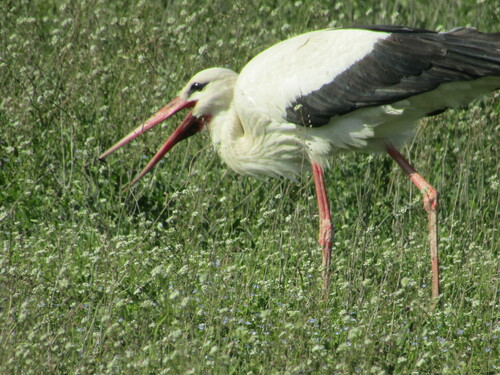
White Stork (Ciconia ciconia) White Stork
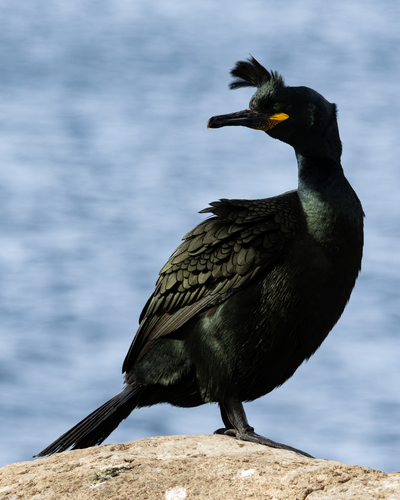
European Shag (Gulosus aristotelis) European Shag

Media

Loading…

In short

The most reliable way to separate White Stork from European Shag is by overall structure and plumage: White Stork is a huge, mainly white bird with black flight feathers, long red legs and bill, while European Shag is a much smaller, entirely dark bird with a slender bill and a greenish sheen. In flight, White Stork shows striking white wings with black primaries and secondaries, and flies with neck outstretched and legs trailing well beyond the tail; Shag is all dark, flies with neck retracted, and has a longish tail. Juvenile Shags are darker below, while juvenile White Storks are still mostly white with black wings. Perched, the stork’s long red legs and upright stance contrast with the Shag’s low, cormorant-like posture. Confusion is most likely at long range or in poor light, but size and color differences are decisive at any reasonable distance.

Identification tips

  1. Size and shape: White Stork is much larger and taller than European Shag. If you see a bird that looks as big as a heron or larger, it is a stork. Shag is cormorant-sized and never appears stork-like in proportions.
  2. Plumage contrast: White Stork is always white with black flight feathers; Shag is always entirely dark. If you see a black-and-white bird, it is not a Shag.
  3. Bill color and shape: Stork has a long, straight, pointed red bill; Shag has a slender, dark bill with a slight hook at the tip. Bill color is especially useful at close range.
  4. Legs: Stork’s long, bright red legs are obvious when perched or in flight, trailing well beyond the tail. Shag’s legs are dark and short, barely extending past the tail in flight.
  5. Neck posture in flight: Stork flies with neck and legs fully outstretched, giving a long, straight profile. Shag flies with neck retracted, giving a more compact, cormorant-like silhouette.
  6. Tail: Shag has a proportionally long, wedge-shaped tail; stork’s tail is short and square.
  7. Wing pattern in flight: Stork shows white wings with a bold black trailing edge (all ages); Shag’s wings are uniformly dark above and below, with no white.
  8. Juvenile plumage: Juvenile Shag is darker below than adult, but still all dark; juvenile stork is still mostly white with black wings.
  9. Crest and throat patch: Adult Shag in breeding season has a small crest and yellow throat patch, but these are subtle and not visible at distance; stork never shows these features.
  10. Perched posture: Stork stands upright, often on one leg, high above the ground; Shag perches low, often on rocks, and may be seen with wings spread to dry.
  11. Habitat: Stork is found in open fields, wetlands, and farmland, often inland; Shag is strictly coastal, on rocky shores and cliffs.
  12. Behavior: Stork walks slowly on land, soars high in the sky; Shag swims and dives for fish, often seen low in the water or drying wings.
  13. Group behavior: Storks may be solitary or in loose groups; Shags often gather in colonies or small flocks on rocks.
  14. Flight style: Stork soars and glides with steady wingbeats; Shag flies low over water with rapid wingbeats, rarely soaring.
  15. Pitfalls: At great distance or in poor light, a flying stork’s black-and-white wings could be misread as a dark bird, but size, neck, and leg projection will always separate them. Shag never shows white in the plumage, and is never seen inland.

Size

White Stork is dramatically larger: 100–115 cm in length with a 155–215 cm wingspan [wikipedia], towering over the European Shag, which measures only 68–78 cm long and has a 95–110 cm wingspan [wikipedia]. The stork’s long legs and neck further exaggerate its size, especially in flight, where it appears lanky and elongated. Shag is more compact, with a proportionally longer tail for its size, and never approaches the stork’s bulk or height.

Plumage

Juvenile and adult White Storks are always mostly white with black only on the wings (primaries and secondaries); this contrast is obvious both perched and in flight. The underwing is white with a bold black trailing edge in all ages. European Shag is entirely dark at all ages, with a metallic greenish sheen in adults and darker underparts in juveniles. Shag never shows white in the wings or body. In breeding season, adult Shags have a small crest and a yellow throat patch, but these are subtle at distance. The stork’s red bill and legs are visible at close range, while Shag has a dark bill and legs. No age or season of Shag ever shows the white-and-black contrast of the stork.

Behaviour

White Stork is usually seen walking in open fields, standing upright on long legs, or soaring high with slow, steady wingbeats and glides, neck and legs fully outstretched. In flight, it is often solitary or in loose, disorganized groups. European Shag is typically perched low on rocks or cliffs near the sea, often with wings spread to dry, and flies with rapid wingbeats, neck retracted, and legs not projecting past the tail. Shags may be seen diving for fish or swimming low in the water, behaviors never shown by storks.

Habitat

White Stork favors open wetlands, grasslands, and agricultural fields, often far from the coast. It nests on tall structures or trees in open country. European Shag is strictly coastal, breeding and feeding on rocky shores, islands, and sea cliffs, rarely venturing inland. If the bird is seen inland or in farmland, it is almost certainly a stork; if on a rocky seacoast, especially on a cliff or rock, Shag is much more likely.

Submit a better description

Use the same sections as the comparison. Your text is published immediately.

The most reliable way to separate White Stork from European Shag is by overall structure and plumage: White Stork is a huge, mainly white bird with black flight feathers, long red legs and bill, while European Shag is a much smaller, entirely dark bird with a slender bill and a greenish sheen. In flight, White Stork shows striking white wings with black primaries and secondaries, and flies with neck outstretched and legs trailing well beyond the tail; Shag is all dark, flies with neck retracted, and has a longish tail. Juvenile Shags are darker below, while juvenile White Storks are still mostly white with black wings. Perched, the stork’s long red legs and upright stance contrast with the Shag’s low, cormorant-like posture. Confusion is most likely at long range or in poor light, but size and color differences are decisive at any reasonable distance.

  1. Size and shape: White Stork is much larger and taller than European Shag. If you see a bird that looks as big as a heron or larger, it is a stork. Shag is cormorant-sized and never appears stork-like in proportions.
  2. Plumage contrast: White Stork is always white with black flight feathers; Shag is always entirely dark. If you see a black-and-white bird, it is not a Shag.
  3. Bill color and shape: Stork has a long, straight, pointed red bill; Shag has a slender, dark bill with a slight hook at the tip. Bill color is especially useful at close range.
  4. Legs: Stork’s long, bright red legs are obvious when perched or in flight, trailing well beyond the tail. Shag’s legs are dark and short, barely extending past the tail in flight.
  5. Neck posture in flight: Stork flies with neck and legs fully outstretched, giving a long, straight profile. Shag flies with neck retracted, giving a more compact, cormorant-like silhouette.
  6. Tail: Shag has a proportionally long, wedge-shaped tail; stork’s tail is short and square.
  7. Wing pattern in flight: Stork shows white wings with a bold black trailing edge (all ages); Shag’s wings are uniformly dark above and below, with no white.
  8. Juvenile plumage: Juvenile Shag is darker below than adult, but still all dark; juvenile stork is still mostly white with black wings.
  9. Crest and throat patch: Adult Shag in breeding season has a small crest and yellow throat patch, but these are subtle and not visible at distance; stork never shows these features.
  10. Perched posture: Stork stands upright, often on one leg, high above the ground; Shag perches low, often on rocks, and may be seen with wings spread to dry.
  11. Habitat: Stork is found in open fields, wetlands, and farmland, often inland; Shag is strictly coastal, on rocky shores and cliffs.
  12. Behavior: Stork walks slowly on land, soars high in the sky; Shag swims and dives for fish, often seen low in the water or drying wings.
  13. Group behavior: Storks may be solitary or in loose groups; Shags often gather in colonies or small flocks on rocks.
  14. Flight style: Stork soars and glides with steady wingbeats; Shag flies low over water with rapid wingbeats, rarely soaring.
  15. Pitfalls: At great distance or in poor light, a flying stork’s black-and-white wings could be misread as a dark bird, but size, neck, and leg projection will always separate them. Shag never shows white in the plumage, and is never seen inland.

White Stork is dramatically larger: 100–115 cm in length with a 155–215 cm wingspan [wikipedia], towering over the European Shag, which measures only 68–78 cm long and has a 95–110 cm wingspan [wikipedia]. The stork’s long legs and neck further exaggerate its size, especially in flight, where it appears lanky and elongated. Shag is more compact, with a proportionally longer tail for its size, and never approaches the stork’s bulk or height.

Juvenile and adult White Storks are always mostly white with black only on the wings (primaries and secondaries); this contrast is obvious both perched and in flight. The underwing is white with a bold black trailing edge in all ages. European Shag is entirely dark at all ages, with a metallic greenish sheen in adults and darker underparts in juveniles. Shag never shows white in the wings or body. In breeding season, adult Shags have a small crest and a yellow throat patch, but these are subtle at distance. The stork’s red bill and legs are visible at close range, while Shag has a dark bill and legs. No age or season of Shag ever shows the white-and-black contrast of the stork.

White Stork is usually seen walking in open fields, standing upright on long legs, or soaring high with slow, steady wingbeats and glides, neck and legs fully outstretched. In flight, it is often solitary or in loose, disorganized groups. European Shag is typically perched low on rocks or cliffs near the sea, often with wings spread to dry, and flies with rapid wingbeats, neck retracted, and legs not projecting past the tail. Shags may be seen diving for fish or swimming low in the water, behaviors never shown by storks.

White Stork favors open wetlands, grasslands, and agricultural fields, often far from the coast. It nests on tall structures or trees in open country. European Shag is strictly coastal, breeding and feeding on rocky shores, islands, and sea cliffs, rarely venturing inland. If the bird is seen inland or in farmland, it is almost certainly a stork; if on a rocky seacoast, especially on a cliff or rock, Shag is much more likely.

Discard your changes?

You have unsaved edits. If you leave now, those changes will be lost.

White Stork · European Shag · My Tricky Birds