

Motmot

White-necked Babbler vs Spot-necked Babbler

Stachyris leucotis versus Stachyris strialata

Play a quiz with White-necked Babbler and Spot-necked Babbler
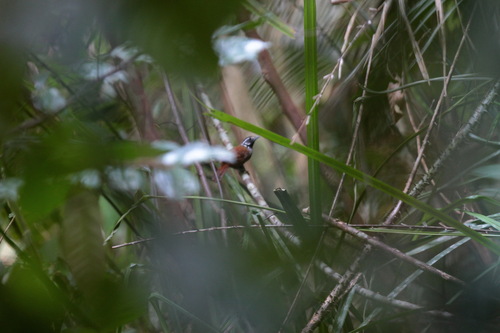
White-necked Babbler (Stachyris leucotis) White-necked Babbler
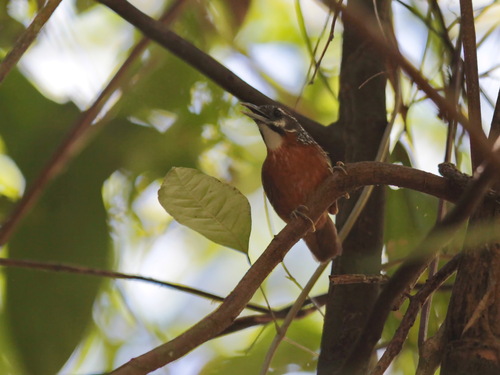
Spot-necked Babbler (Stachyris strialata) Spot-necked Babbler

Media

Loading…

In short

The most reliable way to separate White-necked Babbler from Spot-necked Babbler is by their distinctive neck markings: White-necked Babbler shows a clear white patch on the sides of the neck, while Spot-necked Babbler has a pattern of small pale spots or streaks on the neck area. Both species are similar in overall shape and behavior, but Spot-necked Babbler is slightly heavier and has a broader geographic range, including China and montane forests. In the field, focus on the neck pattern and, where possible, habitat context to avoid confusion.

Identification tips

  1. Neck Markings: The most consistent field mark is the neck pattern. White-necked Babbler shows a bold, solid white patch on the sides of the neck; Spot-necked Babbler has a series of pale spots or streaks, never forming a solid patch. This is visible on perched birds and often even in poor light.
  2. Geographic Range: If you are in China, Laos, Myanmar, or Vietnam, you are looking at Spot-necked Babbler; in Brunei or Malaysia, it is White-necked Babbler. Both occur in Indonesia and Thailand, so use plumage there.
  3. Habitat Elevation: Spot-necked Babbler can be found in montane as well as lowland forests; White-necked Babbler is restricted to lowland forests. In high-elevation forest, Spot-necked is more likely.
  4. Body Size: Spot-necked Babbler averages slightly heavier, but this is not a reliable field mark unless birds are together.
  5. Group Behavior: Both species are gregarious and forage in dense undergrowth, so do not rely on behavior for separation.
  6. Overall Plumage: Both are brownish overall; do not use back or wing color for separation.
  7. Flight Views: There are no known age-specific flight or upperwing patterns to separate these species; focus on neck pattern even in flight if possible.
  8. Juvenile/Immature Birds: No special juvenile marks are documented; use the neck pattern for all ages.
  9. Sex Differences: No sexual dimorphism is reported; both sexes show the same field marks.
  10. Seasonal Variation: No seasonal plumage changes are noted; neck pattern is reliable year-round.
  11. Pitfall—Partial Views: If you see only the back or underparts, do not attempt an ID; wait for a clear view of the neck.
  12. Pitfall—Lighting: In poor light, the white neck patch of White-necked Babbler may appear dull, but the absence of spots still distinguishes it from Spot-necked.
  13. Pitfall—Overlap Zones: In Indonesia and Thailand, both species occur; always check the neck pattern carefully.
  14. Vocalizations: No distinctive vocal differences are documented in the available notes; do not use voice for separation.
  15. Summary: Always prioritize a clear view of the neck; if this is not possible, use range and habitat as supporting evidence, but avoid guessing based on behavior or size alone.

Size

Spot-necked Babbler is marginally heavier (28 g vs 24 g for White-necked Babbler), but this size difference is subtle and unlikely to be obvious in the field unless the birds are side by side. Both are small, active babblers with similar proportions.

Plumage

Plumage differences are centered on the neck: adult White-necked Babblers have a distinct, well-defined white patch on the sides of the neck, which stands out against the otherwise brownish plumage. Spot-necked Babblers, in contrast, display a series of pale spots or streaks on the neck, giving a speckled appearance rather than a solid patch. There are no detailed notes on age-specific (juvenile or immature) upperwing patterns or flight marks for either species, so focus remains on the neck pattern for all ages. Overall body coloration and structure are otherwise quite similar, so the neck is the key field mark.

Behaviour

Both species are typical babblers: social, often moving in small groups, and foraging in dense undergrowth. Their behavior in the field is very similar, making behavioral cues unreliable for separation.

Habitat

White-necked Babbler is found in lowland moist forests in Brunei, Indonesia, Malaysia, and Thailand. Spot-necked Babbler has a broader range, occurring in China, Indonesia, Laos, Myanmar, Thailand, and Vietnam, and is found in both lowland and montane moist forests. If you encounter a babbler with a spotted neck in montane forest or in China, it is almost certainly Spot-necked Babbler. In Malaysia or Brunei, only White-necked Babbler is expected.

Submit a better description

Use the same sections as the comparison. Your text is published immediately.

The most reliable way to separate White-necked Babbler from Spot-necked Babbler is by their distinctive neck markings: White-necked Babbler shows a clear white patch on the sides of the neck, while Spot-necked Babbler has a pattern of small pale spots or streaks on the neck area. Both species are similar in overall shape and behavior, but Spot-necked Babbler is slightly heavier and has a broader geographic range, including China and montane forests. In the field, focus on the neck pattern and, where possible, habitat context to avoid confusion.

  1. Neck Markings: The most consistent field mark is the neck pattern. White-necked Babbler shows a bold, solid white patch on the sides of the neck; Spot-necked Babbler has a series of pale spots or streaks, never forming a solid patch. This is visible on perched birds and often even in poor light.
  2. Geographic Range: If you are in China, Laos, Myanmar, or Vietnam, you are looking at Spot-necked Babbler; in Brunei or Malaysia, it is White-necked Babbler. Both occur in Indonesia and Thailand, so use plumage there.
  3. Habitat Elevation: Spot-necked Babbler can be found in montane as well as lowland forests; White-necked Babbler is restricted to lowland forests. In high-elevation forest, Spot-necked is more likely.
  4. Body Size: Spot-necked Babbler averages slightly heavier, but this is not a reliable field mark unless birds are together.
  5. Group Behavior: Both species are gregarious and forage in dense undergrowth, so do not rely on behavior for separation.
  6. Overall Plumage: Both are brownish overall; do not use back or wing color for separation.
  7. Flight Views: There are no known age-specific flight or upperwing patterns to separate these species; focus on neck pattern even in flight if possible.
  8. Juvenile/Immature Birds: No special juvenile marks are documented; use the neck pattern for all ages.
  9. Sex Differences: No sexual dimorphism is reported; both sexes show the same field marks.
  10. Seasonal Variation: No seasonal plumage changes are noted; neck pattern is reliable year-round.
  11. Pitfall—Partial Views: If you see only the back or underparts, do not attempt an ID; wait for a clear view of the neck.
  12. Pitfall—Lighting: In poor light, the white neck patch of White-necked Babbler may appear dull, but the absence of spots still distinguishes it from Spot-necked.
  13. Pitfall—Overlap Zones: In Indonesia and Thailand, both species occur; always check the neck pattern carefully.
  14. Vocalizations: No distinctive vocal differences are documented in the available notes; do not use voice for separation.
  15. Summary: Always prioritize a clear view of the neck; if this is not possible, use range and habitat as supporting evidence, but avoid guessing based on behavior or size alone.

Spot-necked Babbler is marginally heavier (28 g vs 24 g for White-necked Babbler), but this size difference is subtle and unlikely to be obvious in the field unless the birds are side by side. Both are small, active babblers with similar proportions.

Plumage differences are centered on the neck: adult White-necked Babblers have a distinct, well-defined white patch on the sides of the neck, which stands out against the otherwise brownish plumage. Spot-necked Babblers, in contrast, display a series of pale spots or streaks on the neck, giving a speckled appearance rather than a solid patch. There are no detailed notes on age-specific (juvenile or immature) upperwing patterns or flight marks for either species, so focus remains on the neck pattern for all ages. Overall body coloration and structure are otherwise quite similar, so the neck is the key field mark.

Both species are typical babblers: social, often moving in small groups, and foraging in dense undergrowth. Their behavior in the field is very similar, making behavioral cues unreliable for separation.

White-necked Babbler is found in lowland moist forests in Brunei, Indonesia, Malaysia, and Thailand. Spot-necked Babbler has a broader range, occurring in China, Indonesia, Laos, Myanmar, Thailand, and Vietnam, and is found in both lowland and montane moist forests. If you encounter a babbler with a spotted neck in montane forest or in China, it is almost certainly Spot-necked Babbler. In Malaysia or Brunei, only White-necked Babbler is expected.

Discard your changes?

You have unsaved edits. If you leave now, those changes will be lost.

White-necked Babbler · Spot-necked Babbler · My Tricky Birds