

Motmot

White-faced Whistling-Duck vs West Indian Whistling-Duck

Dendrocygna viduata versus Dendrocygna arborea

Play a quiz with White-faced Whistling-Duck and West Indian Whistling-Duck
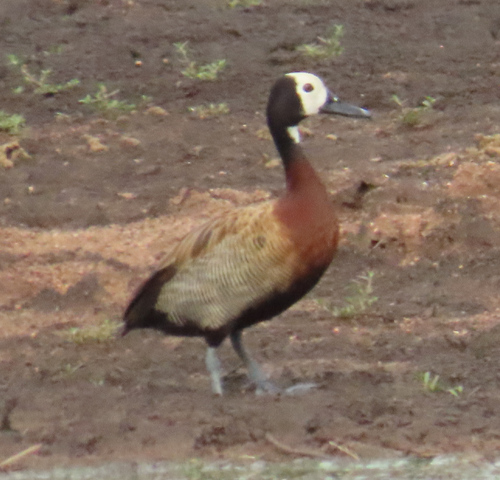
White-faced Whistling-Duck (Dendrocygna viduata) White-faced Whistling-Duck
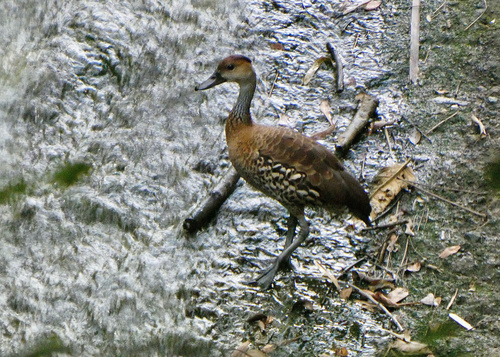
West Indian Whistling-Duck (Dendrocygna arborea) West Indian Whistling-Duck

Media

Loading…

In short

The most reliable field mark for separating White-faced Whistling-Duck from West Indian Whistling-Duck is the striking head pattern: White-faced shows a bold white face and black neck, while West Indian has a pale brown face and foreneck with a dark crown and lacks the sharply contrasting white. Juveniles of both are duller, but White-faced still shows less contrast on the head than adults, while West Indian juveniles have a less distinct belly pattern. Both species are long-necked, long-legged whistling ducks, but West Indian is notably larger and bulkier. In the field, focus on the face and neck color, overall size, and the density of black markings on the underparts.

Identification tips

  1. Head and neck pattern: White-faced Whistling-Duck has a bold white face and black neck, creating a sharp contrast; West Indian has a pale brown face and foreneck with a dark crown, lacking the crisp white/black division. This is the single most useful field mark in all plumages.
  2. Juvenile head pattern: Juvenile White-faced is duller but still shows some pale on the face, while juvenile West Indian is overall duller with a less distinct belly pattern but still lacks a white face.
  3. Underparts: White-faced shows black underparts with fine white barring on the flanks; West Indian has white underparts with heavy black markings (more blotched or spotted). This is best seen on birds at rest or preening.
  4. Size and bulk: West Indian is much larger and bulkier, about Mallard-sized, while White-faced is slimmer and lighter. Use this when birds are seen together or with familiar waterfowl.
  5. Bill color: West Indian is sometimes called 'black-billed' whistling duck, but both species have dark bills; bill color is not a strong separator in the field.
  6. Chestnut neck: White-faced has a rich chestnut neck (sides), adding to the contrast with the black and white head; West Indian's neck is pale brown to buff, blending into the face.
  7. Crown color: West Indian has a dark brown to black crown contrasting with the paler face, while White-faced's head is mostly black except for the white face.
  8. Flock size: Large, dense flocks (hundreds to thousands) at dawn strongly suggest White-faced; West Indian is not known for such massive gatherings.
  9. Geographic range: In the Caribbean, expect West Indian; in Africa or South America, expect White-faced. Escapees aside, range is a strong clue.
  10. Voice: A clear, three-note whistle identifies White-faced; lack of this call does not confirm West Indian but may help if heard.
  11. Sex differences: Both species have similar plumage in males and females; do not rely on sex for identification.
  12. Juvenile pitfalls: Both species' juveniles are duller, but the presence or absence of a white face remains the key mark.
  13. Plumage variability: Some White-faced populations (especially in wetter West Africa) show more black on the face, but still never match the pale brown face of West Indian.
  14. Underpart barring vs. blotching: Fine barring (White-faced) versus heavy, irregular black markings (West Indian) can help at close range.
  15. Leg and posture: Both are long-legged and upright; structure is not a strong separator.

Size

West Indian Whistling-Duck is the largest and heaviest whistling duck, with females weighing 800–1,320 g and males 760–1,240 g, making it noticeably bulkier than the White-faced Whistling-Duck (average 674 g) [wikidata, wikipedia]. West Indian is about the size of a Mallard, while White-faced is distinctly slimmer and lighter. This size difference is most apparent when both species are seen together or with other waterfowl for scale.

Plumage

No age-specific upperwing or flight pattern marks are described for either species, so focus on head and underpart contrasts. Adult White-faced Whistling-Duck has a bold white face, black head and neck, chestnut neck sides, dark brown to black back and wings, and black underparts with fine white barring on the flanks. West Indian Whistling-Duck adults have a pale brown face and foreneck, dark brown to black crown, back, breast, and wings, and white underparts heavily marked with black. Juveniles of both are duller: White-faced juveniles have a less contrasted head pattern but still show some pale on the face, while West Indian juveniles have a less distinct belly pattern but retain the pale face and foreneck. The white face of White-faced is always more striking than the pale brown face of West Indian, regardless of age.

Behaviour

White-faced Whistling-Duck is highly gregarious, often forming flocks of hundreds or thousands, especially at dawn at favored sites. West Indian Whistling-Duck is not described as forming such large flocks and may be encountered in smaller groups. Both species are long-legged, upright, and often seen swimming or standing at the water's edge.

Habitat

White-faced Whistling-Duck is found in sub-Saharan Africa and much of South America, frequenting large wetlands and open water where it forms large flocks. West Indian Whistling-Duck is restricted to the Caribbean, often called the Cuban or black-billed whistling duck, and is not found in Africa or South America. If seen in the Caribbean, West Indian is expected; elsewhere, especially in Africa or South America, White-faced is the likely species.

Voice

White-faced Whistling-Duck is noted for its clear three-note whistling call, which is loud and carries over water. No distinctive vocalization is described for West Indian Whistling-Duck in the provided notes, so voice is only a reliable separator if the classic three-note whistle is heard (favoring White-faced).

Submit a better description

Use the same sections as the comparison. Your text is published immediately.

The most reliable field mark for separating White-faced Whistling-Duck from West Indian Whistling-Duck is the striking head pattern: White-faced shows a bold white face and black neck, while West Indian has a pale brown face and foreneck with a dark crown and lacks the sharply contrasting white. Juveniles of both are duller, but White-faced still shows less contrast on the head than adults, while West Indian juveniles have a less distinct belly pattern. Both species are long-necked, long-legged whistling ducks, but West Indian is notably larger and bulkier. In the field, focus on the face and neck color, overall size, and the density of black markings on the underparts.

  1. Head and neck pattern: White-faced Whistling-Duck has a bold white face and black neck, creating a sharp contrast; West Indian has a pale brown face and foreneck with a dark crown, lacking the crisp white/black division. This is the single most useful field mark in all plumages.
  2. Juvenile head pattern: Juvenile White-faced is duller but still shows some pale on the face, while juvenile West Indian is overall duller with a less distinct belly pattern but still lacks a white face.
  3. Underparts: White-faced shows black underparts with fine white barring on the flanks; West Indian has white underparts with heavy black markings (more blotched or spotted). This is best seen on birds at rest or preening.
  4. Size and bulk: West Indian is much larger and bulkier, about Mallard-sized, while White-faced is slimmer and lighter. Use this when birds are seen together or with familiar waterfowl.
  5. Bill color: West Indian is sometimes called 'black-billed' whistling duck, but both species have dark bills; bill color is not a strong separator in the field.
  6. Chestnut neck: White-faced has a rich chestnut neck (sides), adding to the contrast with the black and white head; West Indian's neck is pale brown to buff, blending into the face.
  7. Crown color: West Indian has a dark brown to black crown contrasting with the paler face, while White-faced's head is mostly black except for the white face.
  8. Flock size: Large, dense flocks (hundreds to thousands) at dawn strongly suggest White-faced; West Indian is not known for such massive gatherings.
  9. Geographic range: In the Caribbean, expect West Indian; in Africa or South America, expect White-faced. Escapees aside, range is a strong clue.
  10. Voice: A clear, three-note whistle identifies White-faced; lack of this call does not confirm West Indian but may help if heard.
  11. Sex differences: Both species have similar plumage in males and females; do not rely on sex for identification.
  12. Juvenile pitfalls: Both species' juveniles are duller, but the presence or absence of a white face remains the key mark.
  13. Plumage variability: Some White-faced populations (especially in wetter West Africa) show more black on the face, but still never match the pale brown face of West Indian.
  14. Underpart barring vs. blotching: Fine barring (White-faced) versus heavy, irregular black markings (West Indian) can help at close range.
  15. Leg and posture: Both are long-legged and upright; structure is not a strong separator.

West Indian Whistling-Duck is the largest and heaviest whistling duck, with females weighing 800–1,320 g and males 760–1,240 g, making it noticeably bulkier than the White-faced Whistling-Duck (average 674 g) [wikidata, wikipedia]. West Indian is about the size of a Mallard, while White-faced is distinctly slimmer and lighter. This size difference is most apparent when both species are seen together or with other waterfowl for scale.

No age-specific upperwing or flight pattern marks are described for either species, so focus on head and underpart contrasts. Adult White-faced Whistling-Duck has a bold white face, black head and neck, chestnut neck sides, dark brown to black back and wings, and black underparts with fine white barring on the flanks. West Indian Whistling-Duck adults have a pale brown face and foreneck, dark brown to black crown, back, breast, and wings, and white underparts heavily marked with black. Juveniles of both are duller: White-faced juveniles have a less contrasted head pattern but still show some pale on the face, while West Indian juveniles have a less distinct belly pattern but retain the pale face and foreneck. The white face of White-faced is always more striking than the pale brown face of West Indian, regardless of age.

White-faced Whistling-Duck is highly gregarious, often forming flocks of hundreds or thousands, especially at dawn at favored sites. West Indian Whistling-Duck is not described as forming such large flocks and may be encountered in smaller groups. Both species are long-legged, upright, and often seen swimming or standing at the water's edge.

White-faced Whistling-Duck is found in sub-Saharan Africa and much of South America, frequenting large wetlands and open water where it forms large flocks. West Indian Whistling-Duck is restricted to the Caribbean, often called the Cuban or black-billed whistling duck, and is not found in Africa or South America. If seen in the Caribbean, West Indian is expected; elsewhere, especially in Africa or South America, White-faced is the likely species.

White-faced Whistling-Duck is noted for its clear three-note whistling call, which is loud and carries over water. No distinctive vocalization is described for West Indian Whistling-Duck in the provided notes, so voice is only a reliable separator if the classic three-note whistle is heard (favoring White-faced).

Discard your changes?

You have unsaved edits. If you leave now, those changes will be lost.

White-faced Whistling-Duck · West Indian Whistling-Duck · My Tricky Birds