

Motmot

White-faced Whistling-Duck vs Fulvous Whistling-Duck

Dendrocygna viduata versus Dendrocygna bicolor

Play a quiz with White-faced Whistling-Duck and Fulvous Whistling-Duck
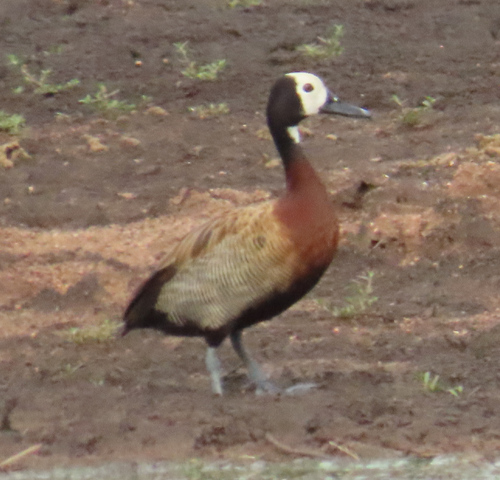
White-faced Whistling-Duck (Dendrocygna viduata) White-faced Whistling-Duck
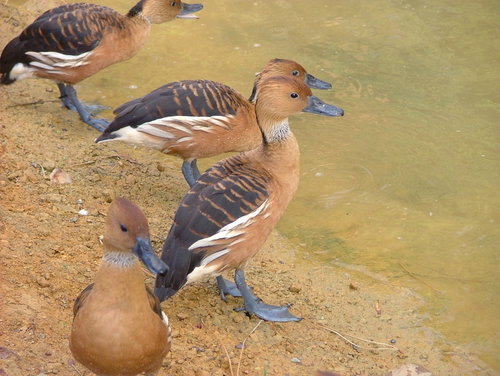
Fulvous Whistling-Duck (Dendrocygna bicolor) Fulvous Whistling-Duck

Media

Loading…

In short

The most reliable way to separate White-faced Whistling-Duck from Fulvous Whistling-Duck is by head and neck pattern: White-faced shows a striking white face and black neck, while Fulvous is rich buff overall with a dark crown stripe and no white in the face. In flight, Fulvous Whistling-Duck displays a bold white band across the black tail, absent in White-faced. Both species are similar in size and structure, but their plumage and especially head pattern are consistently diagnostic at all ages. Juveniles of both are duller, but the face and neck contrast remains the best clue. Calls are similar, but subtle differences exist.

Identification tips

  1. Face and Neck Pattern (All Ages): White-faced Whistling-Duck always shows a sharply contrasting white face and black neck, even in juveniles (though less crisp in young birds). Fulvous Whistling-Duck never shows white on the face; instead, it has a buffy or fulvous head and neck with a dark crown stripe and nape line.
  2. Flight Pattern (All Ages): Fulvous Whistling-Duck shows a bold white band or crescent across the black tail in flight, visible from above and below. White-faced lacks this feature entirely.
  3. Underparts and Flanks: White-faced has black underparts with fine white barring on the flanks; Fulvous is rich buff below with paler, less contrasting flanks and no fine barring.
  4. Chestnut Neck Sides: White-faced shows chestnut on the sides of the neck, contrasting with the black front and white face. Fulvous is more uniform buffy-brown on the neck.
  5. Crown Stripe: Fulvous Whistling-Duck has a dark brown to black stripe running from the crown down the nape, lacking in White-faced.
  6. Mantle and Back: Fulvous has a darker brown mantle with buff-tipped feathers; White-faced's back and wings are dark brown to black but lack the buff tips.
  7. Bill and Legs: Both have long grey bills and legs—these features do not separate them.
  8. Juvenile Plumage: Juvenile White-faced is duller but retains the pale face and dark neck; juvenile Fulvous is paler overall, especially on the flanks, but never shows a white face.
  9. Sexes: Males and females are similar in both species; sex is not a field mark.
  10. Vocalizations: Both are whistlers, but White-faced gives a clear three-note call, while Fulvous's call is a whistling 'kee-wee-ooo.' These are subtle and best used with experience.
  11. Flocking Behavior: Both are highly gregarious and often seen in large flocks, so flock size or behavior is not a separator.
  12. Habitat: Both use similar wetland habitats in overlapping ranges; habitat is not a reliable separator.
  13. Geographic Range: Fulvous Whistling-Duck has a broader range, but where both occur, range is not diagnostic.
  14. In Flight: Look for the white tail band on Fulvous and the absence of white on the face; White-faced lacks the white tail band but shows a pale face even in flight.
  15. Pitfalls: Immature White-faced can look dull-faced but always shows some pale contrast; Fulvous never shows a white face at any age. Avoid relying on size or bill shape, as these are too similar.

Size

Both species are nearly identical in size and mass, with White-faced Whistling-Duck averaging 674g and Fulvous Whistling-Duck 682g [wikidata]. Both have long legs and long grey bills. In the field, size is not a reliable separator, as both have similar proportions and bulk.

Plumage

Juveniles of both species are duller than adults, but the key difference—White-faced's pale face versus Fulvous's uniform buffy head—remains visible even in young birds. White-faced Whistling-Duck (all ages) shows a white face and black neck, with chestnut on the neck sides and black underparts with fine white flank barring. Fulvous Whistling-Duck (all ages) is rich buff or fulvous on the head, neck, and breast, with a dark brown crown stripe and nape line, darker back, and buff-tipped mantle feathers. In flight, Fulvous shows a distinctive white band across the black tail (rump crescent), which White-faced lacks. The upperwing and underwing are brown to blackish in both, but only Fulvous has the white tail band. Juvenile Fulvous is paler and duller, especially on the flanks, but still lacks any white on the face.

Behaviour

Both species are highly gregarious and often found in large flocks, sometimes numbering in the thousands. They are both noisy and active, especially at dawn. Both species feed in wetlands and show similar feeding and flocking behavior. There is no strong behavioral difference for field separation.

Habitat

Both species overlap widely in range and habitat, occurring in sub-Saharan Africa and South America, and both favor wetlands with abundant vegetation. Fulvous Whistling-Duck has a broader global range, also occurring in parts of Asia and the southern United States. Both can be found in shallow lakes, marshes, and rice fields. Habitat alone does not reliably separate them where ranges overlap.

Voice

Both species have clear whistling calls, often given in flight or on the ground. White-faced Whistling-Duck gives a clear three-note whistle; Fulvous Whistling-Duck's call is described as a whistling 'kee-wee-ooo.' Both are noisy and vocal, especially in flocks. The differences are subtle and not always reliable for field separation unless calls are well known.

Submit a better description

Use the same sections as the comparison. Your text is published immediately.

The most reliable way to separate White-faced Whistling-Duck from Fulvous Whistling-Duck is by head and neck pattern: White-faced shows a striking white face and black neck, while Fulvous is rich buff overall with a dark crown stripe and no white in the face. In flight, Fulvous Whistling-Duck displays a bold white band across the black tail, absent in White-faced. Both species are similar in size and structure, but their plumage and especially head pattern are consistently diagnostic at all ages. Juveniles of both are duller, but the face and neck contrast remains the best clue. Calls are similar, but subtle differences exist.

  1. Face and Neck Pattern (All Ages): White-faced Whistling-Duck always shows a sharply contrasting white face and black neck, even in juveniles (though less crisp in young birds). Fulvous Whistling-Duck never shows white on the face; instead, it has a buffy or fulvous head and neck with a dark crown stripe and nape line.
  2. Flight Pattern (All Ages): Fulvous Whistling-Duck shows a bold white band or crescent across the black tail in flight, visible from above and below. White-faced lacks this feature entirely.
  3. Underparts and Flanks: White-faced has black underparts with fine white barring on the flanks; Fulvous is rich buff below with paler, less contrasting flanks and no fine barring.
  4. Chestnut Neck Sides: White-faced shows chestnut on the sides of the neck, contrasting with the black front and white face. Fulvous is more uniform buffy-brown on the neck.
  5. Crown Stripe: Fulvous Whistling-Duck has a dark brown to black stripe running from the crown down the nape, lacking in White-faced.
  6. Mantle and Back: Fulvous has a darker brown mantle with buff-tipped feathers; White-faced's back and wings are dark brown to black but lack the buff tips.
  7. Bill and Legs: Both have long grey bills and legs—these features do not separate them.
  8. Juvenile Plumage: Juvenile White-faced is duller but retains the pale face and dark neck; juvenile Fulvous is paler overall, especially on the flanks, but never shows a white face.
  9. Sexes: Males and females are similar in both species; sex is not a field mark.
  10. Vocalizations: Both are whistlers, but White-faced gives a clear three-note call, while Fulvous's call is a whistling 'kee-wee-ooo.' These are subtle and best used with experience.
  11. Flocking Behavior: Both are highly gregarious and often seen in large flocks, so flock size or behavior is not a separator.
  12. Habitat: Both use similar wetland habitats in overlapping ranges; habitat is not a reliable separator.
  13. Geographic Range: Fulvous Whistling-Duck has a broader range, but where both occur, range is not diagnostic.
  14. In Flight: Look for the white tail band on Fulvous and the absence of white on the face; White-faced lacks the white tail band but shows a pale face even in flight.
  15. Pitfalls: Immature White-faced can look dull-faced but always shows some pale contrast; Fulvous never shows a white face at any age. Avoid relying on size or bill shape, as these are too similar.

Both species are nearly identical in size and mass, with White-faced Whistling-Duck averaging 674g and Fulvous Whistling-Duck 682g [wikidata]. Both have long legs and long grey bills. In the field, size is not a reliable separator, as both have similar proportions and bulk.

Juveniles of both species are duller than adults, but the key difference—White-faced's pale face versus Fulvous's uniform buffy head—remains visible even in young birds. White-faced Whistling-Duck (all ages) shows a white face and black neck, with chestnut on the neck sides and black underparts with fine white flank barring. Fulvous Whistling-Duck (all ages) is rich buff or fulvous on the head, neck, and breast, with a dark brown crown stripe and nape line, darker back, and buff-tipped mantle feathers. In flight, Fulvous shows a distinctive white band across the black tail (rump crescent), which White-faced lacks. The upperwing and underwing are brown to blackish in both, but only Fulvous has the white tail band. Juvenile Fulvous is paler and duller, especially on the flanks, but still lacks any white on the face.

Both species are highly gregarious and often found in large flocks, sometimes numbering in the thousands. They are both noisy and active, especially at dawn. Both species feed in wetlands and show similar feeding and flocking behavior. There is no strong behavioral difference for field separation.

Both species overlap widely in range and habitat, occurring in sub-Saharan Africa and South America, and both favor wetlands with abundant vegetation. Fulvous Whistling-Duck has a broader global range, also occurring in parts of Asia and the southern United States. Both can be found in shallow lakes, marshes, and rice fields. Habitat alone does not reliably separate them where ranges overlap.

Both species have clear whistling calls, often given in flight or on the ground. White-faced Whistling-Duck gives a clear three-note whistle; Fulvous Whistling-Duck's call is described as a whistling 'kee-wee-ooo.' Both are noisy and vocal, especially in flocks. The differences are subtle and not always reliable for field separation unless calls are well known.

Discard your changes?

You have unsaved edits. If you leave now, those changes will be lost.

White-faced Whistling-Duck · Fulvous Whistling-Duck · My Tricky Birds