

Motmot

White-crowned Sparrow vs Golden-crowned Sparrow

Zonotrichia leucophrys versus Zonotrichia atricapilla

Play a quiz with White-crowned Sparrow and Golden-crowned Sparrow
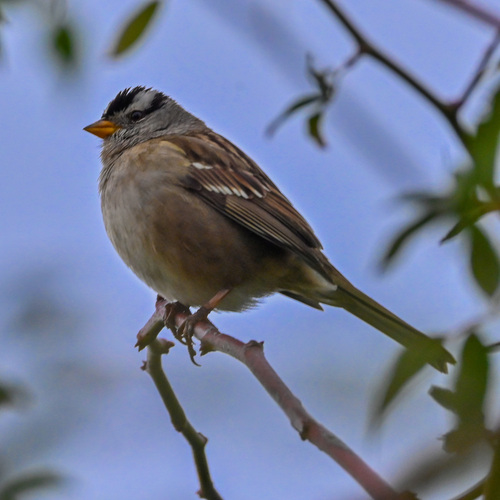
White-crowned Sparrow (Zonotrichia leucophrys) White-crowned Sparrow
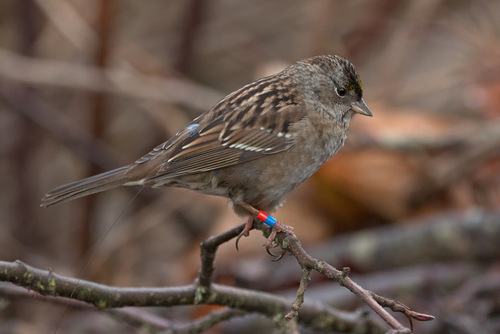
Golden-crowned Sparrow (Zonotrichia atricapilla) Golden-crowned Sparrow

Media

Loading…

In short

The most reliable field mark between White-crowned and Golden-crowned Sparrows is the pattern and color of the crown: adult White-crowned Sparrows show bold black-and-white head stripes, while adult Golden-crowned Sparrows have a yellow central crown stripe bordered by black, especially in breeding plumage. Immature and non-breeding birds of both species can be confusing, but the bill color (pale pink/yellowish in White-crowned, dusky/dark in Golden-crowned) and the extent and color of the crown markings remain key. Both species are similar in size and shape, but Golden-crowned is slightly larger and bulkier on average. Careful attention to head pattern, bill color, and subtle differences in plumage and structure will help separate them, especially in mixed winter flocks.

Identification tips

  1. Crown pattern (adults, breeding): White-crowned Sparrow shows bold black and white stripes on the crown; Golden-crowned Sparrow has a yellow central stripe bordered by black, fading to gray at the nape.
  2. Crown pattern (immature/non-breeding): Immature and winter Golden-crowned Sparrows have a duller or incomplete yellow crown stripe, but still lack the sharp black-and-white contrast of White-crowned. Young White-crowned usually show at least some pale crown stripes.
  3. Bill color: White-crowned Sparrow has a pale pink or yellowish bill; Golden-crowned Sparrow's bill is dusky or dark, with the upper mandible darker than the lower. This is often the best mark in dull-plumaged birds.
  4. Face pattern: White-crowned has a plain gray face contrasting with the crown stripes; Golden-crowned's face is also gray but blends more with the head, especially in immatures.
  5. Upperparts and flanks: Both have brown streaked backs, but Golden-crowned's flanks are buffier and its rump is unstreaked, while White-crowned's underparts are more evenly gray.
  6. Wing pattern: Both show brown wings with two white wing bars; this is not a strong separator.
  7. Tail: Both have long, square-tipped tails; tail shape is not diagnostic.
  8. Size and structure: Golden-crowned is slightly larger and bulkier, but this is subtle and unreliable unless birds are side by side.
  9. Leg color: Golden-crowned has pale brown legs; White-crowned's leg color is not distinctive in the field.
  10. Iris color: Both have brown irises; not a useful field mark.
  11. Habitat: Overlaps in winter; not a strong separator.
  12. Behavior: Both forage in flocks on the ground; Golden-crowned may show more stable flock associations and dominance signaling via crown pattern.
  13. Flock context: If seen in a mixed flock, check for both species—do not assume all birds are the same.
  14. Seasonal context: In breeding season, Golden-crowned's yellow crown is brightest; in winter, crown pattern becomes less distinct, increasing confusion with White-crowned.
  15. Pitfalls: Immature Golden-crowned can look very dull and may lack obvious yellow, but will still have a dark bill and less crisp head pattern than White-crowned. Immature White-crowned may have brownish crown stripes but retain a pale bill.

Size

Both sparrows are medium to large for their group, with Golden-crowned Sparrow averaging slightly larger and heavier (15–18 cm length, 19–35.4 g) compared to White-crowned Sparrow (15–16 cm, 28.9 g). In the field, this difference is subtle and rarely diagnostic unless birds are side by side. Both have long tails and similar overall proportions, but Golden-crowned may appear a bit bulkier and longer-winged.

Plumage

For adults in breeding plumage, White-crowned Sparrow shows crisp black and white stripes across the crown, with a plain gray face and brown streaked upperparts. Golden-crowned Sparrow adults have a broad yellow central crown stripe bordered by black, fading to gray at the nape, and their face is plainer gray without the sharply contrasting white of White-crowned. In non-breeding and immature birds, Golden-crowned's crown stripe is duller yellow or even absent, but the head remains less crisply patterned than White-crowned. Bill color is a strong clue: White-crowned usually has a pale pink or yellowish bill, while Golden-crowned's is dusky or dark, with a darker upper mandible. Both show brown wings with two white wing bars, gray underparts, and brownish streaked backs, but Golden-crowned's flanks are buffier and the rump is unstreaked, while White-crowned's underparts are more evenly gray. Juvenile and first-winter birds of both species can be confusing, but White-crowned usually retains some pale crown stripes and a paler bill, while Golden-crowned is overall duskier and lacks sharp head contrasts.

Behaviour

Both species often flock together in winter, especially in the western parts of North America. Golden-crowned Sparrows are noted for forming stable winter flocks with complex social hierarchies signaled by crown pattern, while White-crowned Sparrows are also social but less is noted about their flock dynamics. Both forage on the ground in brushy or weedy areas, and their general behavior is similar in mixed flocks.

Habitat

White-crowned Sparrows breed in brushy taiga, tundra, and montane habitats across northern and western North America, while Golden-crowned Sparrows are restricted to the west, breeding in shrubby or open areas. In winter, both species overlap in the western U.S., often in brushy, weedy, or edge habitats. Habitat is not a strong separator where their ranges overlap in winter.

Submit a better description

Use the same sections as the comparison. Your text is published immediately.

The most reliable field mark between White-crowned and Golden-crowned Sparrows is the pattern and color of the crown: adult White-crowned Sparrows show bold black-and-white head stripes, while adult Golden-crowned Sparrows have a yellow central crown stripe bordered by black, especially in breeding plumage. Immature and non-breeding birds of both species can be confusing, but the bill color (pale pink/yellowish in White-crowned, dusky/dark in Golden-crowned) and the extent and color of the crown markings remain key. Both species are similar in size and shape, but Golden-crowned is slightly larger and bulkier on average. Careful attention to head pattern, bill color, and subtle differences in plumage and structure will help separate them, especially in mixed winter flocks.

  1. Crown pattern (adults, breeding): White-crowned Sparrow shows bold black and white stripes on the crown; Golden-crowned Sparrow has a yellow central stripe bordered by black, fading to gray at the nape.
  2. Crown pattern (immature/non-breeding): Immature and winter Golden-crowned Sparrows have a duller or incomplete yellow crown stripe, but still lack the sharp black-and-white contrast of White-crowned. Young White-crowned usually show at least some pale crown stripes.
  3. Bill color: White-crowned Sparrow has a pale pink or yellowish bill; Golden-crowned Sparrow's bill is dusky or dark, with the upper mandible darker than the lower. This is often the best mark in dull-plumaged birds.
  4. Face pattern: White-crowned has a plain gray face contrasting with the crown stripes; Golden-crowned's face is also gray but blends more with the head, especially in immatures.
  5. Upperparts and flanks: Both have brown streaked backs, but Golden-crowned's flanks are buffier and its rump is unstreaked, while White-crowned's underparts are more evenly gray.
  6. Wing pattern: Both show brown wings with two white wing bars; this is not a strong separator.
  7. Tail: Both have long, square-tipped tails; tail shape is not diagnostic.
  8. Size and structure: Golden-crowned is slightly larger and bulkier, but this is subtle and unreliable unless birds are side by side.
  9. Leg color: Golden-crowned has pale brown legs; White-crowned's leg color is not distinctive in the field.
  10. Iris color: Both have brown irises; not a useful field mark.
  11. Habitat: Overlaps in winter; not a strong separator.
  12. Behavior: Both forage in flocks on the ground; Golden-crowned may show more stable flock associations and dominance signaling via crown pattern.
  13. Flock context: If seen in a mixed flock, check for both species—do not assume all birds are the same.
  14. Seasonal context: In breeding season, Golden-crowned's yellow crown is brightest; in winter, crown pattern becomes less distinct, increasing confusion with White-crowned.
  15. Pitfalls: Immature Golden-crowned can look very dull and may lack obvious yellow, but will still have a dark bill and less crisp head pattern than White-crowned. Immature White-crowned may have brownish crown stripes but retain a pale bill.

Both sparrows are medium to large for their group, with Golden-crowned Sparrow averaging slightly larger and heavier (15–18 cm length, 19–35.4 g) compared to White-crowned Sparrow (15–16 cm, 28.9 g). In the field, this difference is subtle and rarely diagnostic unless birds are side by side. Both have long tails and similar overall proportions, but Golden-crowned may appear a bit bulkier and longer-winged.

For adults in breeding plumage, White-crowned Sparrow shows crisp black and white stripes across the crown, with a plain gray face and brown streaked upperparts. Golden-crowned Sparrow adults have a broad yellow central crown stripe bordered by black, fading to gray at the nape, and their face is plainer gray without the sharply contrasting white of White-crowned. In non-breeding and immature birds, Golden-crowned's crown stripe is duller yellow or even absent, but the head remains less crisply patterned than White-crowned. Bill color is a strong clue: White-crowned usually has a pale pink or yellowish bill, while Golden-crowned's is dusky or dark, with a darker upper mandible. Both show brown wings with two white wing bars, gray underparts, and brownish streaked backs, but Golden-crowned's flanks are buffier and the rump is unstreaked, while White-crowned's underparts are more evenly gray. Juvenile and first-winter birds of both species can be confusing, but White-crowned usually retains some pale crown stripes and a paler bill, while Golden-crowned is overall duskier and lacks sharp head contrasts.

Both species often flock together in winter, especially in the western parts of North America. Golden-crowned Sparrows are noted for forming stable winter flocks with complex social hierarchies signaled by crown pattern, while White-crowned Sparrows are also social but less is noted about their flock dynamics. Both forage on the ground in brushy or weedy areas, and their general behavior is similar in mixed flocks.

White-crowned Sparrows breed in brushy taiga, tundra, and montane habitats across northern and western North America, while Golden-crowned Sparrows are restricted to the west, breeding in shrubby or open areas. In winter, both species overlap in the western U.S., often in brushy, weedy, or edge habitats. Habitat is not a strong separator where their ranges overlap in winter.

Discard your changes?

You have unsaved edits. If you leave now, those changes will be lost.

White-crowned Sparrow · Golden-crowned Sparrow · My Tricky Birds