

Motmot

White-capped Bunting vs Grey-necked Bunting

Emberiza stewarti versus Emberiza buchanani

Play a quiz with White-capped Bunting and Grey-necked Bunting
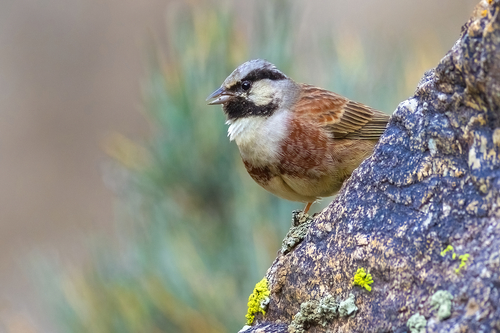
White-capped Bunting (Emberiza stewarti) White-capped Bunting
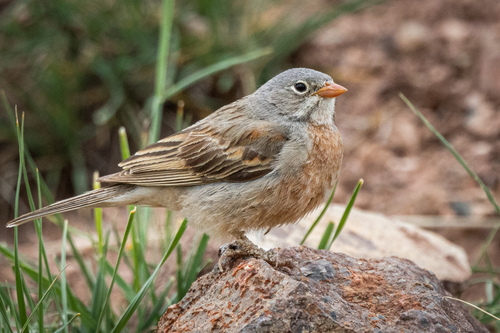
Grey-necked Bunting (Emberiza buchanani) Grey-necked Bunting

Media

Loading…

In short

The most reliable field mark between White-capped Bunting and Grey-necked Bunting is the striking white crown of adult White-capped Bunting, which is never shown by Grey-necked Bunting. Grey-necked Bunting males instead have a uniform grey hood with a clear white eye-ring, and both sexes show pinkish underparts and a long pink bill. Juvenile and non-breeding birds of both species can look similar, but Grey-necked Bunting's greyish upperparts and white outer tail feathers are helpful. Habitat and structure offer only subtle clues, so focus on head pattern and underpart color for the best separation.

Identification tips

  1. White crown (adult White-capped Bunting): Only adult White-capped Bunting shows a clean, contrasting white crown. If you see this, Grey-necked is ruled out.
  2. Grey hood and white eye-ring (Grey-necked Bunting male): Adult male Grey-necked Bunting has a uniform grey hood and a clear white eye-ring, never shown by White-capped.
  3. Underpart color: Grey-necked Bunting has pinkish brown underparts, while White-capped Bunting (especially males) shows a richer chestnut breast. This is less reliable in females and immatures.
  4. Bill color and shape: Grey-necked Bunting has a long, pink bill. Bill color in White-capped is not described, so use with caution.
  5. Moustachial stripe (female Grey-necked): Females of Grey-necked Bunting may show a more obvious moustachial stripe than White-capped, but this is subtle and variable.
  6. Outer tail feathers in flight: Grey-necked Bunting shows whitish outer tail feathers, especially visible in flight or when the tail is fanned. This is less marked in White-capped.
  7. Juvenile/immature confusion: Both species' young birds are duller, but look for any trace of white on the crown (White-capped) or a uniform greyish tone and white tail edges (Grey-necked).
  8. Habitat context: If found in dry, stony, or scrubby hillsides, especially below 7000 ft, Grey-necked is more likely. Boreal forest or shrubland suggests White-capped.
  9. Song: If you hear a metallic, jingly song with a dzwe-ee-dul ending, it's Grey-necked. Silence or unknown song means this mark can't be used.
  10. Sexual dimorphism: Males of both species are more distinctive; females and immatures are best identified by structure and subtle plumage cues.
  11. Confusion with Ortolan Bunting: Non-breeding Grey-necked Buntings can resemble Ortolan, but the grey hood and white eye-ring are unique.
  12. Seasonal movement: Grey-necked Buntings migrate in flocks and may be seen in weedy fields in winter, while White-capped may stay in more forested or shrubby areas year-round.
  13. Flock composition: Both species can be found in small flocks, so group size is not a separator.
  14. Perched vs. flight views: Head pattern (white crown vs. grey hood) is best seen when perched; white outer tail is best seen in flight for Grey-necked.
  15. Range overlap: Both species can occur together in Central Asia; always rely on plumage and structure over location.

Plumage

Juvenile and immature birds of both species can be confusing, as both lack the crisp adult head patterns. However, adult White-capped Bunting males have a bold white crown set off by a chestnut breast, while Grey-necked Bunting males have a uniform grey hood with a white eye-ring and pinkish brown underparts. Females of both species are duller, but Grey-necked Bunting females may show a more noticeable moustachial stripe. In flight, Grey-necked Bunting shows whitish outer tail feathers, a feature less marked in White-capped Bunting. Non-breeding Grey-necked Buntings can resemble Ortolan Bunting, but the combination of grey hood and white eye-ring is distinctive in adults. For both species, immature birds are best separated by the presence or absence of the white crown (White-capped) and the overall greyish tone and white tail edges (Grey-necked).

Behaviour

Both species are typically seen in small flocks, especially outside the breeding season. Grey-necked Buntings may be more likely to be found in open, stony, or scrubby hillsides, while White-capped Buntings are more often associated with boreal or temperate grasslands and shrubland. Both species may perch conspicuously when singing, but this is not a strong separator.

Habitat

White-capped Bunting is most often found in boreal forests, shrubland, and temperate grassland across Central and South Asia. Grey-necked Bunting prefers dry, open habitats such as stony or scrubby hillsides with low thorn scrub, and winters in weedy or stubbly fields. There is considerable overlap in range, but habitat preference can provide a supporting clue: White-capped Bunting is more tied to higher elevation or boreal zones, while Grey-necked Bunting favors drier, more open country below 7000 ft.

Voice

Grey-necked Bunting's song is a metallic jingle of short, shrill swee-swee notes ending with a dzwe-ee-dul, and in winter it gives a subdued click note. There is no vocal description for White-capped Bunting in the provided notes, so voice is not a reliable separator unless Grey-necked's distinctive jingle is heard.

Submit a better description

Use the same sections as the comparison. Your text is published immediately.

The most reliable field mark between White-capped Bunting and Grey-necked Bunting is the striking white crown of adult White-capped Bunting, which is never shown by Grey-necked Bunting. Grey-necked Bunting males instead have a uniform grey hood with a clear white eye-ring, and both sexes show pinkish underparts and a long pink bill. Juvenile and non-breeding birds of both species can look similar, but Grey-necked Bunting's greyish upperparts and white outer tail feathers are helpful. Habitat and structure offer only subtle clues, so focus on head pattern and underpart color for the best separation.

  1. White crown (adult White-capped Bunting): Only adult White-capped Bunting shows a clean, contrasting white crown. If you see this, Grey-necked is ruled out.
  2. Grey hood and white eye-ring (Grey-necked Bunting male): Adult male Grey-necked Bunting has a uniform grey hood and a clear white eye-ring, never shown by White-capped.
  3. Underpart color: Grey-necked Bunting has pinkish brown underparts, while White-capped Bunting (especially males) shows a richer chestnut breast. This is less reliable in females and immatures.
  4. Bill color and shape: Grey-necked Bunting has a long, pink bill. Bill color in White-capped is not described, so use with caution.
  5. Moustachial stripe (female Grey-necked): Females of Grey-necked Bunting may show a more obvious moustachial stripe than White-capped, but this is subtle and variable.
  6. Outer tail feathers in flight: Grey-necked Bunting shows whitish outer tail feathers, especially visible in flight or when the tail is fanned. This is less marked in White-capped.
  7. Juvenile/immature confusion: Both species' young birds are duller, but look for any trace of white on the crown (White-capped) or a uniform greyish tone and white tail edges (Grey-necked).
  8. Habitat context: If found in dry, stony, or scrubby hillsides, especially below 7000 ft, Grey-necked is more likely. Boreal forest or shrubland suggests White-capped.
  9. Song: If you hear a metallic, jingly song with a dzwe-ee-dul ending, it's Grey-necked. Silence or unknown song means this mark can't be used.
  10. Sexual dimorphism: Males of both species are more distinctive; females and immatures are best identified by structure and subtle plumage cues.
  11. Confusion with Ortolan Bunting: Non-breeding Grey-necked Buntings can resemble Ortolan, but the grey hood and white eye-ring are unique.
  12. Seasonal movement: Grey-necked Buntings migrate in flocks and may be seen in weedy fields in winter, while White-capped may stay in more forested or shrubby areas year-round.
  13. Flock composition: Both species can be found in small flocks, so group size is not a separator.
  14. Perched vs. flight views: Head pattern (white crown vs. grey hood) is best seen when perched; white outer tail is best seen in flight for Grey-necked.
  15. Range overlap: Both species can occur together in Central Asia; always rely on plumage and structure over location.

Juvenile and immature birds of both species can be confusing, as both lack the crisp adult head patterns. However, adult White-capped Bunting males have a bold white crown set off by a chestnut breast, while Grey-necked Bunting males have a uniform grey hood with a white eye-ring and pinkish brown underparts. Females of both species are duller, but Grey-necked Bunting females may show a more noticeable moustachial stripe. In flight, Grey-necked Bunting shows whitish outer tail feathers, a feature less marked in White-capped Bunting. Non-breeding Grey-necked Buntings can resemble Ortolan Bunting, but the combination of grey hood and white eye-ring is distinctive in adults. For both species, immature birds are best separated by the presence or absence of the white crown (White-capped) and the overall greyish tone and white tail edges (Grey-necked).

Both species are typically seen in small flocks, especially outside the breeding season. Grey-necked Buntings may be more likely to be found in open, stony, or scrubby hillsides, while White-capped Buntings are more often associated with boreal or temperate grasslands and shrubland. Both species may perch conspicuously when singing, but this is not a strong separator.

White-capped Bunting is most often found in boreal forests, shrubland, and temperate grassland across Central and South Asia. Grey-necked Bunting prefers dry, open habitats such as stony or scrubby hillsides with low thorn scrub, and winters in weedy or stubbly fields. There is considerable overlap in range, but habitat preference can provide a supporting clue: White-capped Bunting is more tied to higher elevation or boreal zones, while Grey-necked Bunting favors drier, more open country below 7000 ft.

Grey-necked Bunting's song is a metallic jingle of short, shrill swee-swee notes ending with a dzwe-ee-dul, and in winter it gives a subdued click note. There is no vocal description for White-capped Bunting in the provided notes, so voice is not a reliable separator unless Grey-necked's distinctive jingle is heard.

Discard your changes?

You have unsaved edits. If you leave now, those changes will be lost.

White-capped Bunting · Grey-necked Bunting · My Tricky Birds