

Motmot

White-capped Albatross vs Salvin's Albatross

Thalassarche cauta versus Thalassarche salvini

Play a quiz with White-capped Albatross and Salvin's Albatross
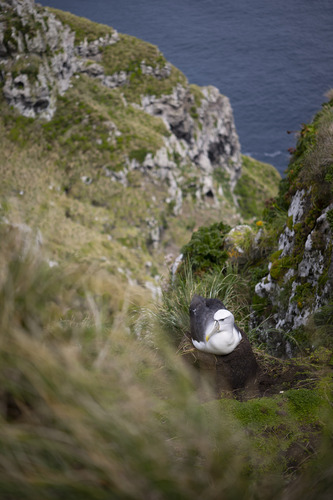
White-capped Albatross (Thalassarche cauta) White-capped Albatross
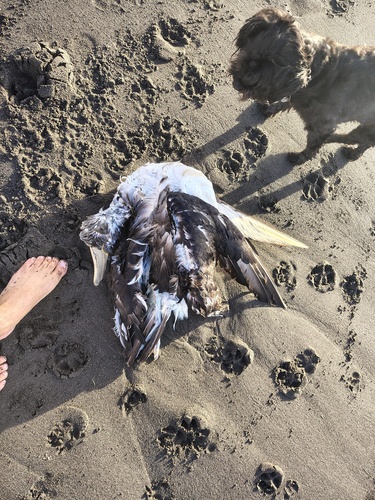
Salvin's Albatross (Thalassarche salvini) Salvin's Albatross

Media

Loading…

In short

The most reliable field mark between White-capped (Shy) Albatross and Salvin's Albatross is the color and contrast of the head and bill in adults: White-capped has a crisp white crown and forehead, while Salvin's shows a noticeably greyer, silver-washed crown and face. Both species share a black 'thumbmark' on the underwing and similar size, making separation at sea challenging, especially for immatures. Juvenile Salvin's are even greyer-headed and have a blue-grey bill with black tips, while juvenile White-capped are paler and have more yellow in the bill. Bill color and head contrast are best seen at close range or in good light; distant birds are often best left unidentified. Focus on the combination of head color and bill pattern, especially in perched or close-flying birds.

Identification tips

  1. Head Color in Adults: White-capped (Shy) Albatross has a clean white crown and forehead, sharply contrasting with a dark eyebrow and pale grey face. Salvin's has a silver-grey crown and a generally greyer face and upper throat. This is the most reliable mark in good light and close views.
  2. Bill Color and Pattern (Adults): White-capped's bill is grey-yellow with a prominent yellow culmen and tip. Salvin's has a pale grey-green bill with a yellow upper ridge, yellow tip on the upper mandible, and a dark spot at the tip of the lower mandible. Bill color is subtle at distance but diagnostic up close.
  3. Juvenile Head and Bill: Juvenile Salvin's are much greyer on the head and upper throat than juvenile White-capped, which remain pale-headed. Juvenile Salvin's also have a blue-grey bill with black tips, while juvenile White-capped shows more yellow in the bill.
  4. Underwing Pattern: Both species have a black 'thumbmark' at the base of the leading edge of the underwing and black wingtips. This mark is not diagnostic between the two, but its presence helps rule out other mollymawks.
  5. Facial Contrast: In White-capped, the white crown is sharply bordered by a dark eyebrow, giving a striking facial contrast. Salvin's lacks this sharp demarcation, with the grey crown blending into the face.
  6. Upperparts and Mantle: Both have grey-black mantles, upperwings, and tails, with white rumps and underparts. These features are not useful for separation.
  7. Size and Structure: Both are large, robust mollymawks with similar proportions. Size is not a reliable field mark.
  8. Jizz and Flight: Both species show typical mollymawk flight style, with long, stiff wings and gliding motion. No unique jizz differences are noted.
  9. Geographic Context: If seen near breeding colonies, range can help: White-capped breeds only on Tasmanian islands, Salvin's mainly on the Bounty Islands. At sea, ranges overlap and this is not reliable.
  10. At-Sea Pitfalls: Distant or poor-light birds are often best left unidentified, as head and bill color differences can be subtle and variable with angle and lighting.
  11. Immature Birds: Immatures of both species are especially difficult. Focus on overall head color (paler in White-capped, greyer in Salvin's) and bill color (more yellow in White-capped, blue-grey with black tips in Salvin's).
  12. Bill Tip Markings: Salvin's adults have a dark spot at the tip of the lower mandible, which is absent or less obvious in White-capped. This is subtle but can be seen in close photos.
  13. Sex and Season: No significant sexual dimorphism or seasonal plumage change is noted for either species.
  14. Association with Other Species: Both may associate with other mollymawks and large albatrosses; beware confusion with Chatham Albatross (which is smaller and has a differently colored bill) or Black-browed Albatross (which is smaller and more contrastingly marked).
  15. When in Doubt: If you cannot see the head and bill color clearly, or if the bird is distant or in poor light, it is safest to leave the bird as a 'Shy/Salvin's Albatross' complex.

Size

Both species are among the largest mollymawks, with very similar dimensions. White-capped averages 90–99 cm in length, 220–256 cm wingspan, and about 4.1 kg in weight [wikipedia]. Salvin's is about 90 cm long, with a wingspan up to 2.56 m and a weight range of 3.3–4.9 kg [wikipedia]. In the field, size is not a reliable separator between these two, as overlap is extensive and both appear large and robust compared to other mollymawks.

Plumage

Juvenile and immature birds are the most challenging: both show a black 'thumbmark' at the base of the underwing, white underparts, and grey-black upperwings. However, Salvin's juveniles are distinctly greyer on the head and upper throat, and their bill is blue-grey with black tips. White-capped juveniles are paler-headed, with a white crown and forehead, and their bill is more yellowish. In adults, White-capped has a strikingly white crown and forehead, bordered below by a dark eyebrow and a pale grey face, while Salvin's adult has a silver-grey crown and a generally greyer face and upper throat. Both have grey-black mantles, tails, and upperwings, and white underparts. Bill color is also key: White-capped's is grey-yellow with a prominent yellow culmen and tip, while Salvin's is pale grey-green with a yellow upper ridge, yellow tip on the upper mandible, and a dark spot on the tip of the lower mandible. These differences are subtle but consistent in good viewing conditions.

Behaviour

Both species are typical mollymawks in flight, with strong, gliding flight and long wings held stiffly. No significant behavioral differences are noted in the sources for field separation. Both can be seen singly or in loose groups, often associating with other seabirds around fishing vessels. At rest on the water, both appear large, with a high-backed profile. No unique display or foraging behaviors are highlighted as diagnostic between these two.

Habitat

Both species are pelagic outside the breeding season and can be found across the southern oceans. White-capped breeds only on three islands off Tasmania, Australia, while Salvin's breeds mainly on the Bounty Islands near New Zealand, with smaller numbers on other subantarctic islands. At sea, ranges overlap widely, especially around southern Australia and New Zealand, and both can occur far from land. Habitat is not a reliable separator away from breeding colonies.

Submit a better description

Use the same sections as the comparison. Your text is published immediately.

The most reliable field mark between White-capped (Shy) Albatross and Salvin's Albatross is the color and contrast of the head and bill in adults: White-capped has a crisp white crown and forehead, while Salvin's shows a noticeably greyer, silver-washed crown and face. Both species share a black 'thumbmark' on the underwing and similar size, making separation at sea challenging, especially for immatures. Juvenile Salvin's are even greyer-headed and have a blue-grey bill with black tips, while juvenile White-capped are paler and have more yellow in the bill. Bill color and head contrast are best seen at close range or in good light; distant birds are often best left unidentified. Focus on the combination of head color and bill pattern, especially in perched or close-flying birds.

  1. Head Color in Adults: White-capped (Shy) Albatross has a clean white crown and forehead, sharply contrasting with a dark eyebrow and pale grey face. Salvin's has a silver-grey crown and a generally greyer face and upper throat. This is the most reliable mark in good light and close views.
  2. Bill Color and Pattern (Adults): White-capped's bill is grey-yellow with a prominent yellow culmen and tip. Salvin's has a pale grey-green bill with a yellow upper ridge, yellow tip on the upper mandible, and a dark spot at the tip of the lower mandible. Bill color is subtle at distance but diagnostic up close.
  3. Juvenile Head and Bill: Juvenile Salvin's are much greyer on the head and upper throat than juvenile White-capped, which remain pale-headed. Juvenile Salvin's also have a blue-grey bill with black tips, while juvenile White-capped shows more yellow in the bill.
  4. Underwing Pattern: Both species have a black 'thumbmark' at the base of the leading edge of the underwing and black wingtips. This mark is not diagnostic between the two, but its presence helps rule out other mollymawks.
  5. Facial Contrast: In White-capped, the white crown is sharply bordered by a dark eyebrow, giving a striking facial contrast. Salvin's lacks this sharp demarcation, with the grey crown blending into the face.
  6. Upperparts and Mantle: Both have grey-black mantles, upperwings, and tails, with white rumps and underparts. These features are not useful for separation.
  7. Size and Structure: Both are large, robust mollymawks with similar proportions. Size is not a reliable field mark.
  8. Jizz and Flight: Both species show typical mollymawk flight style, with long, stiff wings and gliding motion. No unique jizz differences are noted.
  9. Geographic Context: If seen near breeding colonies, range can help: White-capped breeds only on Tasmanian islands, Salvin's mainly on the Bounty Islands. At sea, ranges overlap and this is not reliable.
  10. At-Sea Pitfalls: Distant or poor-light birds are often best left unidentified, as head and bill color differences can be subtle and variable with angle and lighting.
  11. Immature Birds: Immatures of both species are especially difficult. Focus on overall head color (paler in White-capped, greyer in Salvin's) and bill color (more yellow in White-capped, blue-grey with black tips in Salvin's).
  12. Bill Tip Markings: Salvin's adults have a dark spot at the tip of the lower mandible, which is absent or less obvious in White-capped. This is subtle but can be seen in close photos.
  13. Sex and Season: No significant sexual dimorphism or seasonal plumage change is noted for either species.
  14. Association with Other Species: Both may associate with other mollymawks and large albatrosses; beware confusion with Chatham Albatross (which is smaller and has a differently colored bill) or Black-browed Albatross (which is smaller and more contrastingly marked).
  15. When in Doubt: If you cannot see the head and bill color clearly, or if the bird is distant or in poor light, it is safest to leave the bird as a 'Shy/Salvin's Albatross' complex.

Both species are among the largest mollymawks, with very similar dimensions. White-capped averages 90–99 cm in length, 220–256 cm wingspan, and about 4.1 kg in weight [wikipedia]. Salvin's is about 90 cm long, with a wingspan up to 2.56 m and a weight range of 3.3–4.9 kg [wikipedia]. In the field, size is not a reliable separator between these two, as overlap is extensive and both appear large and robust compared to other mollymawks.

Juvenile and immature birds are the most challenging: both show a black 'thumbmark' at the base of the underwing, white underparts, and grey-black upperwings. However, Salvin's juveniles are distinctly greyer on the head and upper throat, and their bill is blue-grey with black tips. White-capped juveniles are paler-headed, with a white crown and forehead, and their bill is more yellowish. In adults, White-capped has a strikingly white crown and forehead, bordered below by a dark eyebrow and a pale grey face, while Salvin's adult has a silver-grey crown and a generally greyer face and upper throat. Both have grey-black mantles, tails, and upperwings, and white underparts. Bill color is also key: White-capped's is grey-yellow with a prominent yellow culmen and tip, while Salvin's is pale grey-green with a yellow upper ridge, yellow tip on the upper mandible, and a dark spot on the tip of the lower mandible. These differences are subtle but consistent in good viewing conditions.

Both species are typical mollymawks in flight, with strong, gliding flight and long wings held stiffly. No significant behavioral differences are noted in the sources for field separation. Both can be seen singly or in loose groups, often associating with other seabirds around fishing vessels. At rest on the water, both appear large, with a high-backed profile. No unique display or foraging behaviors are highlighted as diagnostic between these two.

Both species are pelagic outside the breeding season and can be found across the southern oceans. White-capped breeds only on three islands off Tasmania, Australia, while Salvin's breeds mainly on the Bounty Islands near New Zealand, with smaller numbers on other subantarctic islands. At sea, ranges overlap widely, especially around southern Australia and New Zealand, and both can occur far from land. Habitat is not a reliable separator away from breeding colonies.

Discard your changes?

You have unsaved edits. If you leave now, those changes will be lost.

White-capped Albatross · Salvin's Albatross · My Tricky Birds