

White-backed Night Heron vs Squacco Heron
Calherodius leuconotus versus Ardeola ralloides
Play a quiz with White-backed Night Heron and Squacco Heron
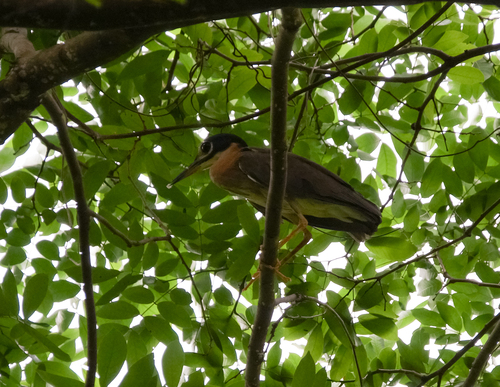 White-backed Night Heron
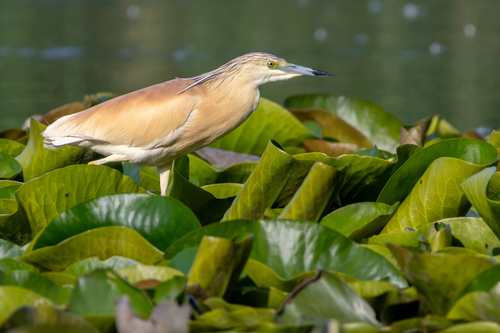 Squacco Heron
In short
The most reliable field mark for separating immature White-backed Night Heron from Squacco Heron is the presence of white spots on the upperwing coverts in the former—this is visible in flight or when perched with wings partially open, and does not occur in Squacco Heron of any age. Adult White-backed Night Heron is distinguished by its black head with a short crest and a bold white triangular patch on the back, while Squacco Heron adults have a buff-brown back and lack any white scapular triangle. In flight, Squacco Heron of all ages shows strikingly white wings contrasting with its tawny body, whereas White-backed Night Heron appears darker overall, with less contrast between wing and body. Structural differences are subtle, but Squacco Heron is slightly smaller and stockier, with a shorter neck and thicker bill. Both species can occur in sub-Saharan Africa, but Squacco Heron is more likely in open wetlands, while White-backed Night Heron prefers denser, wooded habitats.
Identification tips
- Immature upperwing coverts: Immature White-backed Night Heron shows distinctive white spots on the upperwing coverts, visible in flight or when perched with wings partially open. Squacco Heron of any age never shows these spots.
- Scapular triangle: Adult White-backed Night Heron has a bold white triangular patch on the back formed by the scapulars, visible when perched and sometimes in flight. Squacco Heron lacks any white scapular patch—its back is buff-brown in adults.
- Head pattern: White-backed Night Heron adults have a black head with a short crest and prominent white eye-ring; Squacco Heron has a pale buff head with no crest and no strong eye-ring.
- Neck and breast color: White-backed Night Heron has a rufous (reddish-brown) neck and breast, while Squacco Heron is paler overall, with white underparts and only faint streaking in non-breeding or juvenile plumages.
- Flight appearance: In flight, Squacco Heron of all ages shows very white wings contrasting with its tawny body and back. White-backed Night Heron appears darker overall, with less contrast between wing and body, and lacks the gleaming white wings of Squacco Heron.
- Bill shape: Squacco Heron has a short, thick bill; White-backed Night Heron’s bill is proportionally longer and slimmer, though this can be subtle at a distance.
- Body structure: Squacco Heron is stockier and more compact, with a shorter neck and body. White-backed Night Heron is slightly larger and longer-necked.
- Eye color: White-backed Night Heron has large red eyes with a white ring; Squacco Heron’s eyes are less striking and lack a bold ring.
- Leg color: Both species have yellowish legs, but this is not a strong field mark for separation.
- Juvenile breast pattern: Immature White-backed Night Heron has a streaked breast; juvenile Squacco Heron may show some streaking but not as pronounced, and never with white upperwing spots.
- Crest: Only White-backed Night Heron has a short crest or feather display on the head; Squacco Heron lacks any crest.
- Habitat context: If seen in dense, wooded wetland or forested river margin, suspect White-backed Night Heron. If in open marsh, reedbed, or sunlit wetland, Squacco Heron is more likely.
- Behavioral context: White-backed Night Heron is more nocturnal and secretive, often emerging at dusk. Squacco Heron is more likely to be active and visible during the day.
- Seasonal context: Squacco Heron is migratory and may be more common in open wetlands during the non-breeding season in Africa; White-backed Night Heron is resident in its range.
- Pitfall: In poor light, Squacco Heron’s white wings in flight can be mistaken for a white-backed heron, but check for the presence or absence of the white scapular triangle and head pattern when the bird lands.
Size
Squacco Heron is the smaller of the two, measuring 44–47 cm in length with a body mass around 288 g [wikidata]. White-backed Night Heron is slightly larger at 50–55 cm in length (no mass given), but the difference is modest and may not be obvious in the field unless seen side by side. Squacco Heron also appears stockier and more compact, with a shorter neck and bill, while White-backed Night Heron is relatively longer-necked and longer-bodied.
Plumage
Immature White-backed Night Heron is best identified by its streaked breast and distinctive white spots on the upperwing coverts—these spots are visible both in flight and when perched, and are not present in Squacco Heron at any age. Adult White-backed Night Heron has a black head with a short crest, prominent white eye-ring, rufous neck and breast, and a bold white triangular patch on the back formed by the scapulars. The underparts are whitish-brown. In contrast, Squacco Heron adults in breeding plumage have a buff-brown back, white underparts, and long neck feathers; in flight, the wings appear very white and contrast strongly with the tawny body. Non-breeding Squacco Herons are paler, with lighter streaking and a generally tawny appearance, but still lack the white scapular triangle and the black head of White-backed Night Heron. Juvenile Squacco Herons may show some streaking but never have white spots on the upperwing coverts or a white scapular patch.
Behaviour
Both species are secretive and often remain hidden in dense vegetation, but Squacco Heron is more likely to be seen in open, marshy wetlands, often feeding in shallow water or perched on low branches. It is migratory, breeding in Europe and the Middle East and wintering in Africa. White-backed Night Heron is more strictly nocturnal or crepuscular, often roosting in dense cover during the day and emerging at dusk. It is less likely to be seen in the open and prefers wooded or forested wetlands. Both species feed on fish, frogs, and insects, but Squacco Heron is more likely to be seen actively hunting during the day.
Habitat
White-backed Night Heron is typically found in densely vegetated wetlands, wooded swamps, or forested river margins in sub-Saharan Africa. It is rarely seen in open country. Squacco Heron, while also present in sub-Saharan Africa during the non-breeding season, prefers open marshes, reedbeds, and the edges of lakes and rivers, often in more open and sunlit situations. If the bird is in dense woodland or forested wetland, White-backed Night Heron is more likely; if in open marsh or reedbed, Squacco Heron is more probable.