

Western Yellow Wagtail vs Eastern Yellow Wagtail
Motacilla flava versus Motacilla tschutschensis
Play a quiz with Western Yellow Wagtail and Eastern Yellow Wagtail
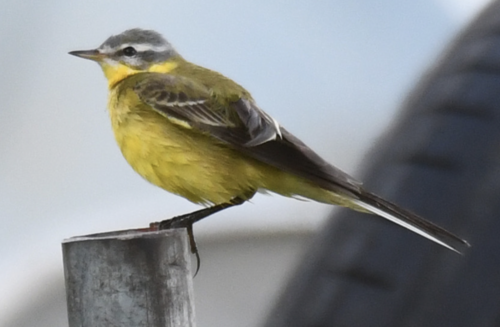 Western Yellow Wagtail
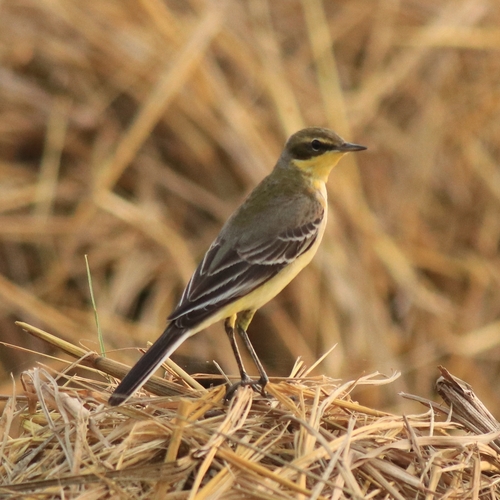 Eastern Yellow Wagtail
In short
The most reliable field mark to separate Western Yellow Wagtail (Motacilla flava) from Eastern Yellow Wagtail (Motacilla tschutschensis) is the hind claw: Eastern has a noticeably longer and straighter hind claw, while Western's is shorter and more strongly curved—though this is hard to see unless the bird is perched on a rock or wire. Both species are slender, long-tailed, and variable in head pattern, especially in breeding males, but subtle differences in call, structure, and juvenile/first-winter plumage can help. Immature birds are especially tricky, as both can show diluted yellow below and pale heads. Vocalizations and context (location and season) can be important clues, especially outside the breeding range.
Identification tips
- Hind claw shape (perched birds): Eastern Yellow Wagtail has a noticeably longer and straighter hind claw, while Western's is shorter and more strongly curved. This is a reliable mark but hard to see unless the bird is perched on a rock, wire, or exposed ground.
- Head pattern (breeding males): Both species show variable head patterns by subspecies; Western can have more extensive white on the head in some forms, but this overlaps with some Eastern subspecies. Not a consistently reliable mark without subspecies expertise.
- Juvenile and first-winter plumage: Both species can look very similar—olive or brownish above, yellowish or whitish below, with pale heads. No consistent difference in upperwing or flight pattern is documented for these ages.
- Bill and leg color: Both have black bills and legs; not useful for separation.
- Tail length and wagging: Both species have long, constantly wagging tails. Western is said to have the shortest tail among European wagtails, but the difference is subtle and not diagnostic in the field.
- Flight style: Both show undulating flight and frequently call in flight; no difference noted.
- Voice: Eastern's call is shriller and more rasping ('zrri' or 'jeet'), while Western's is a softer, high-pitched 'jeet'. Useful for experienced listeners, especially on migration.
- Habitat and range: Western breeds in Europe and western/central Asia; Eastern in the eastern Palearctic and Alaska. In winter and migration, ranges can overlap, so use with caution.
- Season and location: In Europe, a yellow wagtail in spring/summer is likely Western; in East Asia or Alaska, likely Eastern. In South/Southeast Asia or as a vagrant in Europe, both are possible.
- Subspecies confusion: Both species have many subspecies with overlapping head patterns and plumage, making identification by color alone unreliable.
- Hybrid zones: In areas where Western subspecies hybridize (e.g., northern France, Romania), birds may show intermediate features, further complicating ID.
- Contextual clues: Flock composition, timing, and known migration routes can help, but are not definitive.
- No reliable size difference: Both are equally slim and similar in length and mass.
- No consistent difference in wing pattern: Unlike some other wagtail species, these two do not show a diagnostic upperwing or flight mark at any age.
- Use multiple features: Because no single field mark is always reliable, combine hind claw (when visible), voice, and context for the best chance of correct ID.
Size
Both species are very similar in size, with a length of 15–16 cm and slim proportions [wikipedia]. No consistent difference in mass or overall length is noted in the sources [avonet].
Plumage
Juveniles and first-winter birds of both species can appear drab, with yellow underparts often diluted to whitish and olive or brownish upperparts. There are no strong, consistent differences in upperwing or flight pattern between these two species at any age based on the available notes. In breeding plumage, adult males of both are olive above and yellow below, but head patterns vary widely by subspecies and are not reliable for separation without detailed knowledge. In non-breeding and immature plumages, both can show pale heads and underparts, making field separation by color alone unreliable. The best subtle plumage clue is the slightly more extensive white on the head of some Western Yellow Wagtail subspecies, but this is not consistent across all forms and overlaps with some Eastern subspecies.
Behaviour
Both species share the typical wagtail behavior: they are active, ground-feeding insectivores, often seen walking or running on open ground near water, and frequently wagging their long tails. Flight is undulating and both species often call in flight. No behavioral difference is reliably diagnostic in the field.
Habitat
Habitat preferences are nearly identical: both favor open country near water, such as wet meadows, marshes, and riverbanks. Western Yellow Wagtail breeds in temperate Europe and western/central Asia, while Eastern Yellow Wagtail breeds in the eastern Palearctic and Alaska. In migration and winter, ranges can overlap, especially in South and Southeast Asia, and both can occur as vagrants far outside their core ranges.
Voice
Both species give a high-pitched call in flight, but Eastern Yellow Wagtail's 'zrri' or 'jeet' is described as shriller and more rasping than the Western's 'jeet'. This difference is subtle and may be hard to judge without direct comparison, but experienced listeners sometimes use it as a supporting clue.
Western Yellow Wagtail · Eastern Yellow Wagtail · My Tricky Birds