

Motmot

Western Cattle-Egret vs Grey Heron

Ardea ibis versus Ardea cinerea

Play a quiz with Western Cattle-Egret and Grey Heron
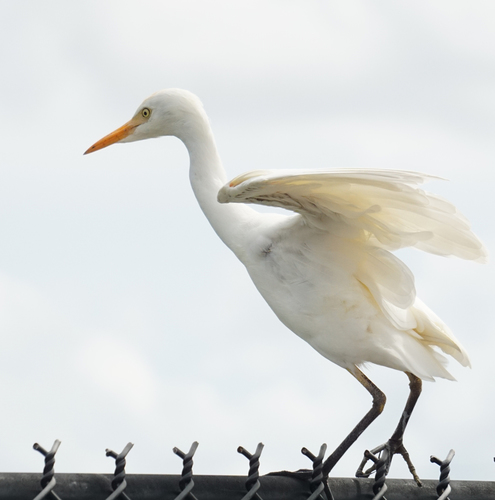
Western Cattle-Egret (Ardea ibis) Western Cattle-Egret
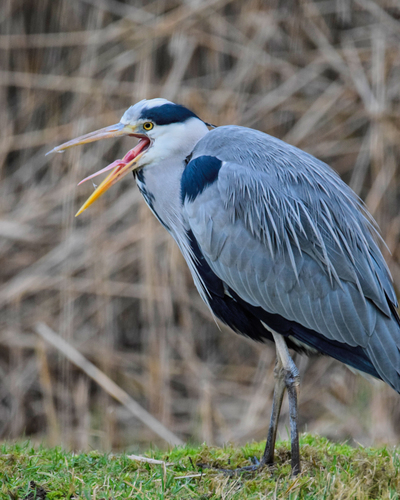
Grey Heron (Ardea cinerea) Grey Heron

Media

Loading…

In short

The most reliable way to separate Western Cattle-Egret from Grey Heron is by size and structure: the cattle egret is much smaller, stockier, and shorter-necked, while the grey heron is tall, long-necked, and lanky. In flight or at rest, cattle egrets appear compact with a thick neck and short legs, whereas grey herons are large, elegant birds with very long legs and a long, dagger-like bill. Adult cattle egrets are all-white outside the breeding season, sometimes with orange-buff plumes in breeding, while grey herons are mostly grey above and pale below, with a striking black-and-white head pattern. Juvenile grey herons are duller but still much larger and greyer than any cattle egret. These two species rarely overlap in habitat preference: cattle egrets are often seen in dry fields among livestock, while grey herons stick to wetlands.

Identification tips

  1. Size is the quickest separator: Grey Heron is more than twice the length and many times the weight of Western Cattle-Egret. Even distant birds can be separated on size alone.
  2. Structure: Cattle egrets are stocky, short-necked, and have a thick, sturdy bill. Grey herons are tall, long-necked, with a long, pointed, dagger-like bill and very long legs.
  3. Plumage (all ages): Cattle egrets are always mainly white, while grey herons are always grey above and pale below, never all-white.
  4. Breeding plumage: Adult cattle egrets develop orange-buff plumes on the head, breast, and back in breeding season; grey herons do not show any orange or buff tones.
  5. Head pattern: Grey herons have a bold black supercilium and crest on a white head, with black streaks on the neck; cattle egrets have a plain white head (except for buff plumes in breeding) and lack any black markings.
  6. Bill color: Adult cattle egrets have a yellow bill (briefly red in peak breeding); juveniles have a black bill. Grey herons have a long, pinkish-yellow bill, brighter in breeding adults.
  7. Leg color: Cattle egret legs are greyish-yellow (briefly red in breeding), while grey heron legs are always brown and much longer in proportion to the body.
  8. Flight silhouette: Cattle egrets look compact in flight, with short neck and legs barely trailing; grey herons are large, with long neck retracted in an S-shape and long legs extending well beyond the tail.
  9. Juvenile confusion: Juvenile grey herons are duller and greyer than adults but never white; juvenile cattle egrets are white with a black bill.
  10. Habitat context: Cattle egrets are often in fields, especially with livestock; grey herons are almost always near water.
  11. Behavior: Cattle egrets walk briskly in open areas, often among animals; grey herons stalk or stand still at water's edge.
  12. Perched posture: Cattle egrets perch with a hunched, compact look; grey herons are upright, tall, and elegant.
  13. Colony nesting: Both may nest in trees, but cattle egret colonies are often in drier areas or mixed with other species; grey herons prefer high trees near water.
  14. Vocalizations: Both are generally silent; calls are not useful for separation in the field.
  15. Seasonal variation: Only cattle egrets show orange-buff plumes and red bare parts in breeding; grey herons do not change much seasonally.

Size

Grey Heron is dramatically larger: standing up to 100 cm tall, with a wingspan of 155–195 cm and weighing 1–2 kg. Western Cattle-Egret is much smaller and more compact, only 46–56 cm long, with a wingspan of 88–96 cm and weighing 270–512 g. Even at a distance, the heron's greater bulk, long legs, and long neck are obvious compared to the egret's squat, hunched look.

Plumage

Juvenile and adult Western Cattle-Egrets are mainly white year-round, with juveniles showing a black bill and adults a yellow bill. In breeding season, adults gain orange-buff plumes on the head, breast, and back, and briefly show reddish bare parts. Grey Herons, in all ages, are never all-white: adults are ashy-grey above, greyish-white below, with a white head and neck, a bold black supercilium and crest, and black streaks on the neck. Juveniles are duller, with a greyer head and less distinct crest, but still show grey upperparts and a pale, not white, face. In flight, cattle egrets show entirely white wings, while grey herons show grey upperwings and paler underwings, with a clear contrast to the white neck and head. There are no complex age-specific upperwing patterns in either species, but the overall color and size difference is always apparent.

Behaviour

Western Cattle-Egrets are often found walking in open fields, especially near cattle or other large mammals, foraging for insects disturbed by livestock. They have a hunched, purposeful gait and may be seen perching in trees at colonies. Grey Herons are solitary or loosely grouped, stalking prey in shallow water with slow, deliberate movements, or standing motionless for long periods. In flight, cattle egrets look compact with deep, rapid wingbeats; grey herons are slow, steady, and graceful, with their long necks retracted and legs trailing far behind.

Habitat

Cattle egrets are most often seen in dry, grassy fields, pastures, and agricultural land, frequently among livestock, and only sometimes near water. Grey herons are tied to wetlands: lakes, rivers, marshes, ponds, and coastlines. While both may nest in trees, cattle egrets are much more likely to be seen away from water, and grey herons rarely stray far from aquatic habitats.

Voice

Cattle egrets are mostly silent away from colonies, where they give a quiet, throaty 'rick-rack' call. Grey herons are also generally silent, but at colonies or when disturbed, they give loud, harsh croaks. Neither species is likely to be identified by voice alone in the field.

Submit a better description

Use the same sections as the comparison. Your text is published immediately.

The most reliable way to separate Western Cattle-Egret from Grey Heron is by size and structure: the cattle egret is much smaller, stockier, and shorter-necked, while the grey heron is tall, long-necked, and lanky. In flight or at rest, cattle egrets appear compact with a thick neck and short legs, whereas grey herons are large, elegant birds with very long legs and a long, dagger-like bill. Adult cattle egrets are all-white outside the breeding season, sometimes with orange-buff plumes in breeding, while grey herons are mostly grey above and pale below, with a striking black-and-white head pattern. Juvenile grey herons are duller but still much larger and greyer than any cattle egret. These two species rarely overlap in habitat preference: cattle egrets are often seen in dry fields among livestock, while grey herons stick to wetlands.

  1. Size is the quickest separator: Grey Heron is more than twice the length and many times the weight of Western Cattle-Egret. Even distant birds can be separated on size alone.
  2. Structure: Cattle egrets are stocky, short-necked, and have a thick, sturdy bill. Grey herons are tall, long-necked, with a long, pointed, dagger-like bill and very long legs.
  3. Plumage (all ages): Cattle egrets are always mainly white, while grey herons are always grey above and pale below, never all-white.
  4. Breeding plumage: Adult cattle egrets develop orange-buff plumes on the head, breast, and back in breeding season; grey herons do not show any orange or buff tones.
  5. Head pattern: Grey herons have a bold black supercilium and crest on a white head, with black streaks on the neck; cattle egrets have a plain white head (except for buff plumes in breeding) and lack any black markings.
  6. Bill color: Adult cattle egrets have a yellow bill (briefly red in peak breeding); juveniles have a black bill. Grey herons have a long, pinkish-yellow bill, brighter in breeding adults.
  7. Leg color: Cattle egret legs are greyish-yellow (briefly red in breeding), while grey heron legs are always brown and much longer in proportion to the body.
  8. Flight silhouette: Cattle egrets look compact in flight, with short neck and legs barely trailing; grey herons are large, with long neck retracted in an S-shape and long legs extending well beyond the tail.
  9. Juvenile confusion: Juvenile grey herons are duller and greyer than adults but never white; juvenile cattle egrets are white with a black bill.
  10. Habitat context: Cattle egrets are often in fields, especially with livestock; grey herons are almost always near water.
  11. Behavior: Cattle egrets walk briskly in open areas, often among animals; grey herons stalk or stand still at water's edge.
  12. Perched posture: Cattle egrets perch with a hunched, compact look; grey herons are upright, tall, and elegant.
  13. Colony nesting: Both may nest in trees, but cattle egret colonies are often in drier areas or mixed with other species; grey herons prefer high trees near water.
  14. Vocalizations: Both are generally silent; calls are not useful for separation in the field.
  15. Seasonal variation: Only cattle egrets show orange-buff plumes and red bare parts in breeding; grey herons do not change much seasonally.

Grey Heron is dramatically larger: standing up to 100 cm tall, with a wingspan of 155–195 cm and weighing 1–2 kg. Western Cattle-Egret is much smaller and more compact, only 46–56 cm long, with a wingspan of 88–96 cm and weighing 270–512 g. Even at a distance, the heron's greater bulk, long legs, and long neck are obvious compared to the egret's squat, hunched look.

Juvenile and adult Western Cattle-Egrets are mainly white year-round, with juveniles showing a black bill and adults a yellow bill. In breeding season, adults gain orange-buff plumes on the head, breast, and back, and briefly show reddish bare parts. Grey Herons, in all ages, are never all-white: adults are ashy-grey above, greyish-white below, with a white head and neck, a bold black supercilium and crest, and black streaks on the neck. Juveniles are duller, with a greyer head and less distinct crest, but still show grey upperparts and a pale, not white, face. In flight, cattle egrets show entirely white wings, while grey herons show grey upperwings and paler underwings, with a clear contrast to the white neck and head. There are no complex age-specific upperwing patterns in either species, but the overall color and size difference is always apparent.

Western Cattle-Egrets are often found walking in open fields, especially near cattle or other large mammals, foraging for insects disturbed by livestock. They have a hunched, purposeful gait and may be seen perching in trees at colonies. Grey Herons are solitary or loosely grouped, stalking prey in shallow water with slow, deliberate movements, or standing motionless for long periods. In flight, cattle egrets look compact with deep, rapid wingbeats; grey herons are slow, steady, and graceful, with their long necks retracted and legs trailing far behind.

Cattle egrets are most often seen in dry, grassy fields, pastures, and agricultural land, frequently among livestock, and only sometimes near water. Grey herons are tied to wetlands: lakes, rivers, marshes, ponds, and coastlines. While both may nest in trees, cattle egrets are much more likely to be seen away from water, and grey herons rarely stray far from aquatic habitats.

Cattle egrets are mostly silent away from colonies, where they give a quiet, throaty 'rick-rack' call. Grey herons are also generally silent, but at colonies or when disturbed, they give loud, harsh croaks. Neither species is likely to be identified by voice alone in the field.

Discard your changes?

You have unsaved edits. If you leave now, those changes will be lost.

Western Cattle-Egret · Grey Heron · My Tricky Birds