

Motmot

Western Capercaillie vs Rock Partridge

Tetrao urogallus versus Alectoris graeca

Play a quiz with Western Capercaillie and Rock Partridge
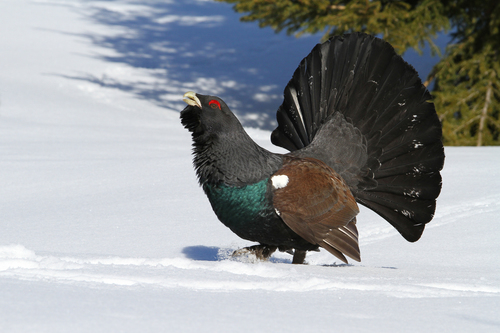
Western Capercaillie (Tetrao urogallus) Western Capercaillie
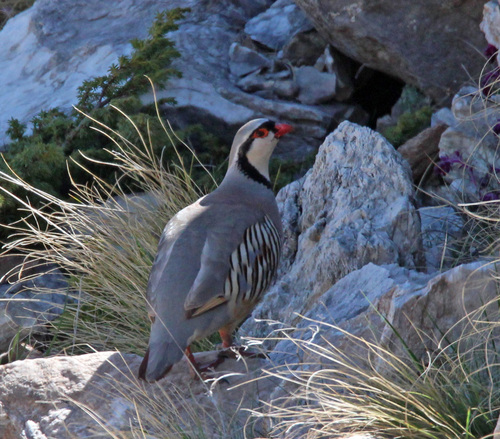
Rock Partridge (Alectoris graeca) Rock Partridge

Media

Loading…

In short

The most reliable way to separate Western Capercaillie from Rock Partridge is by size and structure: capercaillie are massive, turkey-sized forest grouse, while rock partridges are much smaller, rotund gamebirds. In the field, even distant or poorly seen birds can be separated by bulk, stance, and proportions. Adult male capercaillies are especially striking with their dark plumage and metallic green breast, while rock partridges show a pale face with a sharp black gorget. Both species are ground-dwelling, but their preferred habitats and flight styles differ. Sex and age differences in capercaillie can cause confusion, but even females are much larger and browner than any rock partridge.

Identification tips

  1. Size is the first check: Any bird even approaching the size of a small turkey or large chicken is a capercaillie; rock partridge is never more than chicken-sized.
  2. Structure and stance: Capercaillie are long-bodied, heavy, with a long, rounded tail and thick, feathered legs. Rock partridges are compact, round, short-tailed, and have unfeathered red legs.
  3. Sexual dimorphism in capercaillie: Males are much larger and darker than females, but even females are bulkier and longer than any rock partridge.
  4. Plumage: capercaillie males: Look for dark grey to brown body, metallic green breast, and a white spot on the wing. No rock partridge shows this combination.
  5. Plumage: capercaillie females: Mottled brown with black and silver barring above, buffy below. Still much larger and longer than rock partridge, with a more cryptic, less sharply marked face.
  6. Plumage: rock partridge: Pale brown back, grey breast, buff belly, white face with a sharply defined black gorget, and rufous-streaked flanks. The black gorget is diagnostic in adults and never shown by capercaillie.
  7. Wing and tail in flight: Capercaillie have broad, rounded wings and a long, rounded tail; rock partridge has short, rounded wings and a much shorter tail. In flight, capercaillie appear massive and slow, rock partridges small and quick.
  8. Legs and feet: Capercaillie have feathered legs and toes, especially in winter, and leave large, distinctive tracks in snow. Rock partridge legs are bare and red, with no snow adaptations.
  9. Red eye skin: Both sexes of capercaillie show a bright red spot above the eye ('roses'), absent in rock partridge.
  10. Habitat context: Capercaillie are almost never found outside mature forests; rock partridges are birds of rocky hillsides, open scrub, and grassland.
  11. Behavior when flushed: Capercaillie may fly up to trees or make a long, gliding flight; rock partridge prefers to run, only flying short distances with rapid wingbeats.
  12. Vocalizations: Capercaillie males display with mechanical, popping, and scraping sounds at dawn; rock partridge gives a noisy, repetitive 'chakera' call.
  13. Juvenile confusion: Young capercaillie and rock partridge are both cryptically brown, but size and structure still separate them. No distinctive juvenile wing pattern is noted for either species.
  14. Seasonal context: Capercaillie display and vocalize most in spring; rock partridge calls can be heard year-round but are especially frequent in breeding season.
  15. Common pitfalls: Female capercaillie can be mistaken for large gamebirds, but their size, feathered legs, and forest habitat are unique. Rock partridge is sometimes confused with other Alectoris species, but not with capercaillie when size and habitat are considered.

Size

Size is the most obvious distinction: Western Capercaillie is the largest extant grouse, with males averaging 2885 g (and often much heavier), while Rock Partridge averages only 632.5 g. Even female capercaillies, at 1.5–2.5 kg, are more than twice the mass of a rock partridge. Capercaillie males reach up to 100 cm in length and have a broad wingspan (90–125 cm), dwarfing the compact, rotund rock partridge. In direct comparison, capercaillie appear long-bodied and heavy, with thick legs and a long tail, while rock partridges are short-tailed, round, and chicken-sized.

Plumage

Juvenile and immature plumage is not described in detail for either species in the sources, but both capercaillie chicks and hens are cryptically colored brown with barring for camouflage. By late summer, young capercaillies begin to show adult features. Adult male capercaillie are dark grey-brown overall with a metallic green breast, black to white belly (depending on race), and a prominent white wing spot. Females are mottled brown above with black and silver barring, and buffy below. Both sexes have a red skin patch above the eye. In contrast, rock partridge adults are pale brown above, grey-breasted, buff-bellied, with a white face bordered by a sharply defined black gorget, rufous-streaked flanks, and red legs. The white wing spot of capercaillie is absent in rock partridge. In flight, capercaillie show broad, rounded wings and a long, rounded tail; rock partridge has short, rounded wings and a short tail. No distinctive juvenile wing pattern is noted for either species in the sources.

Behaviour

Capercaillie are primarily ground-dwelling but will fly up to trees for display or roosting, especially males during courtship. Their flight is strong but labored, with heavy wingbeats and a long, gliding descent. They display elaborate courtship on the ground or from trees. Rock partridges prefer to run from danger, only flying short distances when forced, with rapid, whirring wingbeats and a low, direct flight. Capercaillie tracks in snow are large and distinctive, with feathered legs and toes adapted for winter. Rock partridges lack these adaptations and do not leave such tracks.

Habitat

Western Capercaillie inhabit mature, often coniferous or mixed forests across Europe and the Palearctic, favoring dense woodland with open clearings for display. They are rarely found outside forested areas. Rock Partridge is native to southern Europe, preferring rocky hillsides, open scrub, and grassland with scattered bushes, and avoids dense forests. Habitat alone can be a strong clue: capercaillie are deep-forest specialists, while rock partridges are birds of open, rocky terrain.

Voice

Capercaillie males produce a unique courtship song: a series of double-clicks accelerating into popping and scraping sounds, described as a ping-pong ball dropping and a cork popping, followed by scraping. This is most often heard at dawn during the breeding season. Rock Partridge gives a noisy, repeated 'ga-ga-ga-ga-chakera-chakera-chakera' call, very different from capercaillie. The rock partridge's call is more typical of Alectoris partridges and is not easily confused with the mechanical, display-oriented sounds of capercaillie.

Submit a better description

Use the same sections as the comparison. Your text is published immediately.

The most reliable way to separate Western Capercaillie from Rock Partridge is by size and structure: capercaillie are massive, turkey-sized forest grouse, while rock partridges are much smaller, rotund gamebirds. In the field, even distant or poorly seen birds can be separated by bulk, stance, and proportions. Adult male capercaillies are especially striking with their dark plumage and metallic green breast, while rock partridges show a pale face with a sharp black gorget. Both species are ground-dwelling, but their preferred habitats and flight styles differ. Sex and age differences in capercaillie can cause confusion, but even females are much larger and browner than any rock partridge.

  1. Size is the first check: Any bird even approaching the size of a small turkey or large chicken is a capercaillie; rock partridge is never more than chicken-sized.
  2. Structure and stance: Capercaillie are long-bodied, heavy, with a long, rounded tail and thick, feathered legs. Rock partridges are compact, round, short-tailed, and have unfeathered red legs.
  3. Sexual dimorphism in capercaillie: Males are much larger and darker than females, but even females are bulkier and longer than any rock partridge.
  4. Plumage: capercaillie males: Look for dark grey to brown body, metallic green breast, and a white spot on the wing. No rock partridge shows this combination.
  5. Plumage: capercaillie females: Mottled brown with black and silver barring above, buffy below. Still much larger and longer than rock partridge, with a more cryptic, less sharply marked face.
  6. Plumage: rock partridge: Pale brown back, grey breast, buff belly, white face with a sharply defined black gorget, and rufous-streaked flanks. The black gorget is diagnostic in adults and never shown by capercaillie.
  7. Wing and tail in flight: Capercaillie have broad, rounded wings and a long, rounded tail; rock partridge has short, rounded wings and a much shorter tail. In flight, capercaillie appear massive and slow, rock partridges small and quick.
  8. Legs and feet: Capercaillie have feathered legs and toes, especially in winter, and leave large, distinctive tracks in snow. Rock partridge legs are bare and red, with no snow adaptations.
  9. Red eye skin: Both sexes of capercaillie show a bright red spot above the eye ('roses'), absent in rock partridge.
  10. Habitat context: Capercaillie are almost never found outside mature forests; rock partridges are birds of rocky hillsides, open scrub, and grassland.
  11. Behavior when flushed: Capercaillie may fly up to trees or make a long, gliding flight; rock partridge prefers to run, only flying short distances with rapid wingbeats.
  12. Vocalizations: Capercaillie males display with mechanical, popping, and scraping sounds at dawn; rock partridge gives a noisy, repetitive 'chakera' call.
  13. Juvenile confusion: Young capercaillie and rock partridge are both cryptically brown, but size and structure still separate them. No distinctive juvenile wing pattern is noted for either species.
  14. Seasonal context: Capercaillie display and vocalize most in spring; rock partridge calls can be heard year-round but are especially frequent in breeding season.
  15. Common pitfalls: Female capercaillie can be mistaken for large gamebirds, but their size, feathered legs, and forest habitat are unique. Rock partridge is sometimes confused with other Alectoris species, but not with capercaillie when size and habitat are considered.

Size is the most obvious distinction: Western Capercaillie is the largest extant grouse, with males averaging 2885 g (and often much heavier), while Rock Partridge averages only 632.5 g. Even female capercaillies, at 1.5–2.5 kg, are more than twice the mass of a rock partridge. Capercaillie males reach up to 100 cm in length and have a broad wingspan (90–125 cm), dwarfing the compact, rotund rock partridge. In direct comparison, capercaillie appear long-bodied and heavy, with thick legs and a long tail, while rock partridges are short-tailed, round, and chicken-sized.

Juvenile and immature plumage is not described in detail for either species in the sources, but both capercaillie chicks and hens are cryptically colored brown with barring for camouflage. By late summer, young capercaillies begin to show adult features. Adult male capercaillie are dark grey-brown overall with a metallic green breast, black to white belly (depending on race), and a prominent white wing spot. Females are mottled brown above with black and silver barring, and buffy below. Both sexes have a red skin patch above the eye. In contrast, rock partridge adults are pale brown above, grey-breasted, buff-bellied, with a white face bordered by a sharply defined black gorget, rufous-streaked flanks, and red legs. The white wing spot of capercaillie is absent in rock partridge. In flight, capercaillie show broad, rounded wings and a long, rounded tail; rock partridge has short, rounded wings and a short tail. No distinctive juvenile wing pattern is noted for either species in the sources.

Capercaillie are primarily ground-dwelling but will fly up to trees for display or roosting, especially males during courtship. Their flight is strong but labored, with heavy wingbeats and a long, gliding descent. They display elaborate courtship on the ground or from trees. Rock partridges prefer to run from danger, only flying short distances when forced, with rapid, whirring wingbeats and a low, direct flight. Capercaillie tracks in snow are large and distinctive, with feathered legs and toes adapted for winter. Rock partridges lack these adaptations and do not leave such tracks.

Western Capercaillie inhabit mature, often coniferous or mixed forests across Europe and the Palearctic, favoring dense woodland with open clearings for display. They are rarely found outside forested areas. Rock Partridge is native to southern Europe, preferring rocky hillsides, open scrub, and grassland with scattered bushes, and avoids dense forests. Habitat alone can be a strong clue: capercaillie are deep-forest specialists, while rock partridges are birds of open, rocky terrain.

Capercaillie males produce a unique courtship song: a series of double-clicks accelerating into popping and scraping sounds, described as a ping-pong ball dropping and a cork popping, followed by scraping. This is most often heard at dawn during the breeding season. Rock Partridge gives a noisy, repeated 'ga-ga-ga-ga-chakera-chakera-chakera' call, very different from capercaillie. The rock partridge's call is more typical of Alectoris partridges and is not easily confused with the mechanical, display-oriented sounds of capercaillie.

Discard your changes?

You have unsaved edits. If you leave now, those changes will be lost.

Western Capercaillie · Rock Partridge · My Tricky Birds