

Motmot

Western Bonelli's Warbler vs Pallas's Warbler

Phylloscopus bonelli versus Phylloscopus proregulus

Play a quiz with Western Bonelli's Warbler and Pallas's Warbler
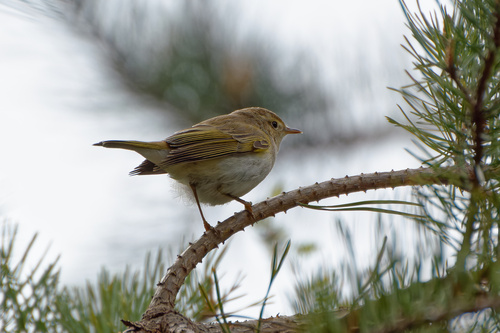
Western Bonelli's Warbler (Phylloscopus bonelli) Western Bonelli's Warbler
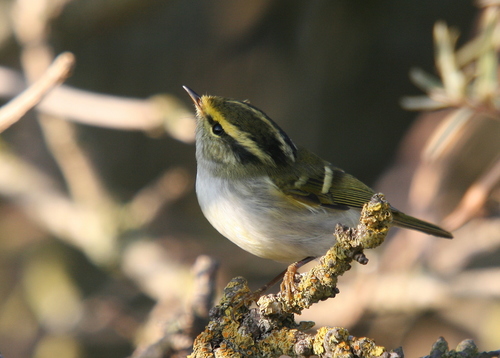
Pallas's Warbler (Phylloscopus proregulus) Pallas's Warbler

Media

Loading…

In short

The most reliable way to separate Western Bonelli's Warbler from Pallas's Warbler is by their striking difference in wing and head pattern: Pallas's Warbler of all ages shows bold yellow double wingbars, a lemon-yellow rump, and a bright yellow supercilium with a central crown stripe, while Western Bonelli's Warbler is much plainer, lacking any wingbars or head stripes and showing a subdued grey-green back and greenish rump. Even in juvenile plumage, Pallas's Warbler is distinctly patterned, though slightly duller, whereas Bonelli's remains uniformly plain. Structurally, Pallas's is smaller and more compact, with a proportionally larger head and shorter tail. Voice is also a strong separator: Western Bonelli's gives a disyllabic 'hu-it', while Pallas's has a soft 'dju-ee' call. If you see a small warbler with obvious yellow wingbars and a yellow rump, it is never Western Bonelli's.

Identification tips

  1. Wingbars: Pallas's Warbler always shows two bright yellow wingbars on the wing coverts, visible in all ages and plumages. Western Bonelli's never shows wingbars—if you see any, it is not Bonelli's.
  2. Yellow rump: Pallas's has a lemon-yellow rump, often visible in flight or when hovering. Bonelli's rump is green-toned but never yellow.
  3. Head pattern: Pallas's has a bold yellow supercilium (eyebrow) and a central yellow crown stripe, forming a striking facial pattern. Bonelli's has a plain face with no supercilium or crown stripe.
  4. Overall coloration: Bonelli's is plain grey-green above with a greenish rump and wings, and whitish below. Pallas's is brighter green above, with white underparts, and extensive yellow highlights.
  5. Juvenile plumage: Even juvenile Pallas's Warblers show the wingbars and head stripes, though with a brownish upperpart and duller supercilium. Juvenile Bonelli's is just as plain as the adult, with no wingbars or head stripes.
  6. Bill and legs: Both have small, pointed bills and brown legs, but Pallas's may show a green or greyish tinge to the legs and a yellowish base to the lower mandible.
  7. Structure and jizz: Pallas's is smaller, with a large head, short tail, and compact body. Bonelli's is larger and more elongated. In direct comparison, Pallas's looks 'cuter' and more delicate.
  8. Flight views: In flight, look for the yellow rump and wingbars of Pallas's. Bonelli's shows no such contrasts—just a uniform greenish upperwing and rump.
  9. Behavior: Pallas's is more likely to hover and flick through foliage, sometimes flashing its yellow rump. Bonelli's moves more steadily and is less likely to hover.
  10. Voice: Calls are diagnostic: Bonelli's gives a disyllabic 'hu-it', Pallas's a soft 'dju-ee'. Listen carefully if the bird is vocal.
  11. Season and context: In Europe, Pallas's is most often a late autumn migrant or vagrant, often as a first-year bird. Bonelli's is a local breeder or rare vagrant outside its core range.
  12. Sex differences: Both species are sexually monomorphic—males and females look alike.
  13. Pitfalls: Do not confuse Bonelli's subtle greenish rump for the bright yellow rump of Pallas's. Wingbars are never present on Bonelli's. If you see a plain, unmarked warbler, check for Bonelli's; if you see any yellow in the wing or head, think Pallas's.
  14. Comparison with other species: Pallas's can be confused with other yellow-rumped Asiatic warblers, but those are larger and less strongly marked. Bonelli's is only likely to be confused with other plain Phylloscopus warblers, not with any yellow-barred species.
  15. When marks fail: In poor light, Pallas's yellow may look subdued, but the wingbars and supercilium should still be visible. If the bird is silent and partly obscured, focus on the presence or absence of wingbars and head stripes.

Size

Pallas's Warbler is noticeably smaller and lighter than Western Bonelli's Warbler. Pallas's averages about 6 grams in body mass and measures 9–10 cm in length, making it one of the tiniest leaf warblers—barely larger than a Goldcrest. Western Bonelli's is larger and longer, with a more typical Phylloscopus warbler build (exact mass not provided, but clearly heavier than Pallas's). In the field, Pallas's appears more compact, with a large-headed, short-tailed look, while Bonelli's is more elongated and less 'cute' in jizz.

Plumage

Age-specific wing and head pattern is the most diagnostic feature. Pallas's Warbler, in all plumages (adult, juvenile, non-breeding), shows two prominent yellow wingbars formed by the pale tips to the wing coverts, a lemon-yellow rump, a bold yellow supercilium, and a central yellow crown stripe. Juveniles are slightly duller, with a brownish tinge above and a less bright supercilium, but the wingbars and head stripes are always present. Western Bonelli's Warbler, regardless of age or season, is plain: it has a grey-green back, green-toned rump and wings, and whitish underparts, with no wingbars, crown stripe, or supercilium. The only color on Bonelli's is a subtle greenish wash to the rump and wings, and a slightly browner tinge to the upperparts compared to Eastern Bonelli's. Both species have similar brown legs, but Pallas's may show a green or greyish tinge to the legs. In flight, the yellow rump of Pallas's can be a standout feature, while Bonelli's shows no such contrast.

Behaviour

Both species are active foragers in trees and shrubs, but Pallas's Warbler often hovers or flits rapidly among foliage, sometimes showing its yellow rump as it feeds. Western Bonelli's tends to move more methodically through branches and is less likely to hover. Pallas's may appear more restless and energetic, matching its smaller, more compact appearance.

Habitat

Western Bonelli's Warbler breeds in southwest Europe and North Africa, favoring forest and woodland habitats, and is a rare vagrant further north. Pallas's Warbler breeds in mountain forests of southern Siberia, Mongolia, and northeast China, but is now a regular autumn migrant and vagrant in Europe, especially in coastal areas. In Europe, Pallas's is most often encountered in autumn, especially as a first-year migrant, while Bonelli's is a local breeder or rare vagrant outside its range. Habitat overlap is minimal except during migration/vagrancy.

Voice

The calls are very different and diagnostic if heard well. Western Bonelli's Warbler gives a disyllabic 'hu-it', which is quite unlike Pallas's Warbler's soft, short 'dju-ee'. The songs are less useful for separation in the field, as both are trilled and similar to other Phylloscopus warblers, but the calls are distinctive and should be relied upon when possible.

Submit a better description

Use the same sections as the comparison. Your text is published immediately.

The most reliable way to separate Western Bonelli's Warbler from Pallas's Warbler is by their striking difference in wing and head pattern: Pallas's Warbler of all ages shows bold yellow double wingbars, a lemon-yellow rump, and a bright yellow supercilium with a central crown stripe, while Western Bonelli's Warbler is much plainer, lacking any wingbars or head stripes and showing a subdued grey-green back and greenish rump. Even in juvenile plumage, Pallas's Warbler is distinctly patterned, though slightly duller, whereas Bonelli's remains uniformly plain. Structurally, Pallas's is smaller and more compact, with a proportionally larger head and shorter tail. Voice is also a strong separator: Western Bonelli's gives a disyllabic 'hu-it', while Pallas's has a soft 'dju-ee' call. If you see a small warbler with obvious yellow wingbars and a yellow rump, it is never Western Bonelli's.

  1. Wingbars: Pallas's Warbler always shows two bright yellow wingbars on the wing coverts, visible in all ages and plumages. Western Bonelli's never shows wingbars—if you see any, it is not Bonelli's.
  2. Yellow rump: Pallas's has a lemon-yellow rump, often visible in flight or when hovering. Bonelli's rump is green-toned but never yellow.
  3. Head pattern: Pallas's has a bold yellow supercilium (eyebrow) and a central yellow crown stripe, forming a striking facial pattern. Bonelli's has a plain face with no supercilium or crown stripe.
  4. Overall coloration: Bonelli's is plain grey-green above with a greenish rump and wings, and whitish below. Pallas's is brighter green above, with white underparts, and extensive yellow highlights.
  5. Juvenile plumage: Even juvenile Pallas's Warblers show the wingbars and head stripes, though with a brownish upperpart and duller supercilium. Juvenile Bonelli's is just as plain as the adult, with no wingbars or head stripes.
  6. Bill and legs: Both have small, pointed bills and brown legs, but Pallas's may show a green or greyish tinge to the legs and a yellowish base to the lower mandible.
  7. Structure and jizz: Pallas's is smaller, with a large head, short tail, and compact body. Bonelli's is larger and more elongated. In direct comparison, Pallas's looks 'cuter' and more delicate.
  8. Flight views: In flight, look for the yellow rump and wingbars of Pallas's. Bonelli's shows no such contrasts—just a uniform greenish upperwing and rump.
  9. Behavior: Pallas's is more likely to hover and flick through foliage, sometimes flashing its yellow rump. Bonelli's moves more steadily and is less likely to hover.
  10. Voice: Calls are diagnostic: Bonelli's gives a disyllabic 'hu-it', Pallas's a soft 'dju-ee'. Listen carefully if the bird is vocal.
  11. Season and context: In Europe, Pallas's is most often a late autumn migrant or vagrant, often as a first-year bird. Bonelli's is a local breeder or rare vagrant outside its core range.
  12. Sex differences: Both species are sexually monomorphic—males and females look alike.
  13. Pitfalls: Do not confuse Bonelli's subtle greenish rump for the bright yellow rump of Pallas's. Wingbars are never present on Bonelli's. If you see a plain, unmarked warbler, check for Bonelli's; if you see any yellow in the wing or head, think Pallas's.
  14. Comparison with other species: Pallas's can be confused with other yellow-rumped Asiatic warblers, but those are larger and less strongly marked. Bonelli's is only likely to be confused with other plain Phylloscopus warblers, not with any yellow-barred species.
  15. When marks fail: In poor light, Pallas's yellow may look subdued, but the wingbars and supercilium should still be visible. If the bird is silent and partly obscured, focus on the presence or absence of wingbars and head stripes.

Pallas's Warbler is noticeably smaller and lighter than Western Bonelli's Warbler. Pallas's averages about 6 grams in body mass and measures 9–10 cm in length, making it one of the tiniest leaf warblers—barely larger than a Goldcrest. Western Bonelli's is larger and longer, with a more typical Phylloscopus warbler build (exact mass not provided, but clearly heavier than Pallas's). In the field, Pallas's appears more compact, with a large-headed, short-tailed look, while Bonelli's is more elongated and less 'cute' in jizz.

Age-specific wing and head pattern is the most diagnostic feature. Pallas's Warbler, in all plumages (adult, juvenile, non-breeding), shows two prominent yellow wingbars formed by the pale tips to the wing coverts, a lemon-yellow rump, a bold yellow supercilium, and a central yellow crown stripe. Juveniles are slightly duller, with a brownish tinge above and a less bright supercilium, but the wingbars and head stripes are always present. Western Bonelli's Warbler, regardless of age or season, is plain: it has a grey-green back, green-toned rump and wings, and whitish underparts, with no wingbars, crown stripe, or supercilium. The only color on Bonelli's is a subtle greenish wash to the rump and wings, and a slightly browner tinge to the upperparts compared to Eastern Bonelli's. Both species have similar brown legs, but Pallas's may show a green or greyish tinge to the legs. In flight, the yellow rump of Pallas's can be a standout feature, while Bonelli's shows no such contrast.

Both species are active foragers in trees and shrubs, but Pallas's Warbler often hovers or flits rapidly among foliage, sometimes showing its yellow rump as it feeds. Western Bonelli's tends to move more methodically through branches and is less likely to hover. Pallas's may appear more restless and energetic, matching its smaller, more compact appearance.

Western Bonelli's Warbler breeds in southwest Europe and North Africa, favoring forest and woodland habitats, and is a rare vagrant further north. Pallas's Warbler breeds in mountain forests of southern Siberia, Mongolia, and northeast China, but is now a regular autumn migrant and vagrant in Europe, especially in coastal areas. In Europe, Pallas's is most often encountered in autumn, especially as a first-year migrant, while Bonelli's is a local breeder or rare vagrant outside its range. Habitat overlap is minimal except during migration/vagrancy.

The calls are very different and diagnostic if heard well. Western Bonelli's Warbler gives a disyllabic 'hu-it', which is quite unlike Pallas's Warbler's soft, short 'dju-ee'. The songs are less useful for separation in the field, as both are trilled and similar to other Phylloscopus warblers, but the calls are distinctive and should be relied upon when possible.

Discard your changes?

You have unsaved edits. If you leave now, those changes will be lost.

Western Bonelli's Warbler · Pallas's Warbler · My Tricky Birds