

Wedge-tailed Shearwater vs Tropical Shearwater
Ardenna pacifica versus Puffinus bailloni
Play a quiz with Wedge-tailed Shearwater and Tropical Shearwater
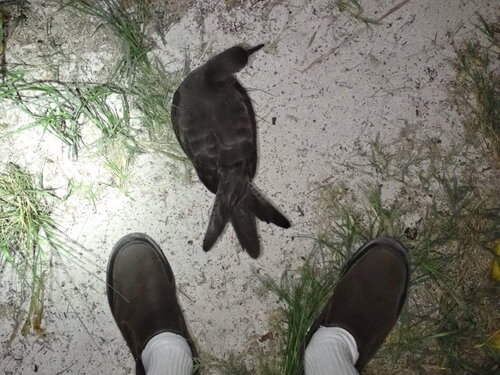 Wedge-tailed Shearwater
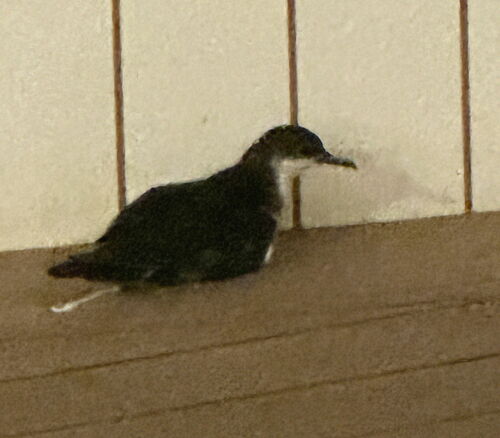 Tropical Shearwater
In short
The most reliable field mark separating Wedge-tailed Shearwater from Tropical Shearwater is size and structure: Wedge-tailed is distinctly larger, with a long, wedge-shaped tail and a heavier, more robust jizz in flight. Both species can show dark and pale morphs, so plumage color alone is not diagnostic. In flight, look for the Wedge-tailed's broad wings and long, pointed tail, which contrasts with the more compact, shorter-tailed appearance of Tropical Shearwater. Bill color and leg color are not reliable in the field at a distance. Focus on overall size, tail shape, and flight style for the best separation.
Identification tips
- Size is the most reliable field mark: Wedge-tailed Shearwater is much larger than Tropical Shearwater. Use this when birds are seen together or with known species for scale.
- Tail shape: Look for the long, wedge-shaped tail of Wedge-tailed Shearwater, especially in flight. Tropical Shearwater's tail is shorter and less pointed.
- Flight style: Wedge-tailed Shearwater has a more languid, gliding flight with stiff wings, while Tropical Shearwater appears quicker and more fluttery due to its smaller size.
- Plumage morphs are not diagnostic: Both species have pale and dark morphs; do not rely on overall color to separate them.
- Bill and leg color: Both species have dark bills and pale legs, but these are rarely visible at sea and not reliable for field separation.
- No age-specific wing pattern differences: There are no described differences in juvenile or immature upperwing patterns between these two species in the available sources.
- Colony context: At breeding colonies, Wedge-tailed Shearwater is often noisier and more conspicuous due to its size and calls.
- Voice at colonies: If heard, Wedge-tailed's long, moaning call is distinctive; Tropical Shearwater's voice is not described in the sources.
- Geographic range: If location is at the western Indian Ocean edge, consider Tropical Shearwater more likely; elsewhere, both can occur.
- Jizz in mixed flocks: In flocks with other shearwaters, Wedge-tailed's bulk and tail shape set it apart; use direct comparison when possible.
- Burrow nesting: Both species use burrows, but Wedge-tailed Shearwater may be more likely to be seen resting outside burrows before laying.
- No sexual dimorphism: Both sexes look alike in both species, so do not use sex as a separator.
- Seasonal context: Both species breed in similar seasons in overlapping areas, so timing is not a reliable separator.
- Potential for confusion: Be cautious with lone birds at sea, especially dark morphs, as size and tail shape may be harder to judge without direct comparison.
- Use multiple marks: For the most reliable ID, combine size, tail shape, and flight style rather than relying on a single feature.
Size
Wedge-tailed Shearwater is substantially larger than Tropical Shearwater, with a body mass around 465 g [wikidata], making it the largest tropical shearwater. Tropical Shearwater is much smaller and lighter, though precise mass is not provided in the sources. In mixed flocks or at colonies, Wedge-tailed will stand out as the bulkier bird with a longer wingspan and tail. Size difference is often apparent even at a distance, especially when birds are seen together.
Plumage
Both species show pale and dark morphs, so color alone is not reliable. Wedge-tailed Shearwater pale morphs have grey-brown upperparts and whiter underparts, while dark morphs are uniformly dark grey-brown. Tropical Shearwater also shows similar morphs, so confusion is common. There are no specific notes on age-related upperwing patterns or juvenile-specific marks for either species in the sources provided. The key difference is structural: Wedge-tailed's tail is distinctly wedge-shaped and longer, especially noticeable in flight, while Tropical Shearwater's tail is shorter and less pointed. Both have dark bills and pale legs, but these are rarely visible at sea. No age-specific wing pattern differences are described for these two species.
Behaviour
Wedge-tailed Shearwater often glides with stiff, straight wings and a languid, buoyant flight, using its long, wedge-shaped tail for control. It may appear more powerful and less fluttery than Tropical Shearwater. Tropical Shearwater, being smaller, tends to fly with quicker, more fluttering wingbeats and appears more compact. Both species can be seen in flocks, but Wedge-tailed Shearwater's larger size and distinctive flight style often set it apart.
Habitat
Both species are found in tropical oceans, but Wedge-tailed Shearwater has a broader range across the tropical Pacific and Indian Oceans, while Tropical Shearwater is more restricted to the western Indian Ocean and parts of the Pacific. At breeding colonies, Wedge-tailed Shearwater nests in burrows or under cover, often forming large, noisy colonies. Tropical Shearwater also nests in similar habitats. At sea, both species are pelagic and overlap in range, so habitat is not a reliable separator except at the extremes of their distributions.
Voice
Wedge-tailed Shearwater is known for its long, moaning call with inhaling and exhaling components, especially at colonies. There are no specific vocalization notes for Tropical Shearwater in the sources provided. At sea, both species are generally silent, so voice is mainly useful at breeding sites, where Wedge-tailed's distinctive calls may be heard.
Wedge-tailed Shearwater · Tropical Shearwater · My Tricky Birds