

Wattled Starling vs Pale-winged Starling
Creatophora cinerea versus Onychognathus nabouroup
Play a quiz with Wattled Starling and Pale-winged Starling
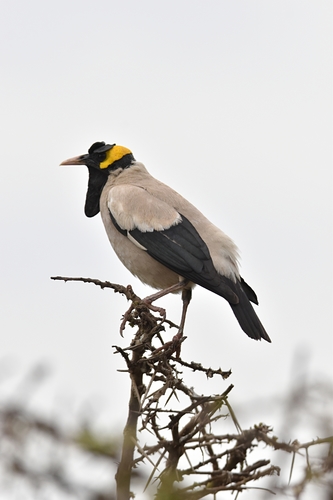 Wattled Starling
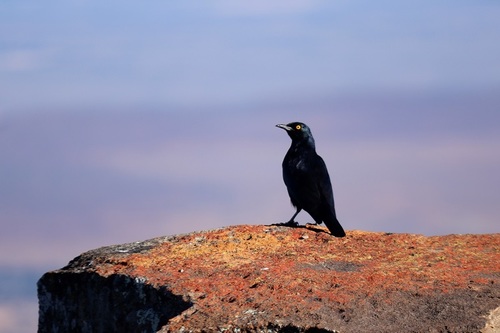 Pale-winged Starling
In short
The most reliable field mark to separate Wattled Starling from Pale-winged Starling is the striking white rump and black flight feathers visible on Wattled Starling in flight, regardless of age, while Pale-winged Starling lacks these contrasts. Wattled Starling also shows a variable but often distinctive bare yellow facial skin and wattles in breeding males, which Pale-winged Starling never shows. Structural differences are subtle, but Wattled Starling is slimmer and shorter-tailed, while Pale-winged is heavier-bodied. Immature and female Wattled Starlings can be confused with other starlings, but the white rump and dark wings remain diagnostic in flight. Habitat overlap is possible, but Pale-winged Starling is more tied to arid rocky areas, while Wattled Starling prefers open grasslands and agricultural land.
Identification tips
- White rump in flight: Wattled Starling of all ages shows a bright white rump contrasting with black flight feathers and tail—this is diagnostic in flight and never shown by Pale-winged Starling.
- Bare yellow facial skin and wattles: Breeding male Wattled Starlings have extensive bare yellow skin on the head, with black wattles on the forehead and throat. Some older females may show reduced versions. Pale-winged Starling never shows bare facial skin or wattles.
- Non-breeding and immature head pattern: Non-breeding male, female, and juvenile Wattled Starlings have a feathered head with a small yellow patch behind the eye and a black moustachial stripe; Pale-winged Starling lacks these features.
- Shoulder patch: Breeding male Wattled Starlings have a white shoulder patch, which is much reduced in non-breeding birds. Pale-winged Starling does not show a white shoulder patch.
- Flight feather color: Wattled Starling has black flight feathers and tail (brownish in juveniles), while Pale-winged Starling is generally uniform dark with pale panels on the wings, but not a white rump.
- Overall structure: Wattled Starling is slimmer, with a short tail and pointed wings, giving a more streamlined look. Pale-winged Starling is heavier and bulkier.
- Size: Pale-winged Starling is significantly heavier (103g vs. 73g), but this is hard to judge unless both are side by side.
- Behavior: Wattled Starling is highly gregarious, often in large flocks, and frequently perches on livestock or scavenges in open areas. Pale-winged Starling is less gregarious and not known for these behaviors.
- Habitat: Wattled Starling is found in grasslands, open woodlands, and agricultural areas, often near livestock. Pale-winged Starling prefers arid, rocky habitats and is less likely in open farmland.
- Vocalization: If you hear a wheezing 'ssreeeeo' or similar grating call, it's likely Wattled Starling. Pale-winged Starling's call is not described here.
- Mixing with other species: Wattled Starling often forms mixed flocks with other starlings and weavers, especially at reedbed roosts; Pale-winged Starling is less likely to do so.
- Seasonal changes: Wattled Starling's bare facial skin and wattles are most obvious in breeding males and older birds, but even in non-breeding or immature birds, the white rump and dark wings remain diagnostic.
- Plumage pitfalls: Immature Wattled Starlings may appear duller, with brownish flight feathers, but the white rump and contrasting wing pattern persist. Do not rely on overall darkness or sheen, as both species can appear dark at a distance.
- Perched views: Look for the head pattern and any bare skin on Wattled Starling, especially in males. Pale-winged Starling will lack these features and appear more uniformly dark.
- In flight: Prioritize rump and wing pattern—white rump with dark wings (Wattled) vs. uniform dark with pale wing panels but no white rump (Pale-winged).
Size
Wattled Starling is noticeably lighter (73g) than Pale-winged Starling (103g) [wikidata], making the latter a bulkier, heavier bird. Wattled Starling is also described as having a short tail and pointed wings, contributing to a more streamlined appearance, while Pale-winged Starling is generally more robust. However, size alone is not always reliable in the field unless both species are seen together.
Plumage
Juvenile and non-breeding Wattled Starlings are greyish with brown flight feathers and tail, but always show a white rump and contrasting dark wings in flight, a combination not found in Pale-winged Starling. Breeding male Wattled Starlings develop extensive bare yellow skin on the head, black wattles, and a white shoulder patch, while non-breeding males, females, and juveniles have a feathered head with a small yellow patch and black moustachial stripe. Pale-winged Starling's plumage is not described in detail here, but it lacks any mention of white rump, bare facial skin, or wattles, and is generally a uniform dark starling with pale panels on the wings (not white rump) in flight. The black flight and tail feathers with a white rump are unique to Wattled Starling at all ages and are the best in-flight mark.
Behaviour
Wattled Starling is highly gregarious, often forming large flocks and mixing with other starlings, and is frequently seen perching on livestock or feeding in open agricultural areas. It is also a colonial breeder, sometimes sharing colonies with weavers. Pale-winged Starling's behavior is less detailed here, but it is not noted for such large, mixed flocks or colonial nesting. Wattled Starling's tendency to perch on livestock and scavenge at rubbish heaps is also distinctive.
Habitat
Wattled Starling prefers grasslands, open woodlands, and cultivated areas, and is often found in association with livestock or agricultural activity. Pale-winged Starling, while present in some of the same countries, is more associated with arid, rocky habitats and is less likely to be seen in open, grassy, or agricultural settings. This difference in preferred habitat can help separate the two when context is clear.
Voice
Wattled Starling has a range of wheezing or grating calls, with the most familiar being a drawn-out 'ssreeeeo', similar to the common starling. No distinctive vocalizations are described for Pale-winged Starling in these notes, so voice is only useful for positively identifying Wattled Starling when this call is heard.