

Village Weaver vs Black-headed Weaver
Ploceus cucullatus versus Ploceus melanocephalus
Play a quiz with Village Weaver and Black-headed Weaver
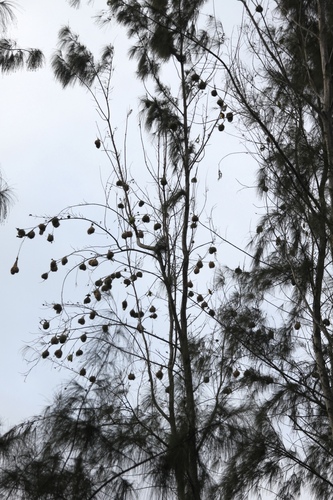 Village Weaver
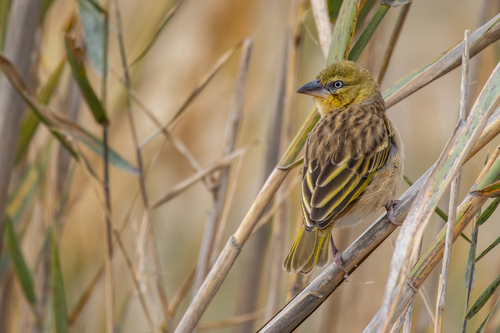 Black-headed Weaver
In short
The most reliable field mark between Village Weaver and Black-headed Weaver is the color and pattern of the mantle (back) and the head in breeding males: Village Weaver shows a boldly streaked black-and-yellow back and, in most subspecies, a black head edged with chestnut, while Black-headed Weaver has a plain greenish mantle and a black head with a yellow collar. Females and nonbreeding males are more similar, but Black-headed Weaver is plainer above and has a buffier breast. Juvenile and immature birds can be especially confusing, but the back pattern remains a key separator. Both species are similar in size and structure, so focus on plumage details, especially in the upperparts and head, for confident identification.
Identification tips
- Back pattern is key: Village Weaver of all ages shows a boldly streaked black-and-yellow back, while Black-headed Weaver has a plain greenish mantle. This is the most reliable mark in all plumages.
- Breeding male head pattern: Village Weaver males have a black head, often edged with chestnut (especially in northern forms), while Black-headed Weaver males have a black head with a distinct yellow collar (nuchal band). Southern Village Weaver males may have less black, but never the yellow collar.
- Underparts color: Village Weaver males are bright yellow below; Black-headed Weaver males are pale yellow, often with some chestnut suffusion on the breast and belly.
- Female and nonbreeding male confusion: Both species lose the black head outside breeding. Female Village Weaver is more streaked above and paler yellow below, while Black-headed Weaver is plainer olive-green above with a buffy (not bright yellow) breast.
- Juvenile plumage: Juvenile Village Weavers are browner above but retain some streaking; juvenile Black-headed Weavers are plainer and greener above, matching the adult female pattern.
- Bill and eye color: Both species have dark bills and dark reddish or dark eyes in all plumages; this does not separate them.
- Habitat context: If seen in a noisy colony in a village, Village Weaver is more likely; if in a small group near water, especially in Acacia trees overhanging water, consider Black-headed Weaver.
- Nape/collar: Only Black-headed Weaver breeding males show a clear yellow nuchal collar; Village Weaver never shows this, though some subspecies have yellow on the nape but not as a collar.
- Chestnut on head: Village Weaver breeding males often have chestnut edging to the black head, especially in the north; Black-headed Weaver never shows chestnut on the head, but may have chestnut on the underparts.
- Upperwing pattern: No distinctive upperwing marks are described for either species in flight; rely on back pattern and head color when birds are perched or visible from above.
- Colony structure: Village Weaver colonies are often larger and more conspicuous in urban areas; Black-headed Weaver colonies are smaller and more tied to wetland edges.
- Seasonal change: Both species lose the black head outside breeding season, so back pattern and underpart color become more important in nonbreeding and female birds.
- Pitfall with Masked and Golden-backed Weavers: Females and nonbreeding Black-headed Weavers can resemble female Masked Weavers, but the darker bill and eyes, and buffy breast, help separate them. Village Weaver is more streaked above than either.
- Introduced populations: In the Iberian Peninsula, both species may occur; use the same plumage marks, as structure and behavior remain similar.
- When in doubt: If you cannot see the back pattern or nuchal collar, and the bird is not in breeding plumage, identification can be genuinely difficult—try to observe the bird in different postures and lighting to catch the key mantle and head features.
Size
Village Weaver averages about 37.5g in body mass [wikidata], with no direct measurement available for Black-headed Weaver, but both are typical medium-sized weavers and appear similar in the field. Structure, including bill size and overall jizz, is not a reliable separator between these two species.
Plumage
For breeding males, Village Weaver is distinctive with a black head (often edged with chestnut, especially in northern populations), a boldly streaked black-and-yellow back, and yellow underparts. Southern Village Weaver males may have less black on the head, but always show the streaked back. Black-headed Weaver males have a black head with a yellow collar (nuchal band), but the key difference is their plain greenish mantle (back), lacking the bold streaks of Village Weaver. Their underparts are pale yellow, variably suffused with chestnut. Females and nonbreeding males of both species lack the black head; however, Black-headed Weaver is plainer olive-green above with a buffy breast, while Village Weaver females are more streaked above and have paler yellow underparts. Juveniles of both species resemble females, but Village Weaver juveniles are browner above and still show some streaking, while Black-headed Weaver juveniles are plainer. In all ages, focus on the back pattern: streaked (Village) versus plain (Black-headed).
Behaviour
Both species are social, often forming colonies and nesting in groups. Village Weavers are especially known for large, noisy colonies in towns and villages. Black-headed Weavers also breed colonially, often near water, sometimes choosing trees overhanging water to reduce predation. Foraging behavior is similar, with both species feeding mainly on seeds and grains, sometimes becoming crop pests.
Habitat
Village Weaver is widespread in sub-Saharan Africa and adapts well to human-altered environments, frequently seen in villages, towns, hotel grounds, and open woodlands. Black-headed Weaver is also widespread in tropical Africa but is more closely associated with damp areas and is often found near water, especially in savanna habitats. Both have been introduced outside Africa, but Village Weaver is more likely in urban or peri-urban settings, while Black-headed Weaver prefers wetland edges and Acacia trees near water.