

Motmot

Verditer Flycatcher vs Pale Blue Flycatcher

Eumyias thalassinus versus Cyornis unicolor

Play a quiz with Verditer Flycatcher and Pale Blue Flycatcher
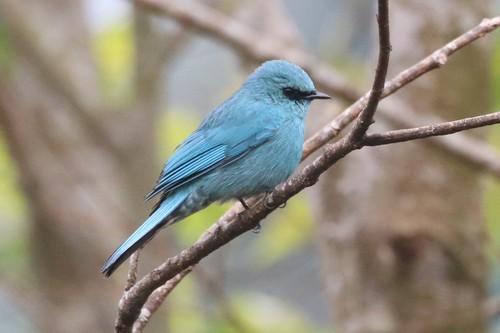
Verditer Flycatcher (Eumyias thalassinus) Verditer Flycatcher
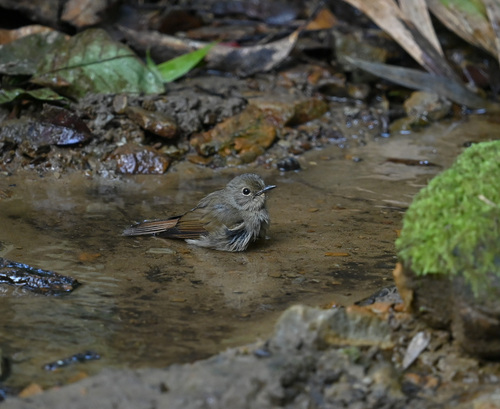
Pale Blue Flycatcher (Cyornis unicolor) Pale Blue Flycatcher

Media

Loading…

In short

The most reliable field mark between Verditer Flycatcher and Pale Blue Flycatcher is the overall intensity and uniformity of blue: Verditer Flycatcher is a striking, all-over copper-sulphate blue with a sharp black eye-patch, while Pale Blue Flycatcher is paler blue above and has greyish underparts with a less distinct, broken eye-patch. Both species can overlap in range and habitat, and females and immatures can be especially confusing, but the Verditer’s bold blue coloration and solid face pattern usually stand out. Structural and behavioral cues are subtle, so careful attention to plumage—especially the face and underparts—is key. Juvenile and immature wing patterns are not described as distinctive for either species in the available notes.

Identification tips

  1. Overall blue coloration: Verditer Flycatcher is a vivid, copper-sulphate blue over the entire body in adult males, while Pale Blue Flycatcher is noticeably paler blue above and has greyish underparts. This is the single most reliable field mark for both sexes and all ages, though less intense in female/sub-adult Verditer.
  2. Face pattern: Verditer Flycatcher shows a sharply defined black patch between the eyes and above the bill base, giving a masked look. Pale Blue Flycatcher has a less continuous, less defined black eye-patch. This mark is visible in good light and at close range.
  3. Underparts: Verditer Flycatcher’s underparts are blue (with a grey vent), matching the upperparts, while Pale Blue Flycatcher’s underparts are greyish from throat to vent, contrasting with the blue upperparts. This is especially useful when the bird is facing you or in side view.
  4. Intensity of blue: Even in females and sub-adults, Verditer Flycatcher is more uniform and intense blue than any Pale Blue Flycatcher.
  5. Perching behavior: Verditer Flycatcher often perches on exposed treetops or wires, sometimes above the canopy. If you see a blue flycatcher in a high, open perch, consider Verditer first.
  6. Habitat overlap: Both species can occur together in the same forests, so do not rely on location alone for ID.
  7. Juvenile/immature confusion: No distinctive juvenile or immature upperwing or flight pattern marks are described for either species, so focus on face and underpart color even in young birds.
  8. Bill and structure: No strong structural differences are noted in the sources; both are typical small flycatchers. Do not rely on bill shape or tail length for separation.
  9. Sex differences: Female and sub-adult Verditer Flycatchers are paler than males but still more uniform blue than Pale Blue Flycatcher of any sex or age.
  10. Lighting pitfalls: In poor light, both species can appear duller or greyer than they are; always try to confirm face pattern and underpart color in good light.
  11. Face patch continuity: The Verditer’s black face patch is solid and well-defined, while Pale Blue’s is broken or incomplete—check this carefully if the bird is close enough.
  12. Grey vent: Verditer Flycatcher has a grey vent contrasting with the blue belly, which can be a subtle but useful mark if seen.
  13. Mass and size: Both species are essentially the same size; do not use bulk or length as a separator.
  14. Seasonal change: No strong seasonal plumage changes are noted for either species; the above marks apply year-round.
  15. Vocalizations: No diagnostic vocal differences are described in the notes, so do not rely on song or call for separation.

Size

Both species are very similar in size and mass, with Verditer Flycatcher averaging 18.1 g and Pale Blue Flycatcher 17.5 g [wikidata]. In the field, size is not a reliable separator between these two; any perceived difference is likely due to posture or viewing conditions.

Plumage

Adult male Verditer Flycatcher is a vivid, uniform blue over the entire body except for a sharply defined black patch between the eyes and above the bill, and a grey vent. Females and sub-adults are a paler blue but still more uniform than Pale Blue. In contrast, Pale Blue Flycatcher is paler blue above and has distinctly greyish underparts from throat to vent, lacking the Verditer’s all-over blue effect. Its black eye-patch is less continuous and less sharply defined. Both species can appear similar at a glance, especially in poor light or with immature/female birds, but the Verditer’s intensity and uniformity of blue, and its solid facial patch, are diagnostic. Juvenile and immature wing patterns are not noted as distinctive for either species in the sources provided.

Behaviour

Verditer Flycatcher often perches conspicuously on exposed tree tops or wires and forages above the canopy, which is somewhat unusual for flycatchers. Pale Blue Flycatcher’s behavior is less specifically described, but it is not noted for such exposed perching. Both species can be seen in similar forested habitats and may overlap in foraging height, so behavior alone is not a strong separator, but a bird persistently high and exposed is more likely Verditer.

Habitat

Both species occur in overlapping regions across South and Southeast Asia and can be found in similar forested habitats. Pale Blue Flycatcher is noted in subtropical or tropical moist lowland and montane forests, while Verditer Flycatcher is found from the Himalayas through Southeast Asia to Sumatra, often above the canopy. Habitat alone is not diagnostic, but Verditer may be more often seen in open, elevated perches.

Submit a better description

Use the same sections as the comparison. Your text is published immediately.

The most reliable field mark between Verditer Flycatcher and Pale Blue Flycatcher is the overall intensity and uniformity of blue: Verditer Flycatcher is a striking, all-over copper-sulphate blue with a sharp black eye-patch, while Pale Blue Flycatcher is paler blue above and has greyish underparts with a less distinct, broken eye-patch. Both species can overlap in range and habitat, and females and immatures can be especially confusing, but the Verditer’s bold blue coloration and solid face pattern usually stand out. Structural and behavioral cues are subtle, so careful attention to plumage—especially the face and underparts—is key. Juvenile and immature wing patterns are not described as distinctive for either species in the available notes.

  1. Overall blue coloration: Verditer Flycatcher is a vivid, copper-sulphate blue over the entire body in adult males, while Pale Blue Flycatcher is noticeably paler blue above and has greyish underparts. This is the single most reliable field mark for both sexes and all ages, though less intense in female/sub-adult Verditer.
  2. Face pattern: Verditer Flycatcher shows a sharply defined black patch between the eyes and above the bill base, giving a masked look. Pale Blue Flycatcher has a less continuous, less defined black eye-patch. This mark is visible in good light and at close range.
  3. Underparts: Verditer Flycatcher’s underparts are blue (with a grey vent), matching the upperparts, while Pale Blue Flycatcher’s underparts are greyish from throat to vent, contrasting with the blue upperparts. This is especially useful when the bird is facing you or in side view.
  4. Intensity of blue: Even in females and sub-adults, Verditer Flycatcher is more uniform and intense blue than any Pale Blue Flycatcher.
  5. Perching behavior: Verditer Flycatcher often perches on exposed treetops or wires, sometimes above the canopy. If you see a blue flycatcher in a high, open perch, consider Verditer first.
  6. Habitat overlap: Both species can occur together in the same forests, so do not rely on location alone for ID.
  7. Juvenile/immature confusion: No distinctive juvenile or immature upperwing or flight pattern marks are described for either species, so focus on face and underpart color even in young birds.
  8. Bill and structure: No strong structural differences are noted in the sources; both are typical small flycatchers. Do not rely on bill shape or tail length for separation.
  9. Sex differences: Female and sub-adult Verditer Flycatchers are paler than males but still more uniform blue than Pale Blue Flycatcher of any sex or age.
  10. Lighting pitfalls: In poor light, both species can appear duller or greyer than they are; always try to confirm face pattern and underpart color in good light.
  11. Face patch continuity: The Verditer’s black face patch is solid and well-defined, while Pale Blue’s is broken or incomplete—check this carefully if the bird is close enough.
  12. Grey vent: Verditer Flycatcher has a grey vent contrasting with the blue belly, which can be a subtle but useful mark if seen.
  13. Mass and size: Both species are essentially the same size; do not use bulk or length as a separator.
  14. Seasonal change: No strong seasonal plumage changes are noted for either species; the above marks apply year-round.
  15. Vocalizations: No diagnostic vocal differences are described in the notes, so do not rely on song or call for separation.

Both species are very similar in size and mass, with Verditer Flycatcher averaging 18.1 g and Pale Blue Flycatcher 17.5 g [wikidata]. In the field, size is not a reliable separator between these two; any perceived difference is likely due to posture or viewing conditions.

Adult male Verditer Flycatcher is a vivid, uniform blue over the entire body except for a sharply defined black patch between the eyes and above the bill, and a grey vent. Females and sub-adults are a paler blue but still more uniform than Pale Blue. In contrast, Pale Blue Flycatcher is paler blue above and has distinctly greyish underparts from throat to vent, lacking the Verditer’s all-over blue effect. Its black eye-patch is less continuous and less sharply defined. Both species can appear similar at a glance, especially in poor light or with immature/female birds, but the Verditer’s intensity and uniformity of blue, and its solid facial patch, are diagnostic. Juvenile and immature wing patterns are not noted as distinctive for either species in the sources provided.

Verditer Flycatcher often perches conspicuously on exposed tree tops or wires and forages above the canopy, which is somewhat unusual for flycatchers. Pale Blue Flycatcher’s behavior is less specifically described, but it is not noted for such exposed perching. Both species can be seen in similar forested habitats and may overlap in foraging height, so behavior alone is not a strong separator, but a bird persistently high and exposed is more likely Verditer.

Both species occur in overlapping regions across South and Southeast Asia and can be found in similar forested habitats. Pale Blue Flycatcher is noted in subtropical or tropical moist lowland and montane forests, while Verditer Flycatcher is found from the Himalayas through Southeast Asia to Sumatra, often above the canopy. Habitat alone is not diagnostic, but Verditer may be more often seen in open, elevated perches.

Discard your changes?

You have unsaved edits. If you leave now, those changes will be lost.

Verditer Flycatcher · Pale Blue Flycatcher · My Tricky Birds