

Motmot

Ural Owl vs Great Grey Owl

Strix uralensis versus Strix nebulosa

Play a quiz with Ural Owl and Great Grey Owl
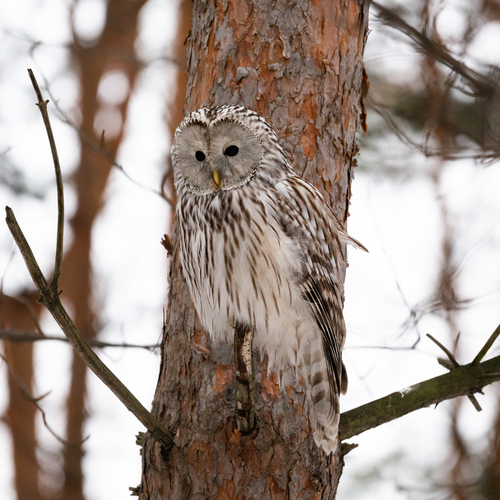
Ural Owl (Strix uralensis) Ural Owl
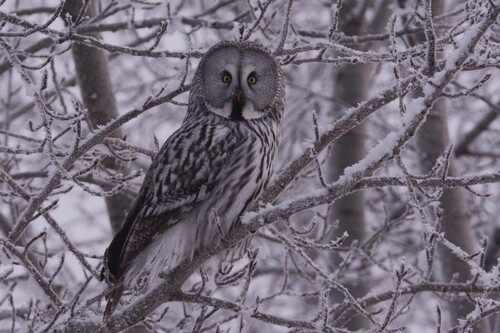
Great Grey Owl (Strix nebulosa) Great Grey Owl

Media

Loading…

In short

The most reliable way to separate Ural Owl from Great Grey Owl is by the facial disc: Great Grey Owl has a huge, round face with bold concentric dark rings and a distinctive white 'bow-tie' under the beak, while Ural Owl’s face is plainer and lacks these strong concentric lines. In flight or perched, Great Grey Owl appears even larger and more massive-headed, with a longer, rounded tail and more uniform, dark grey plumage. Ural Owl is smaller, paler, and shows heavier, straighter streaks on the underparts. Both species lack ear tufts, but Great Grey Owl's sheer size and facial pattern are unmistakable in good views.

Identification tips

  1. Facial Disc Pattern: Great Grey Owl has a huge, round face with bold, dark concentric rings and a white 'bow-tie' under the beak. Ural Owl’s face is paler, less patterned, and lacks these strong concentric lines. This is the single most reliable field mark at all ages.
  2. Head Size and Shape: Great Grey Owl’s head is massive and round, making the bird look top-heavy and imposing. Ural Owl’s head is proportionally smaller and less striking.
  3. Tail Shape and Length: Both have long tails, but Great Grey Owl’s is the longest of any owl and appears broad and rounded at the tip. Ural Owl’s tail is long but not as broad or rounded.
  4. Underpart Streaking: Ural Owl shows heavy, straight dark streaks on the underparts. Great Grey Owl’s underparts are paler with finer, less straight streaks.
  5. Overall Plumage Tone: Great Grey Owl is more uniformly dark grey above and below, while Ural Owl is paler and less uniform, often appearing washed-out by comparison.
  6. White 'Bow-Tie': Only Great Grey Owl has a prominent white 'bow-tie' or throat patch below the beak, often visible even at a distance.
  7. Eye Color: Both have yellow eyes, but Great Grey Owl’s are set in a much larger facial disc, making them appear smaller and more deeply set.
  8. Ear Tufts: Neither species has ear tufts, so this is not useful for separation.
  9. Flight Silhouette: In flight, Great Grey Owl looks huge, with long, broad wings and a long, rounded tail. Ural Owl is still large but slimmer and less massive.
  10. Perched Posture: Great Grey Owl sits very upright and appears bulky, while Ural Owl is more slender and less upright.
  11. Habitat Context: If seen in open bogs or meadows near large trees in northern or montane forests, Great Grey Owl is more likely. Ural Owl prefers denser, mixed or coniferous forests.
  12. Behavior: Ural Owl may be active during the day, especially in summer; Great Grey Owl is more strictly nocturnal or crepuscular.
  13. Size Impression: If the bird appears truly enormous, especially in the head and tail, it is likely a Great Grey Owl. Ural Owl is large but never as massive.
  14. Facial Expression: Great Grey Owl’s face often looks flat and disc-like, while Ural Owl’s is more rounded and less exaggerated.
  15. Juvenile/Immature Birds: No distinctive age-specific upperwing patterns are noted for separation; rely on facial disc and overall structure for all ages.

Size

Great Grey Owl is the world’s longest owl, with females averaging 72 cm in length and a wingspan over 140 cm; even males are larger than Ural Owl. Ural Owl is still a large owl, but noticeably smaller and lighter, with a less massive head and body. The Great Grey's size is accentuated by its fluffy plumage and huge facial disc, while Ural Owl is more slender and less imposing overall. In direct comparison, Great Grey Owl will always look bulkier, longer-tailed, and bigger-headed.

Plumage

Juvenile and adult Great Grey Owls of all ages show a large, round grey face with bold, dark concentric rings and a white 'bow-tie' below the beak, plus a uniform dark grey upperpart and long, rounded tail. Ural Owl, at all ages, has a paler, less uniform plumage, with heavy but straight dark streaks on the underparts and a facial disc that lacks the Great Grey’s strong concentric pattern. The Ural Owl’s tail is long but not as massively rounded or as long in proportion to the body as in Great Grey. Both species lack ear tufts, but Great Grey Owl’s facial markings and overall darker, more uniform grey coloration are distinctive. There are no notes indicating distinctive age-specific upperwing patterns for either species that would be diagnostic in flight.

Behaviour

Both species are true owls (Strix) and are generally nocturnal, but Ural Owl is sometimes active during the day, especially in warmer months. Great Grey Owl is more strictly crepuscular or nocturnal. In flight, Great Grey Owl appears slow, buoyant, and almost ghostly due to its size and fluffy plumage, while Ural Owl is less massive and more hawk-like, but still flies with broad wings and a long tail. Perched, Great Grey Owl often sits very upright and appears huge-headed, while Ural Owl is more slender and less imposing.

Habitat

Both species inhabit mature forests, but Great Grey Owl is found across the Northern Hemisphere in boreal and montane forests, often near open meadows or bogs for hunting. Ural Owl is more restricted to temperate and boreal forests of Eurasia, often in mixed or coniferous woodlands. Great Grey Owl prefers areas with large trees for nesting and open spaces for hunting, while Ural Owl is more of a forest interior species. Habitat overlap is possible in Eurasia, but Great Grey Owl is more likely in open, northern or montane settings.

Submit a better description

Use the same sections as the comparison. Your text is published immediately.

The most reliable way to separate Ural Owl from Great Grey Owl is by the facial disc: Great Grey Owl has a huge, round face with bold concentric dark rings and a distinctive white 'bow-tie' under the beak, while Ural Owl’s face is plainer and lacks these strong concentric lines. In flight or perched, Great Grey Owl appears even larger and more massive-headed, with a longer, rounded tail and more uniform, dark grey plumage. Ural Owl is smaller, paler, and shows heavier, straighter streaks on the underparts. Both species lack ear tufts, but Great Grey Owl's sheer size and facial pattern are unmistakable in good views.

  1. Facial Disc Pattern: Great Grey Owl has a huge, round face with bold, dark concentric rings and a white 'bow-tie' under the beak. Ural Owl’s face is paler, less patterned, and lacks these strong concentric lines. This is the single most reliable field mark at all ages.
  2. Head Size and Shape: Great Grey Owl’s head is massive and round, making the bird look top-heavy and imposing. Ural Owl’s head is proportionally smaller and less striking.
  3. Tail Shape and Length: Both have long tails, but Great Grey Owl’s is the longest of any owl and appears broad and rounded at the tip. Ural Owl’s tail is long but not as broad or rounded.
  4. Underpart Streaking: Ural Owl shows heavy, straight dark streaks on the underparts. Great Grey Owl’s underparts are paler with finer, less straight streaks.
  5. Overall Plumage Tone: Great Grey Owl is more uniformly dark grey above and below, while Ural Owl is paler and less uniform, often appearing washed-out by comparison.
  6. White 'Bow-Tie': Only Great Grey Owl has a prominent white 'bow-tie' or throat patch below the beak, often visible even at a distance.
  7. Eye Color: Both have yellow eyes, but Great Grey Owl’s are set in a much larger facial disc, making them appear smaller and more deeply set.
  8. Ear Tufts: Neither species has ear tufts, so this is not useful for separation.
  9. Flight Silhouette: In flight, Great Grey Owl looks huge, with long, broad wings and a long, rounded tail. Ural Owl is still large but slimmer and less massive.
  10. Perched Posture: Great Grey Owl sits very upright and appears bulky, while Ural Owl is more slender and less upright.
  11. Habitat Context: If seen in open bogs or meadows near large trees in northern or montane forests, Great Grey Owl is more likely. Ural Owl prefers denser, mixed or coniferous forests.
  12. Behavior: Ural Owl may be active during the day, especially in summer; Great Grey Owl is more strictly nocturnal or crepuscular.
  13. Size Impression: If the bird appears truly enormous, especially in the head and tail, it is likely a Great Grey Owl. Ural Owl is large but never as massive.
  14. Facial Expression: Great Grey Owl’s face often looks flat and disc-like, while Ural Owl’s is more rounded and less exaggerated.
  15. Juvenile/Immature Birds: No distinctive age-specific upperwing patterns are noted for separation; rely on facial disc and overall structure for all ages.

Great Grey Owl is the world’s longest owl, with females averaging 72 cm in length and a wingspan over 140 cm; even males are larger than Ural Owl. Ural Owl is still a large owl, but noticeably smaller and lighter, with a less massive head and body. The Great Grey's size is accentuated by its fluffy plumage and huge facial disc, while Ural Owl is more slender and less imposing overall. In direct comparison, Great Grey Owl will always look bulkier, longer-tailed, and bigger-headed.

Juvenile and adult Great Grey Owls of all ages show a large, round grey face with bold, dark concentric rings and a white 'bow-tie' below the beak, plus a uniform dark grey upperpart and long, rounded tail. Ural Owl, at all ages, has a paler, less uniform plumage, with heavy but straight dark streaks on the underparts and a facial disc that lacks the Great Grey’s strong concentric pattern. The Ural Owl’s tail is long but not as massively rounded or as long in proportion to the body as in Great Grey. Both species lack ear tufts, but Great Grey Owl’s facial markings and overall darker, more uniform grey coloration are distinctive. There are no notes indicating distinctive age-specific upperwing patterns for either species that would be diagnostic in flight.

Both species are true owls (Strix) and are generally nocturnal, but Ural Owl is sometimes active during the day, especially in warmer months. Great Grey Owl is more strictly crepuscular or nocturnal. In flight, Great Grey Owl appears slow, buoyant, and almost ghostly due to its size and fluffy plumage, while Ural Owl is less massive and more hawk-like, but still flies with broad wings and a long tail. Perched, Great Grey Owl often sits very upright and appears huge-headed, while Ural Owl is more slender and less imposing.

Both species inhabit mature forests, but Great Grey Owl is found across the Northern Hemisphere in boreal and montane forests, often near open meadows or bogs for hunting. Ural Owl is more restricted to temperate and boreal forests of Eurasia, often in mixed or coniferous woodlands. Great Grey Owl prefers areas with large trees for nesting and open spaces for hunting, while Ural Owl is more of a forest interior species. Habitat overlap is possible in Eurasia, but Great Grey Owl is more likely in open, northern or montane settings.

Discard your changes?

You have unsaved edits. If you leave now, those changes will be lost.

Ural Owl · Great Grey Owl · My Tricky Birds