

Allocco degli Urali vs Great Gray Owl
Strix uralensis contro Strix nebulosa
Fai un quiz con Allocco degli Urali e Great Gray Owl
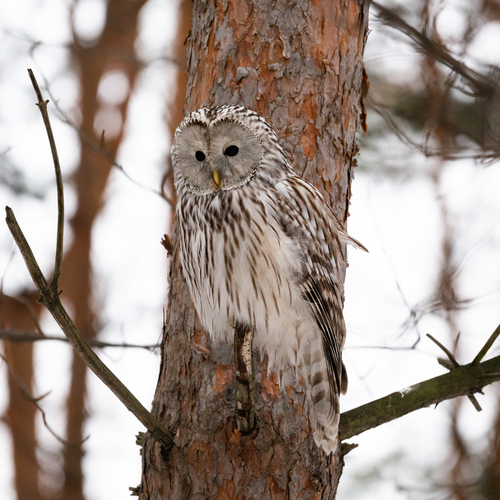 Allocco degli Urali
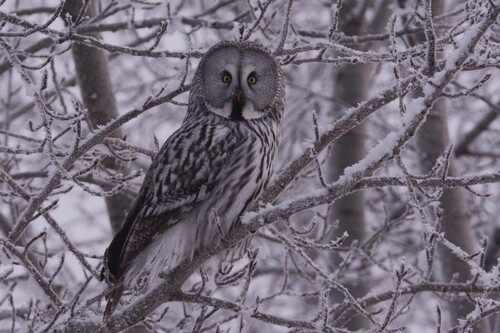 Great Gray Owl
In breve
Il modo più affidabile per separare l'Allocco degli Urali dal Grande Gufo Grigio è attraverso il disco facciale: il Grande Gufo Grigio ha un enorme viso rotondo con audaci anelli concentrici scuri e un distintivo 'papillon' bianco sotto il becco, mentre il viso dell'Allocco degli Urali è più semplice e privo di queste forti linee concentriche. In volo o posato, il Grande Gufo Grigio appare ancora più grande e con una testa più massiccia, con una coda più lunga e arrotondata e un piumaggio grigio scuro più uniforme. L'Allocco degli Urali è più piccolo, più chiaro e mostra striature più pesanti e dritte sulle parti inferiori. Entrambe le specie non hanno ciuffi auricolari, ma le dimensioni e il motivo facciale del Grande Gufo Grigio sono inconfondibili in buone visioni.
Consigli di identificazione
- Motivo del Disco Facciale: Il Grande Gufo Grigio ha un enorme viso rotondo con audaci anelli concentrici scuri e un 'papillon' bianco sotto il becco. Il viso dell'Allocco degli Urali è più chiaro, meno decorato e privo di queste forti linee concentriche. Questo è il segno di campo più affidabile a tutte le età.
- Dimensione e Forma della Testa: La testa del Grande Gufo Grigio è massiccia e rotonda, facendo sembrare l'uccello pesante e imponente. La testa dell'Allocco degli Urali è proporzionalmente più piccola e meno appariscente.
- Forma e Lunghezza della Coda: Entrambi hanno lunghe code, ma quella del Grande Gufo Grigio è la più lunga di qualsiasi gufo e appare larga e arrotondata alla punta. La coda dell'Allocco degli Urali è lunga ma non così larga o arrotondata.
- Striature delle Parti Inferiori: L'Allocco degli Urali mostra pesanti striature scure e dritte sulle parti inferiori. Le parti inferiori del Grande Gufo Grigio sono più chiare con striature più fini e meno dritte.
- Tono Generale del Piumaggio: Il Grande Gufo Grigio è più uniformemente grigio scuro sopra e sotto, mentre l'Allocco degli Urali è più chiaro e meno uniforme, spesso apparendo sbiadito in confronto.
- 'Papillon' Bianco: Solo il Grande Gufo Grigio ha un prominente 'papillon' bianco o una macchia di gola sotto il becco, spesso visibile anche da lontano.
- Colore degli Occhi: Entrambi hanno occhi gialli, ma quelli del Grande Gufo Grigio sono inseriti in un disco facciale molto più grande, facendoli apparire più piccoli e più profondamente incassati.
- Ciuffi Auricolari: Nessuna delle due specie ha ciuffi auricolari, quindi questo non è utile per la separazione.
- Silhouette in Volo: In volo, il Grande Gufo Grigio appare enorme, con lunghe ali larghe e una coda lunga e arrotondata. L'Allocco degli Urali è ancora grande ma più snello e meno massiccio.
- Postura Posata: Il Grande Gufo Grigio si siede molto eretto e appare massiccio, mentre l'Allocco degli Urali è più snello e meno eretto.
- Contesto dell'Habitat: Se visto in torbiere aperte o prati vicino a grandi alberi in foreste settentrionali o montane, è più probabile che sia un Grande Gufo Grigio. L'Allocco degli Urali preferisce foreste più dense, miste o di conifere.
- Comportamento: L'Allocco degli Urali può essere attivo durante il giorno, specialmente in estate; il Grande Gufo Grigio è più rigorosamente notturno o crepuscolare.
- Impressione di Dimensione: Se l'uccello appare davvero enorme, specialmente nella testa e nella coda, è probabile che sia un Grande Gufo Grigio. L'Allocco degli Urali è grande ma mai così massiccio.
- Espressione Facciale: Il viso del Grande Gufo Grigio spesso appare piatto e simile a un disco, mentre quello dell'Allocco degli Urali è più arrotondato e meno esagerato.
- Uccelli Juvenili/Immaturi: Non ci sono schemi distintivi specifici per l'età notati per la separazione; fare affidamento sul disco facciale e sulla struttura generale per tutte le età.
Taglia
Il Grande Gufo Grigio è il gufo più lungo del mondo, con le femmine che misurano in media 72 cm di lunghezza e un'apertura alare superiore ai 140 cm; anche i maschi sono più grandi dell'Allocco degli Urali. L'Allocco degli Urali è comunque un grande gufo, ma notevolmente più piccolo e leggero, con una testa e un corpo meno massicci. Le dimensioni del Grande Gufo sono accentuate dal suo piumaggio soffice e dal suo enorme disco facciale, mentre l'Allocco degli Urali è più snello e meno imponente nel complesso. In un confronto diretto, il Grande Gufo Grigio apparirà sempre più robusto, con una coda più lunga e una testa più grande.
Piumaggio
I gufi Grigi Grandi giovanili e adulti di tutte le età mostrano un grande viso grigio rotondo con audaci anelli concentrici scuri e un 'papillon' bianco sotto il becco, oltre a una parte superiore grigia scura uniforme e una coda lunga e arrotondata. L'Allocco degli Urali, a tutte le età, ha un piumaggio più chiaro e meno uniforme, con pesanti ma dritte striature scure sulle parti inferiori e un disco facciale che manca del forte motivo concentrico del Grande Gufo Grigio. La coda dell'Allocco degli Urali è lunga ma non così massicciamente arrotondata o lunga in proporzione al corpo come nel Grande Gufo Grigio. Entrambe le specie non hanno ciuffi auricolari, ma i segni facciali del Grande Gufo Grigio e la sua colorazione grigia più scura e uniforme sono distintivi. Non ci sono note che indicano schemi distintivi specifici per l'età per nessuna delle due specie che sarebbero diagnostici in volo.
Comportamento
Entrambe le specie sono veri gufi (Strix) e sono generalmente notturni, ma l'Allocco degli Urali è talvolta attivo durante il giorno, specialmente nei mesi più caldi. Il Grande Gufo Grigio è più rigorosamente crepuscolare o notturno. In volo, il Grande Gufo Grigio appare lento, galleggiante e quasi spettrale a causa delle sue dimensioni e del piumaggio soffice, mentre l'Allocco degli Urali è meno massiccio e più simile a un falco, ma vola comunque con ali larghe e una coda lunga. Posato, il Grande Gufo Grigio spesso si siede molto eretto e appare con una testa enorme, mentre l'Allocco degli Urali è più snello e meno imponente.
Habitat
Entrambe le specie abitano foreste mature, ma il Grande Gufo Grigio si trova in tutto l'emisfero settentrionale in foreste boreali e montane, spesso vicino a prati aperti o torbiere per la caccia. L'Allocco degli Urali è più ristretto a foreste temperate e boreali dell'Eurasia, spesso in boschi misti o di conifere. Il Grande Gufo Grigio preferisce aree con grandi alberi per nidificare e spazi aperti per cacciare, mentre l'Allocco degli Urali è più una specie dell'interno della foresta. È possibile una sovrapposizione degli habitat in Eurasia, ma il Grande Gufo Grigio è più probabile in ambienti aperti, settentrionali o montani.
Allocco degli Urali · Great Gray Owl · I miei uccelli difficili